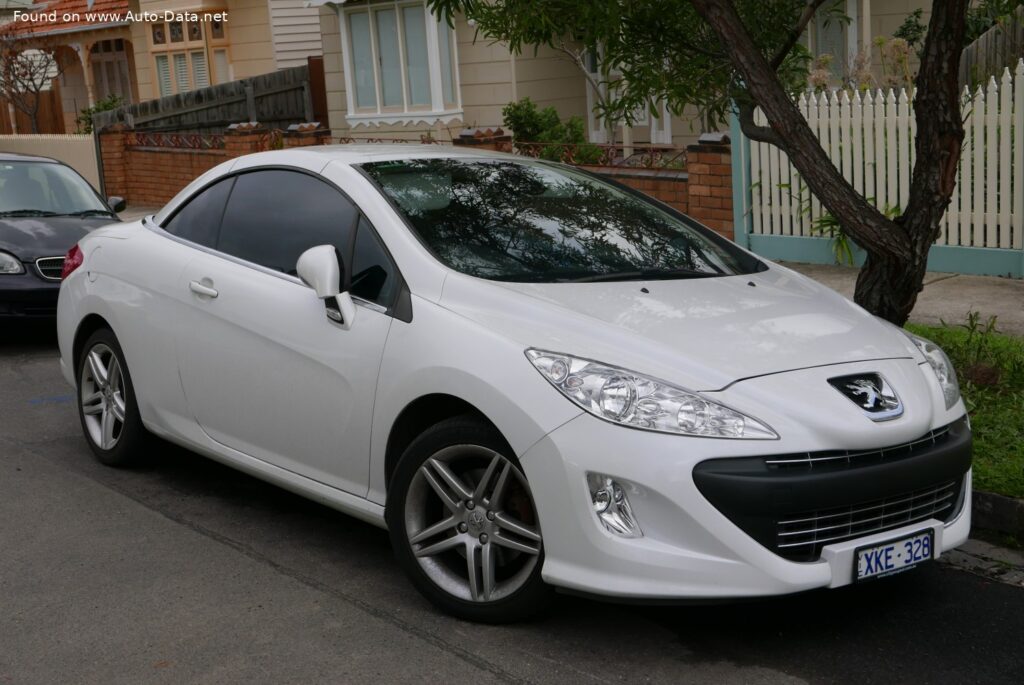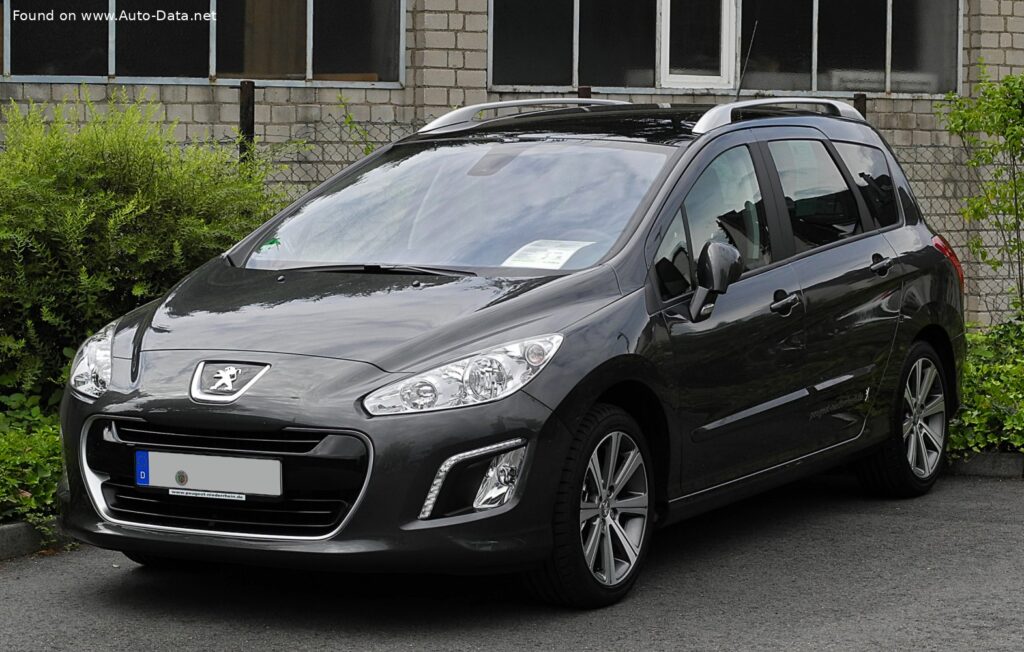
The Peugeot 308 SW I (Phase II, 2011) 2.0 HDI (163 Hp) FAP is a station wagon that represented a significant offering from the French automaker, Peugeot, within the European market. Introduced as part of the first generation (T7) 308 series, the SW – signifying “Station Wagon” – variant catered to buyers prioritizing practicality and cargo space without sacrificing the style and driving dynamics associated with the Peugeot brand. The Phase II update, launched in 2011, brought refinements to the exterior design, interior materials, and crucially, engine technology, focusing on improved fuel efficiency and reduced emissions. While not officially sold in the United States, the 308 SW competed with models like the Volkswagen Golf Estate, Ford Focus Wagon, and Renault Mégane Estate, offering a compelling alternative in the compact family vehicle segment.
Peugeot 308 SW I (Phase II): A Detailed Overview
The 308 SW Phase II built upon the foundation of the original 308, launched in 2007, addressing some initial criticisms and enhancing the overall ownership experience. The SW body style, in particular, was designed to maximize interior space and versatility. The Phase II revisions included subtle styling tweaks to the front and rear fascias, updated interior trim, and the integration of more advanced technology, particularly within the engine range. The 2.0 HDI (163 Hp) FAP variant, equipped with a Diesel Particulate Filter (DPF), was a popular choice for European drivers due to its balance of performance, fuel economy, and compliance with increasingly stringent emissions regulations.
Engine & Performance
The heart of the 308 SW I (Phase II) 2.0 HDI (163 Hp) FAP is a 2.0-liter, four-cylinder diesel engine, designated RHH DW10CTED4. This engine produces 163 horsepower at 4,000 rpm and a substantial 340 Nm (250.77 lb.-ft.) of torque at 2,000 rpm. The engine utilizes a common rail direct fuel injection system and is turbocharged with an intercooler, contributing to its responsive performance and efficiency. Power is delivered to the front wheels via a six-speed automatic transmission. Acceleration from 0 to 100 km/h (0-62 mph) takes 10.3 seconds, while 0 to 60 mph is achieved in approximately 9.8 seconds. The vehicle boasts a maximum speed of 202 km/h (125.52 mph). The engine’s design prioritizes fuel economy, achieving combined fuel consumption of 6.7 l/100 km (35.1 US mpg, 42.2 UK mpg), making it an attractive option for long-distance travel.
Design & Features
The Peugeot 308 SW I (Phase II) is a five-door, five-seat station wagon. Its exterior design is characterized by a sleek profile, a sloping roofline, and a distinctive front grille. The SW variant offers a significantly larger cargo capacity compared to the hatchback version. With the rear seats up, the trunk provides 520 liters (18.36 cu. ft.) of space, expanding to a generous 2,149 liters (75.89 cu. ft.) when the rear seats are folded down. The Phase II update included minor cosmetic enhancements, such as revised headlight designs and updated interior materials. Safety features, typical for a vehicle of this era, included ABS (Anti-lock Braking System), and driver and passenger airbags. The vehicle’s suspension consists of an independent McPherson strut setup at the front and a semi-independent coil spring arrangement at the rear, providing a comfortable ride and predictable handling. Electric power steering further enhances the driving experience.
Technical Specifications
| Brand | Peugeot |
| Model | 308 |
| Generation | 308 SW I (Phase II, 2011) |
| Type (Engine) | 2.0 HDI (163 Hp) FAP |
| Start of production | 2011 |
| End of production | 2013 |
| Powertrain Architecture | Internal Combustion engine |
| Body type | Station wagon (estate) |
| Seats | 5 |
| Doors | 5 |
| Fuel consumption (urban) | 8.8 l/100 km (26.7 US mpg, 32.1 UK mpg, 11.4 km/l) |
| Fuel consumption (extra urban) | 5.5 l/100 km (42.8 US mpg, 51.4 UK mpg, 18.2 km/l) |
| Fuel consumption (combined) | 6.7 l/100 km (35.1 US mpg, 42.2 UK mpg, 14.9 km/l) |
| Fuel Type | Diesel |
| Acceleration 0 – 100 km/h | 10.3 sec |
| Acceleration 0 – 62 mph | 10.3 sec |
| Acceleration 0 – 60 mph | 9.8 sec |
| Maximum speed | 202 km/h (125.52 mph) |
| Emission standard | Euro 5 |
| Weight-to-power ratio | 9.8 kg/Hp, 101.7 Hp/tonne |
| Weight-to-torque ratio | 4.7 kg/Nm, 212.1 Nm/tonne |
| Power | 163 Hp @ 4000 rpm |
| Power per litre | 81.6 Hp/l |
| Torque | 340 Nm @ 2000 rpm (250.77 lb.-ft. @ 2000 rpm) |
| Engine layout | Front, Transverse |
| Engine Model/Code | RHH DW10CTED4 |
| Engine displacement | 1997 cm3 (121.86 cu. in.) |
| Number of cylinders | 4 |
| Engine configuration | Inline |
| Number of valves per cylinder | 4 |
| Fuel injection system | Diesel Commonrail |
| Engine aspiration | Turbocharger, Intercooler |
| Engine oil capacity | 5 l (5.28 US qt | 4.4 UK qt) |
| Coolant | 8.05 l (8.51 US qt | 7.08 UK qt) |
| Kerb Weight | 1603 kg (3534.01 lbs.) |
| Max. weight | 2245 kg (4949.38 lbs.) |
| Max load | 642 kg (1415.37 lbs.) |
| Trunk (boot) space – minimum | 520 l (18.36 cu. ft.) |
| Trunk (boot) space – maximum | 2149 l (75.89 cu. ft.) |
| Fuel tank capacity | 60 l (15.85 US gal | 13.2 UK gal) |
| Length | 4500 mm (177.17 in.) |
| Width | 1815 mm (71.46 in.) |
| Height | 1564 mm (61.57 in.) |
| Wheelbase | 2708 mm (106.61 in.) |
| Minimum turning circle | 11.08 m (36.35 ft.) |
| Drivetrain | Front wheel drive |
| Number of gears | 6 gears, automatic transmission |
| Front suspension | Independent, type McPherson with coil spring and anti-roll bar |
| Rear suspension | Semi-independent, coil spring |
| Front brakes | Ventilated discs |
| Rear brakes | Disc |
| Tires size | 225/45 R17V; 225/40 R18V |
| Wheel rims size | 17; 18 |