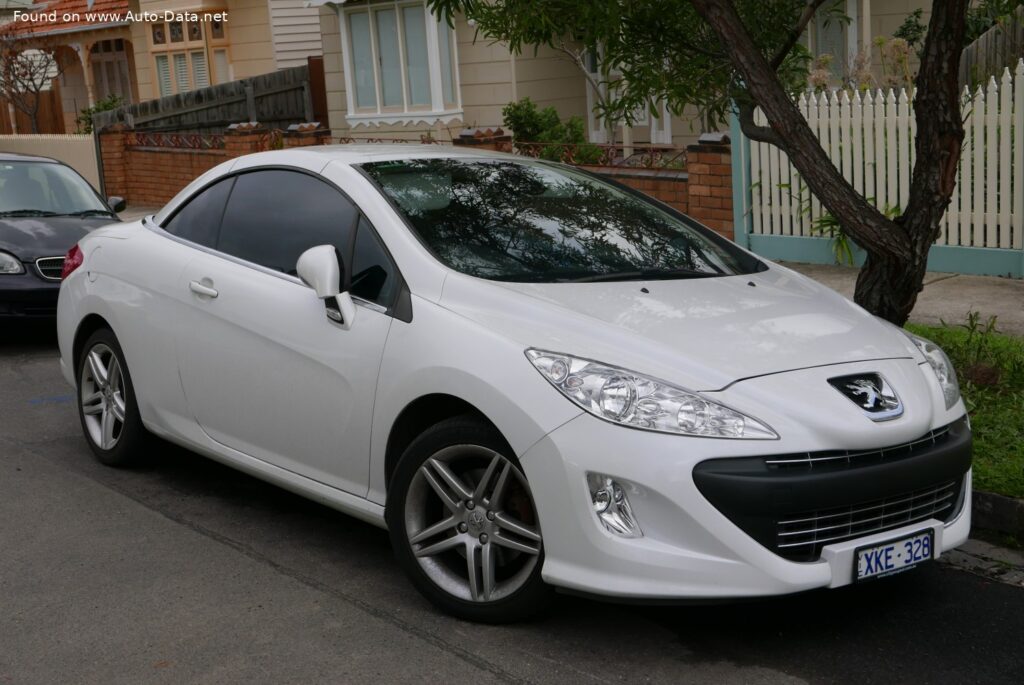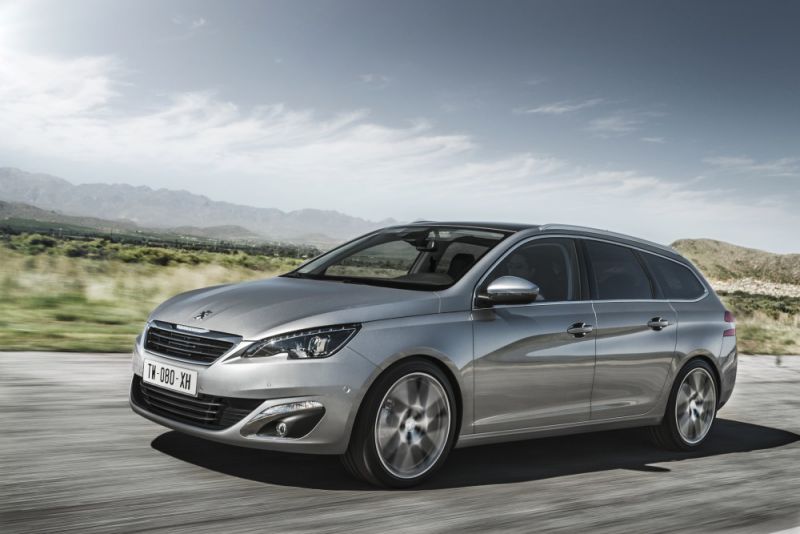
The Peugeot 308 SW II (Phase I), produced from 2013 to 2015, represents the second generation of Peugeot’s compact station wagon. Positioned as a practical and stylish family vehicle, the 308 SW competed in the European market against rivals like the Volkswagen Golf Estate, Ford Focus Estate, and Opel Astra Sports Tourer. While not officially sold in the United States, the 308 SW offered European consumers a blend of fuel efficiency, modern technology, and spaciousness, making it a popular choice for those needing a versatile vehicle. This article focuses on the 1.6 THP (155 horsepower) variant, a common engine choice for this model.
Peugeot 308 SW II (Phase I): Overview
The 308 SW II marked a significant step forward for Peugeot in terms of design and engineering. Building upon the success of the first-generation 308, the SW variant prioritized practicality with its extended roofline and increased cargo capacity. The Phase I models, produced between 2013 and 2015, established the core features and design language of the second-generation 308 SW. The 1.6 THP engine, a turbocharged gasoline direct injection unit, was a key component of the model’s appeal, offering a balance between performance and fuel economy.
Engine & Performance
The heart of the 308 SW II 1.6 THP is a 1.6-liter inline-3 cylinder turbocharged engine, designated as the 5FV EP6DT or EP6CDT. This engine produces 155 horsepower at 6000 rpm and 240 Nm (177.01 lb-ft) of torque at 1400 rpm. The direct injection system and turbocharger contribute to both its responsiveness and efficiency. Power per liter is rated at 97 hp/l. The engine is transversely mounted at the front of the vehicle.
Power is delivered to the front wheels via a 6-speed manual transmission. Acceleration from 0 to 100 km/h (0-62 mph) takes 12.2 seconds, while 0 to 60 mph is achieved in approximately 11.6 seconds. The vehicle has a maximum speed of 208 km/h (129.25 mph). The weight-to-power ratio is 9.3 kg/Hp, and the weight-to-torque ratio is 6 kg/Nm. These figures position the 308 SW 1.6 THP as a reasonably quick and efficient vehicle for everyday driving.
Design & Features
The Peugeot 308 SW II is a five-door, five-seat station wagon (estate). Its exterior design features a sloping roofline that extends to the rear, maximizing cargo space while maintaining a sleek profile. The Phase I models typically included features such as alloy wheels (17-inch in many trims), integrated fog lights, and a panoramic sunroof as optional extras.
Inside, the 308 SW offered a comfortable and well-equipped cabin. Standard features included air conditioning, power windows, and a basic audio system. Higher trim levels added features like a touchscreen infotainment system, navigation, and automatic climate control. Safety features, crucial for family vehicles, included ABS (Anti-lock Braking System), and multiple airbags. The SW’s primary strength lies in its practicality; the trunk offers a minimum of 610 liters (21.54 cu. ft.) of space, expanding to a substantial 1660 liters (58.62 cu. ft.) with the rear seats folded down.
Technical Specifications
| Brand | Peugeot |
| Model | 308 |
| Generation | 308 SW II (Phase I, 2013) |
| Type (Engine) | 1.6 THP (155 Hp) |
| Start of production | 2013 |
| End of production | 2015 |
| Powertrain Architecture | Internal Combustion engine |
| Body type | Station wagon (estate) |
| Seats | 5 |
| Doors | 5 |
| Fuel consumption (urban) | 7.9 l/100 km (29.8 US mpg, 35.8 UK mpg, 12.7 km/l) |
| Fuel consumption (extra urban) | 4.6 l/100 km (51.1 US mpg, 61.4 UK mpg, 21.7 km/l) |
| Fuel consumption (combined) | 5.8 l/100 km (40.6 US mpg, 48.7 UK mpg, 17.2 km/l) |
| CO2 emissions | 134 g/km |
| Fuel Type | Petrol (Gasoline) |
| Acceleration 0 – 100 km/h | 12.2 sec |
| Acceleration 0 – 62 mph | 12.2 sec |
| Acceleration 0 – 60 mph | 11.6 sec |
| Maximum speed | 208 km/h (129.25 mph) |
| Emission standard | Euro 6 |
| Weight-to-power ratio | 9.3 kg/Hp |
| Weight-to-torque ratio | 6 kg/Nm |
| Power | 155 Hp @ 6000 rpm |
| Torque | 240 Nm @ 1400 rpm (177.01 lb.-ft. @ 1400 rpm) |
| Engine layout | Front, Transverse |
| Engine Model/Code | 5FV EP6DT, EP6CDT |
| Engine displacement | 1598 cm3 (97.52 cu. in.) |
| Number of cylinders | 3 |
| Engine configuration | Inline |
| Number of valves per cylinder | 4 |
| Fuel injection system | Direct injection |
| Engine aspiration | Turbocharger, Intercooler |
| Engine oil capacity | 4.25 l (4.49 US qt | 3.74 UK qt) |
| Coolant | 6.4 l (6.76 US qt | 5.63 UK qt) |
| Kerb Weight | 1435 kg (3163.63 lbs.) |
| Max. weight | 1860 kg (4100.6 lbs.) |
| Max load | 425 kg (936.96 lbs.) |
| Trunk (boot) space – minimum | 610 l (21.54 cu. ft.) |
| Trunk (boot) space – maximum | 1660 l (58.62 cu. ft.) |
| Fuel tank capacity | 53 l (14 US gal | 11.66 UK gal) |
| Length | 4585 mm (180.51 in.) |
| Width | 1863 mm (73.35 in.) |
| Height | 1461/1472 mm (57.52 in.) |
| Wheelbase | 2730 mm (107.48 in.) |
| Front track | 1551/1563 mm (61.06 in.) |
| Rear (Back) track | 1546/1557 mm (60.87 in.) |
| Ride height (ground clearance) | 109 mm (4.29 in.) |
| Minimum turning circle (turning diameter) | 11.2 m (36.75 ft.) |
| Drivetrain Architecture | Front wheel drive |
| Number of gears and type of gearbox | 6 gears, manual transmission |
| Front suspension | Independent, type McPherson with coil spring and anti-roll bar |
| Rear suspension | Semi-independent, coil spring |
| Front brakes | Ventilated discs |
| Rear brakes | Disc |
| Assisting systems | ABS (Anti-lock braking system) |
| Steering type | Steering rack and pinion |
| Tires size | 225/45 R17 |
| Wheel rims size | 17 |
The Peugeot 308 SW II (Phase I) 1.6 THP offered a compelling package for European buyers seeking a practical, efficient, and stylish station wagon. While never officially available in the US market, it represents a significant example of Peugeot’s engineering and design capabilities during the early 2010s.