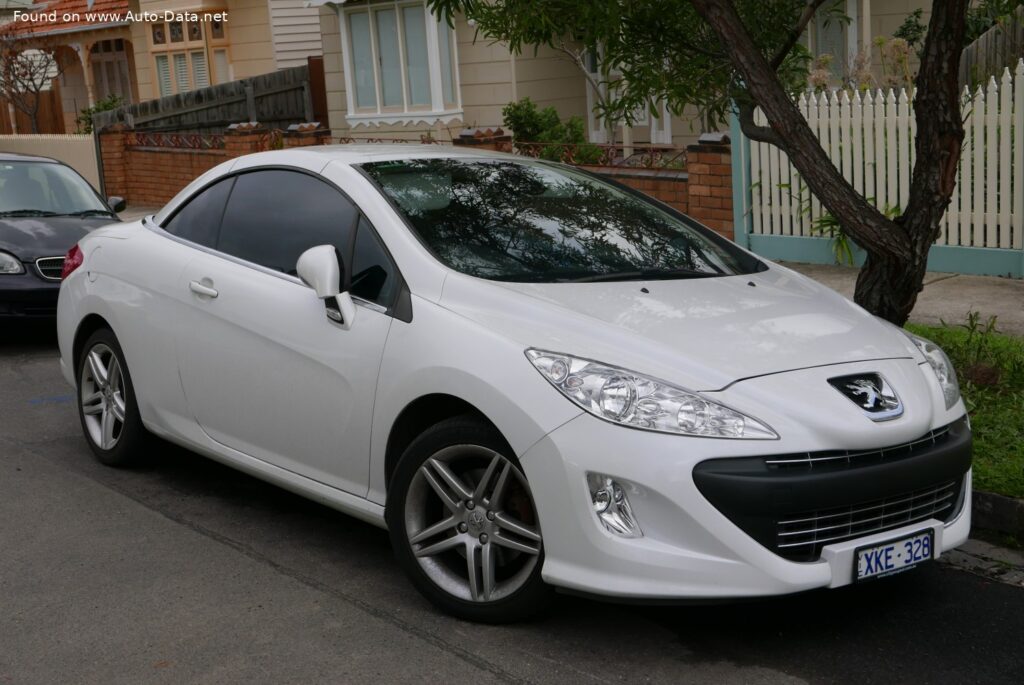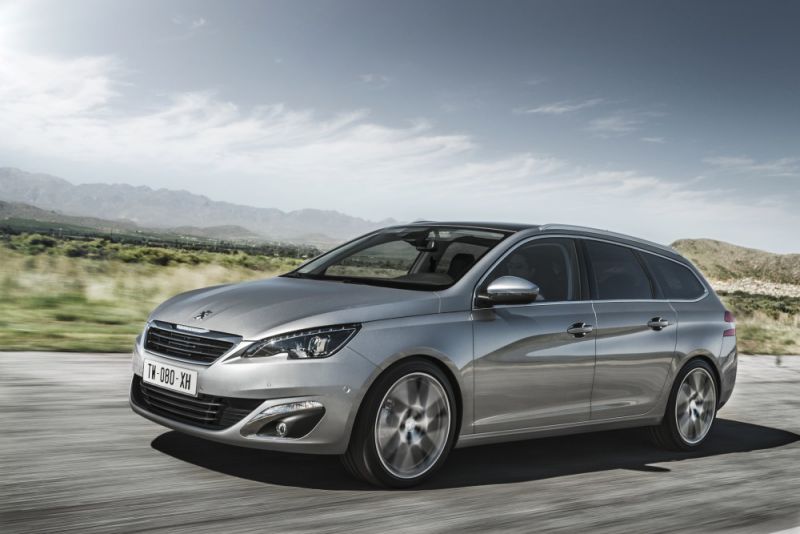
The Peugeot 308 SW II (Phase I), produced from 2014 to 2017, represents the second generation of Peugeot’s compact station wagon. Positioned as a practical and stylish alternative to traditional hatchbacks, the 308 SW aimed to provide increased versatility without sacrificing the driving experience. This particular variant, equipped with a 2.0 BlueHDi engine producing 150 horsepower and paired with an automatic transmission, was a popular choice in European markets, offering a balance of fuel efficiency, performance, and space. While not officially sold in the United States, the 308 SW exemplifies the European preference for efficient diesel engines and practical, family-oriented vehicle designs.
Peugeot 308 SW II: A Detailed Overview
The 308 SW II built upon the success of its predecessor, introducing a new platform and a more refined design. The “SW” designation signifies “Station Wagon,” highlighting the vehicle’s focus on cargo capacity and practicality. The Phase I models, produced between 2014 and 2017, established the core features and design language of the second-generation 308 SW. This model competed with other European station wagons like the Volkswagen Golf Variant, Ford Focus Estate, and Opel Astra Sports Tourer, offering a compelling package for buyers seeking a versatile and economical vehicle.
Engine & Performance
The heart of this 308 SW variant is the 2.0 BlueHDi engine, a four-cylinder diesel powerplant. This engine delivers 150 horsepower at 3750 rpm and a substantial 370 Nm (272.9 lb.-ft.) of torque at 2000 rpm. The use of a turbocharger and intercooler enhances both power and efficiency. The engine utilizes a diesel commonrail fuel injection system, contributing to refined combustion and reduced emissions. Paired with a six-speed automatic transmission, the 308 SW achieves a 0-100 km/h (0-62 mph) acceleration time of 8.9 seconds, and a 0-60 mph time of 8.5 seconds. Its maximum speed is electronically limited to 212 km/h (131.73 mph). A key feature of the BlueHDi engine is its compliance with Euro 6 emission standards, incorporating a particulate filter to minimize harmful emissions. The engine’s power-to-weight ratio is 9.5 kg/Hp, and the torque-to-weight ratio is 3.8 kg/Nm.
Design & Features
The Peugeot 308 SW II Phase I is a five-door, five-seat station wagon. Its exterior design emphasizes flowing lines and a modern aesthetic. The SW body style provides a significantly larger cargo area compared to the hatchback version. With the rear seats up, the trunk offers a minimum of 610 liters (21.54 cu. ft.) of space, expanding to a generous 1660 liters (58.62 cu. ft.) when the rear seats are folded down. The vehicle’s dimensions are 4585 mm (180.51 in.) in length, 1863 mm (73.35 in.) in width, and 1461/1472 mm (57.52 in.) in height. The wheelbase measures 2730 mm (107.48 in.).
Inside, the 308 SW features a driver-focused cabin with a compact steering wheel and a raised center console. Standard features typically included air conditioning, power windows, central locking, and an audio system. Safety features, crucial for a family vehicle, included ABS (Anti-lock Braking System), electronic stability control, and multiple airbags. The vehicle’s kerb weight is 1420 kg (3130.56 lbs), with a maximum permissible weight of 2000 kg (4409.25 lbs). Ride height (ground clearance) is 109 mm (4.29 in.).
Technical Specifications
| Brand | Peugeot |
| Model | 308 |
| Generation | 308 SW II (Phase I, 2013) |
| Type (Engine) | 2.0 BlueHDi (150 Hp) Automatic |
| Start of production | 2014 |
| End of production | 2017 |
| Powertrain Architecture | Internal Combustion engine |
| Body type | Station wagon (estate) |
| Seats | 5 |
| Doors | 5 |
| Fuel consumption (urban) | 4.8 l/100 km (49 US mpg, 58.9 UK mpg, 20.8 km/l) |
| Fuel consumption (extra urban) | 3.8 l/100 km (61.9 US mpg, 74.3 UK mpg, 26.3 km/l) |
| Fuel consumption (combined) | 4.1 l/100 km (57.4 US mpg, 68.9 UK mpg, 24.4 km/l) |
| CO2 emissions | 108 g/km |
| Fuel Type | Diesel |
| Acceleration 0 – 100 km/h | 8.9 sec |
| Acceleration 0 – 62 mph | 8.9 sec |
| Acceleration 0 – 60 mph | 8.5 sec |
| Maximum speed | 212 km/h (131.73 mph) |
| Emission standard | Euro 6 |
| Weight-to-power ratio | 9.5 kg/Hp |
| Weight-to-torque ratio | 3.8 kg/Nm |
| Power | 150 Hp @ 3750 rpm |
| Torque | 370 Nm @ 2000 rpm (272.9 lb.-ft. @ 2000 rpm) |
| Engine layout | Front, Transverse |
| Engine Model/Code | AHX DW10FD |
| Engine displacement | 1997 cm3 (121.86 cu. in.) |
| Number of cylinders | 4 |
| Engine configuration | Inline |
| Number of valves per cylinder | 4 |
| Fuel injection system | Diesel Commonrail |
| Engine aspiration | Turbocharger, Intercooler |
| Engine oil capacity | 4.5 l (4.76 US qt | 3.96 UK qt) |
| Coolant | 9 l (9.51 US qt | 7.92 UK qt) |
| Kerb Weight | 1420 kg (3130.56 lbs.) |
| Max. weight | 2000 kg (4409.25 lbs.) |
| Max load | 580 kg (1278.68 lbs.) |
| Trunk (boot) space – minimum | 610 l (21.54 cu. ft.) |
| Trunk (boot) space – maximum | 1660 l (58.62 cu. ft.) |
| Fuel tank capacity | 53 l (14 US gal | 11.66 UK gal) |
| Length | 4585 mm (180.51 in.) |
| Width | 1863 mm (73.35 in.) |
| Height | 1461/1472 mm (57.52 in.) |
| Wheelbase | 2730 mm (107.48 in.) |
| Front track | 1551/1563 mm (61.06 in.) |
| Rear (Back) track | 1546/1557 mm (60.87 in.) |
| Ride height (ground clearance) | 109 mm (4.29 in.) |
| Minimum turning circle (turning diameter) | 11.2 m (36.75 ft.) |
| Drivetrain Architecture | Front wheel drive |
| Number of gears and type of gearbox | 6 gears, automatic transmission |
| Front suspension | Independent, type McPherson with coil spring and anti-roll bar |
| Rear suspension | Semi-independent, coil spring |
| Front brakes | Ventilated discs |
| Rear brakes | Disc |
| Tires size | 205/55 R16 V |
| Wheel rims size | 16 |