The Peugeot 308 SW II (Phase II), produced from 2017 to 2018, represents a refinement of the second-generation 308 station wagon. This model, powered by the 1.2 PureTech engine producing 110 horsepower, was primarily aimed at the European market, where compact station wagons – known as ‘estate’ cars – remain a popular choice for families and individuals seeking practicality and fuel efficiency. While not officially sold in the United States, the 308 SW offers a compelling example of European automotive engineering focused on maximizing space and minimizing running costs. The Phase II update brought styling revisions and technological enhancements to an already well-regarded platform.
Peugeot 308 SW II (Phase II): Overview
The 308 SW II (Phase II) 1.2 PureTech (110 Hp) occupies the compact family car segment, specifically the station wagon (estate) sub-segment. It’s designed to compete with vehicles like the Volkswagen Golf Estate, Ford Focus Estate, and Skoda Octavia Combi. The ‘SW’ designation within the Peugeot lineup denotes the station wagon body style, emphasizing its increased cargo capacity and versatility compared to the hatchback version. The Phase II update, introduced in 2017, included minor cosmetic changes, improvements to the infotainment system, and refinements to the engine for improved efficiency and reduced emissions.
Engine & Performance
The heart of the 308 SW II 1.2 PureTech (110 Hp) is the EB2DT 1.2-liter turbocharged three-cylinder gasoline engine. This engine, part of Peugeot’s ‘PureTech’ family, is known for its combination of efficiency and surprisingly strong performance. Despite its small displacement of 1199 cm³ (73.17 cubic inches), the engine delivers 110 horsepower at 5500 rpm and 205 Nm (151.2 lb.-ft.) of torque at 1500 rpm. This torque output, available from relatively low engine speeds, provides good responsiveness for everyday driving. The engine utilizes direct fuel injection and a turbocharger with an intercooler to optimize power and efficiency. Power is delivered to the front wheels via a five-speed manual transmission. Acceleration from 0 to 100 km/h (0-62 mph) takes between 11.6 and 12.4 seconds, with a top speed of 188 km/h (116.82 mph). Fuel economy is a strong point, with combined cycle figures ranging from 4.7 to 4.8 liters per 100 kilometers (50-49 US mpg or 60.1-58.9 UK mpg). CO2 emissions are rated between 109 and 111 g/km, meeting Euro 6 emission standards.
Design & Features
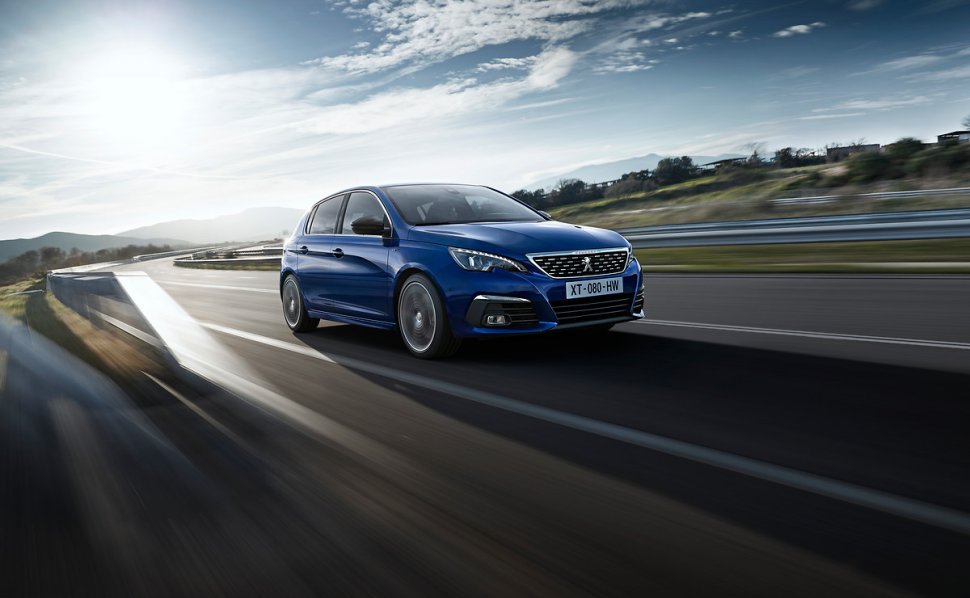
The Peugeot 308 SW II (Phase II) is a five-door, five-seat station wagon. Its exterior design is characterized by a sleek profile, a sloping roofline, and Peugeot’s signature styling cues, including a prominent grille and distinctive headlight design. The Phase II update brought subtle changes to the front fascia, including a revised grille and bumper. The interior is designed with a focus on ergonomics and practicality. The dashboard features a clean layout, and the infotainment system includes a touchscreen display. Key features include ABS (Anti-lock Braking System), electric power steering, and a range of safety equipment. The SW body style provides a significant advantage in terms of cargo space. With the rear seats up, the trunk offers a minimum of 610 liters (21.54 cubic feet) of space, expanding to a maximum of 1660 liters (58.62 cubic feet) with the rear seats folded down. The vehicle’s kerb weight ranges from 1190 to 1392 kg (2623.5 to 3068.83 lbs), depending on the specific trim level and options.
Technical Specifications
| Brand | Peugeot |
| Model | 308 |
| Generation | 308 SW II (Phase II, 2017) |
| Type (Engine) | 1.2 PureTech (110 Hp) |
| Start of production | 2017 |
| End of production | 2018 |
| Powertrain Architecture | Internal Combustion engine |
| Body type | Station wagon (estate) |
| Seats | 5 |
| Doors | 5 |
| Fuel consumption (urban) | 6 l/100 km (39.2 US mpg, 47.1 UK mpg, 16.7 km/l) |
| Fuel consumption (extra urban) | 4.0-4.1 l/100 km (58.8 – 57.4 US mpg, 70.6 – 68.9 UK mpg, 25 – 24.4 km/l) |
| Fuel consumption (combined) | 4.7-4.8 l/100 km (50 – 49 US mpg, 60.1 – 58.9 UK mpg, 21.3 – 20.8 km/l) |
| CO2 emissions | 109-111 g/km |
| Fuel Type | Petrol (Gasoline) |
| Acceleration 0 – 100 km/h | 11.6-12.4 sec |
| Acceleration 0 – 62 mph | 11.6-12.4 sec |
| Acceleration 0 – 60 mph | 11 sec |
| Maximum speed | 188 km/h (116.82 mph) |
| Emission standard | Euro 6 |
| Weight-to-power ratio | 10.8 kg/Hp, 92.4 Hp/tonne |
| Weight-to-torque ratio | 5.8 kg/Nm, 172.3 Nm/tonne |
| Power | 110 Hp @ 5500 rpm |
| Power per litre | 91.7 Hp/l |
| Torque | 205 Nm @ 1500 rpm (151.2 lb.-ft. @ 1500 rpm) |
| Engine layout | Front, Transverse |
| Engine Model/Code | EB2DT |
| Engine displacement | 1199 cm3 (73.17 cu. in.) |
| Number of cylinders | 3 |
| Engine configuration | Inline |
| Number of valves per cylinder | 4 |
| Fuel injection system | Direct injection |
| Engine aspiration | Turbocharger, Intercooler |
| Engine oil capacity | 3.5 l (3.7 US qt | 3.08 UK qt) |
| Kerb Weight | 1190-1392 kg (2623.5 – 3068.83 lbs.) |
| Max. weight | 1825 kg (4023.44 lbs.) |
| Max load | 433-635 kg (954.6 – 1399.94 lbs.) |
| Trunk (boot) space – minimum | 610 l (21.54 cu. ft.) |
| Trunk (boot) space – maximum | 1660 l (58.62 cu. ft.) |
| Fuel tank capacity | 52.5 l (13.87 US gal | 11.55 UK gal) |
| Max. roof load | 80 kg (176.37 lbs.) |
| Permitted trailer load with brakes (12%) | 1100 kg (2425.08 lbs.) |
| Permitted trailer load without brakes | 630 kg (1388.91 lbs.) |
| Permitted towbar download | 71 kg (156.53 lbs.) |
| Length | 4585 mm (180.51 in.) |
| Width | 1804 mm (71.02 in.) |
| Width including mirrors | 2043 mm (80.43 in.) |
| Height | 1472 mm (57.95 in.) |
| Wheelbase | 2730 mm (107.48 in.) |
| Front track | 1551 mm (61.06 in.) |
| Rear (Back) track | 1546 mm (60.87 in.) |
| Front overhang | 863 mm (33.98 in.) |
| Rear overhang | 992 mm (39.06 in.) |
| Minimum turning circle (turning diameter) | 10.4 m (34.12 ft.) |
| Drivetrain Architecture | Front wheel drive |
| Number of gears and type of gearbox | 5 gears, manual transmission |
| Front suspension | Independent type McPherson |
| Rear suspension | Semi-independent, coil spring, Torsion |
| Front brakes | Ventilated discs |
| Rear brakes | Disc |
| Tires size | 195/65 R15 88H; 205/55 R16 88H; 225/45 R17 88H |
| Wheel rims size | 15; 16; 17 |