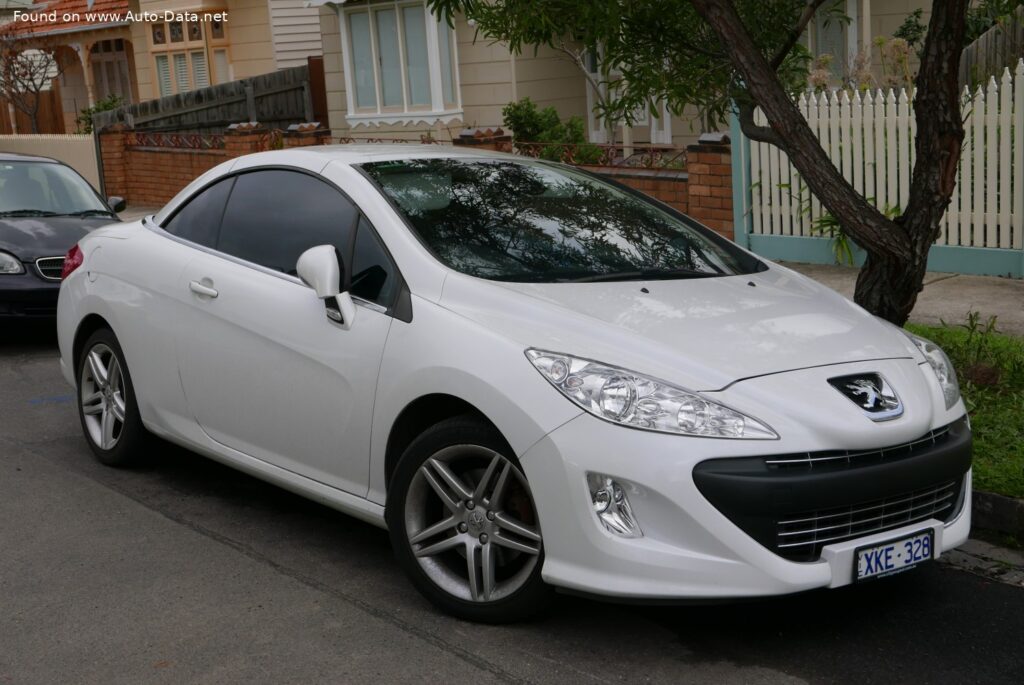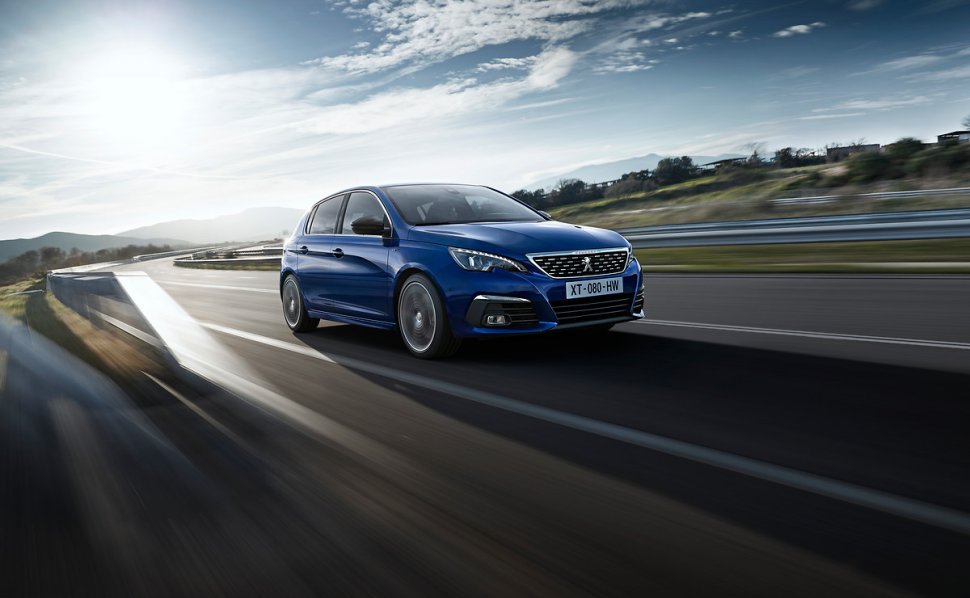
The Peugeot 308 SW II (Phase II), produced from 2017 to 2018, represents a significant iteration of Peugeot’s compact estate car. This model, specifically the 2.0 BlueHDi variant with 150 horsepower, was primarily aimed at the European market, where station wagons (known as estates or SWs – SportWagon in Peugeot terminology) maintain considerable popularity. The 308 SW II offered a practical and stylish alternative to traditional hatchbacks, combining a spacious interior with Peugeot’s characteristic design flair and efficient diesel technology. While not officially sold in the United States, understanding its specifications provides insight into the preferences and engineering standards of the European automotive landscape.
Peugeot 308 SW II: A Detailed Overview
The 308 SW II, as part of the second generation of the 308 family, built upon the success of its predecessor, offering improved refinement, technology, and fuel efficiency. The Phase II update, introduced in 2017, brought subtle styling revisions and enhancements to the vehicle’s interior and equipment levels. The SW body style, a station wagon, distinguishes itself from the standard hatchback by providing a significantly larger cargo capacity, making it ideal for families and those requiring ample space for luggage or equipment. The 2.0 BlueHDi 150 model was a popular choice, balancing performance with excellent fuel economy thanks to Peugeot’s advanced diesel engine technology.
Engine & Performance
The heart of the 308 SW II 2.0 BlueHDi 150 is a 2.0-liter inline four-cylinder diesel engine, designated AHR DW10FD. This engine produces 150 horsepower at 4,000 rpm and a substantial 370 Nm (272.9 lb.-ft.) of torque at 2,000 rpm. The engine utilizes a turbocharger and intercooler to enhance performance and efficiency. Power is delivered to the front wheels via a six-speed manual transmission. This configuration allows for a 0-100 km/h (0-62 mph) acceleration time of 9.2 seconds, and a 0-60 mph time of 8.7 seconds, with a maximum speed of 210 km/h (130.49 mph). The engine’s specific output is 75.1 horsepower per liter, demonstrating a good balance between displacement and power. A key feature of the BlueHDi engines is their advanced exhaust aftertreatment system, including a particulate filter, designed to minimize emissions and meet stringent Euro 6 emission standards. The weight-to-power ratio of 8.8 kg/Hp and weight-to-torque ratio of 3.6 kg/Nm contribute to a responsive driving experience.
Design & Features
The Peugeot 308 SW II is a five-door, five-seat station wagon. Its exterior design is characterized by a sleek profile, a sloping roofline, and Peugeot’s signature styling cues, including a prominent grille and distinctive headlight design. The SW variant extends the roofline rearward, creating a larger cargo area. Inside, the 308 SW II offers a comfortable and well-appointed cabin. The Phase II update included improvements to the infotainment system and interior trim materials. Key features include a spacious trunk with a minimum capacity of 610 liters (21.54 cu. ft.) which expands to 1660 liters (58.62 cu. ft.) with the rear seats folded down. Safety features, typical for a modern European vehicle, include ABS (Anti-lock Braking System), and a robust chassis designed for stability. The vehicle’s dimensions – 4585 mm (180.51 in.) in length, 1804 mm (71.02 in.) in width, and 1472 mm (57.95 in.) in height – position it squarely within the compact estate car segment. The electric power steering provides a light and precise driving experience.
Technical Specifications
| Brand | Peugeot |
| Model | 308 |
| Generation | 308 SW II (Phase II, 2017) |
| Type (Engine) | 2.0 BlueHDi (150 Hp) |
| Start of production | 2017 |
| End of production | 2018 |
| Powertrain Architecture | Internal Combustion engine |
| Body type | Station wagon (estate) |
| Seats | 5 |
| Doors | 5 |
| Fuel consumption (urban) | 4.6 l/100 km (51.1 US mpg, 61.4 UK mpg, 21.7 km/l) |
| Fuel consumption (extra urban) | 3.5 l/100 km (67.2 US mpg, 80.7 UK mpg, 28.6 km/l) |
| Fuel consumption (combined) | 3.9 l/100 km (60.3 US mpg, 72.4 UK mpg, 25.6 km/l) |
| CO2 emissions | 102 g/km |
| Fuel Type | Diesel |
| Acceleration 0 – 100 km/h | 9.2 sec |
| Acceleration 0 – 62 mph | 9.2 sec |
| Acceleration 0 – 60 mph | 8.7 sec |
| Maximum speed | 210 km/h (130.49 mph) |
| Emission standard | Euro 6 |
| Weight-to-power ratio | 8.8 kg/Hp, 114.1 Hp/tonne |
| Weight-to-torque ratio | 3.6 kg/Nm, 281.4 Nm/tonne |
| Power | 150 Hp @ 4000 rpm |
| Torque | 370 Nm @ 2000 rpm (272.9 lb.-ft. @ 2000 rpm) |
| Engine layout | Front, Transverse |
| Engine Model/Code | AHR DW10FD |
| Engine displacement | 1997 cm3 (121.86 cu. in.) |
| Number of cylinders | 4 |
| Engine configuration | Inline |
| Number of valves per cylinder | 4 |
| Fuel injection system | Diesel Commonrail |
| Engine aspiration | Turbocharger, Intercooler |
| Engine oil capacity | 6 l (6.34 US qt | 5.28 UK qt) |
| Coolant | 9 l (9.51 US qt | 7.92 UK qt) |
| Kerb Weight | 1315-1514 kg (2899.08 – 3337.8 lbs.) |
| Max. weight | 1970 kg (4343.11 lbs.) |
| Max load | 456-655 kg (1005.31 – 1444.03 lbs.) |
| Trunk (boot) space – minimum | 610 l (21.54 cu. ft.) |
| Trunk (boot) space – maximum | 1660 l (58.62 cu. ft.) |
| Fuel tank capacity | 52.5 l (13.87 US gal | 11.55 UK gal) |
| Max. roof load | 80 kg (176.37 lbs.) |
| Permitted trailer load with brakes (12%) | 1500 kg (3306.93 lbs.) |
| Permitted trailer load without brakes | 690 kg (1521.19 lbs.) |
| Permitted towbar download | 71 kg (156.53 lbs.) |
| Length | 4585 mm (180.51 in.) |
| Width | 1804 mm (71.02 in.) |
| Width including mirrors | 2043 mm (80.43 in.) |
| Height | 1472 mm (57.95 in.) |
| Wheelbase | 2730 mm (107.48 in.) |
| Front track | 1551 mm (61.06 in.) |
| Rear (Back) track | 1546 mm (60.87 in.) |
| Minimum turning circle (turning diameter) | 10.4 m (34.12 ft.) |
| Drivetrain Architecture | Front wheel drive |
| Number of gears and type of gearbox | 6 gears, manual transmission |
| Front suspension | Independent type McPherson |
| Rear suspension | Semi-independent, coil spring, Torsion |
| Front brakes | Ventilated discs |
| Rear brakes | Disc |
| Tires size | 225/45 R17 88V; 225/40 R18 88V |
| Wheel rims size | 17; 18 |