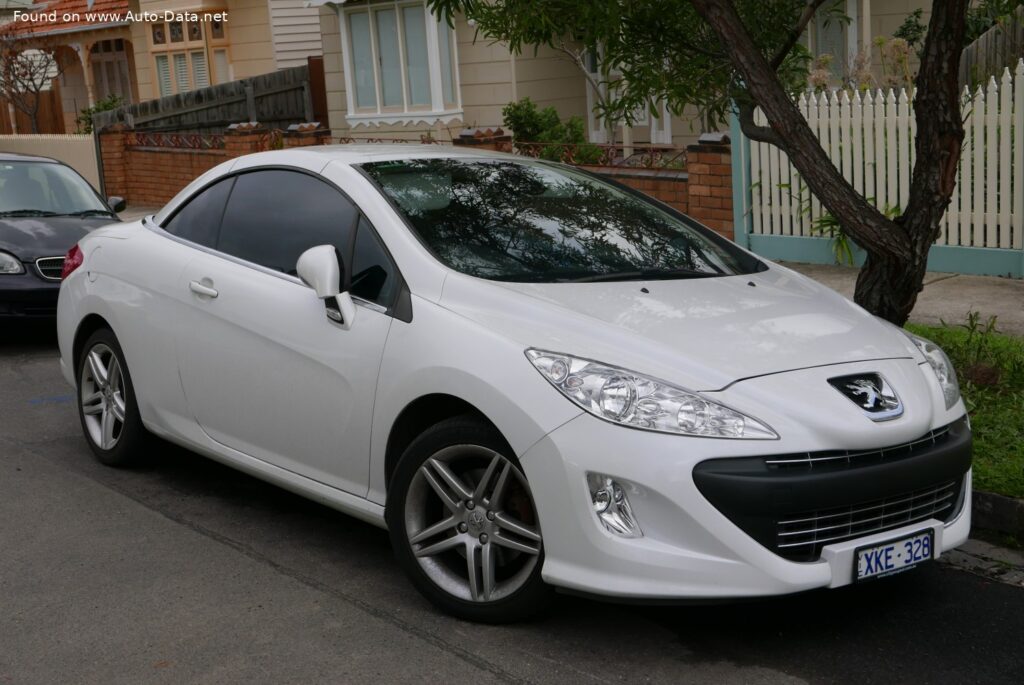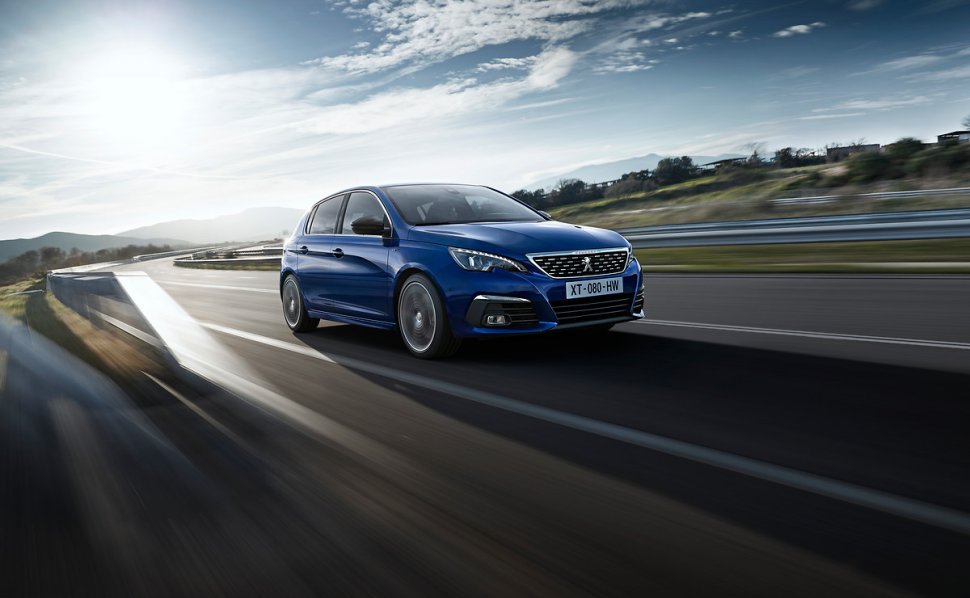
The Peugeot 308 SW II (Phase II), produced from 2017 to 2018, represents a significant iteration of Peugeot’s compact station wagon, known as an “estate” in many markets. This model, specifically the 2.0 BlueHDi variant with 150 horsepower and an automatic transmission, was primarily aimed at the European market, where the station wagon body style remains highly popular. While not officially sold in the United States, the 308 SW competes with vehicles like the Volkswagen Golf SportWagen and Ford Focus Wagon in terms of size and functionality. The Phase II update brought styling refinements and technological upgrades to an already competitive vehicle.
Peugeot 308 SW II (Phase II): Overview
The 308 SW II is part of the second generation of the 308 family, launched in 2013. The “SW” designation signifies the station wagon body style, offering increased cargo capacity and practicality compared to the hatchback version. The Phase II facelift, introduced in 2017, included changes to the front grille, headlights, and interior trim, along with updated safety features and engine options. The 2.0 BlueHDi engine was a key component of Peugeot’s efforts to improve fuel efficiency and reduce emissions, utilizing advanced diesel technology.
Engine & Performance
The heart of the 308 SW II 2.0 BlueHDi is a 1997 cc (121.86 cu. in.) inline-four cylinder diesel engine. This engine produces 150 horsepower at 4000 rpm and a substantial 370 Nm (272.9 lb.-ft.) of torque at 2000 rpm. The engine features a turbocharger and intercooler to enhance performance and efficiency. Power is delivered to the front wheels via a six-speed automatic transmission. This powertrain configuration allows for a 0-100 km/h (0-62 mph) acceleration time of 8.9 seconds, and a 0-60 mph time of 8.5 seconds, with a maximum speed of 209 km/h (129.87 mph). The engine’s specific output is 75.1 horsepower per liter, demonstrating a focus on maximizing power from a relatively small displacement. The inclusion of a particulate filter underscores Peugeot’s commitment to meeting stringent Euro 6 emission standards.
Design & Features
The Peugeot 308 SW II Phase II is a five-door, five-seat station wagon. Its exterior design emphasizes a sleek and modern aesthetic, with flowing lines and a distinctive front grille. The SW body style provides a generous 610 liters (21.54 cu. ft.) of trunk space with the rear seats up, expanding to a substantial 1660 liters (58.62 cu. ft.) when the rear seats are folded down. The Phase II update brought subtle but noticeable changes to the exterior, including revised headlight designs and a more prominent Peugeot emblem. Inside, the 308 SW II features a driver-focused cockpit with a compact steering wheel and a user-friendly infotainment system. Safety features include ABS (Anti-lock Braking System) and a range of driver-assistance systems, reflecting the increasing importance of safety technology in modern vehicles. The vehicle’s kerb weight ranges from 1420 to 1552 kg (3130.56 to 3421.57 lbs.), contributing to its balanced handling characteristics.
Technical Specifications
| Brand | Peugeot |
| Model | 308 |
| Generation | 308 SW II (Phase II, 2017) |
| Type (Engine) | 2.0 BlueHDi (150 Hp) Automatic |
| Start of production | 2017 |
| End of production | 2018 |
| Powertrain Architecture | Internal Combustion engine |
| Body type | Station wagon (estate) |
| Seats | 5 |
| Doors | 5 |
| Fuel consumption (urban) | 5 l/100 km (47 US mpg, 56.5 UK mpg, 20 km/l) |
| Fuel consumption (extra urban) | 3.8 l/100 km (61.9 US mpg, 74.3 UK mpg, 26.3 km/l) |
| Fuel consumption (combined) | 4.3 l/100 km (54.7 US mpg, 65.7 UK mpg, 23.3 km/l) |
| CO2 emissions | 112 g/km |
| Fuel Type | Diesel |
| Acceleration 0 – 100 km/h | 8.9 sec |
| Acceleration 0 – 62 mph | 8.9 sec |
| Acceleration 0 – 60 mph | 8.5 sec |
| Maximum speed | 209 km/h (129.87 mph) |
| Emission standard | Euro 6 |
| Weight-to-power ratio | 9.5 kg/Hp, 105.6 Hp/tonne |
| Weight-to-torque ratio | 3.8 kg/Nm, 260.6 Nm/tonne |
| Power | 150 Hp @ 4000 rpm |
| Power per litre | 75.1 Hp/l |
| Torque | 370 Nm @ 2000 rpm (272.9 lb.-ft. @ 2000 rpm) |
| Engine layout | Front, Transverse |
| Engine Model/Code | AHR DW10FD |
| Engine displacement | 1997 cm3 (121.86 cu. in.) |
| Number of cylinders | 4 |
| Engine configuration | Inline |
| Number of valves per cylinder | 4 |
| Fuel injection system | Diesel Commonrail |
| Engine aspiration | Turbocharger, Intercooler |
| Engine oil capacity | 6 l (6.34 US qt | 5.28 UK qt) |
| Coolant | 9 l (9.51 US qt | 7.92 UK qt) |
| Kerb Weight | 1420-1552 kg (3130.56 – 3421.57 lbs.) |
| Max. weight | 2000 kg (4409.25 lbs.) |
| Max load | 448-580 kg (987.67 – 1278.68 lbs.) |
| Trunk (boot) space – minimum | 610 l (21.54 cu. ft.) |
| Trunk (boot) space – maximum | 1660 l (58.62 cu. ft.) |
| Fuel tank capacity | 52.5 l (13.87 US gal | 11.55 UK gal) |
| Max. roof load | 80 kg (176.37 lbs.) |
| Permitted trailer load with brakes (12%) | 1400 kg (3086.47 lbs.) |
| Permitted trailer load without brakes | 740 kg (1631.42 lbs.) |
| Permitted towbar download | 71 kg (156.53 lbs.) |
| Length | 4585 mm (180.51 in.) |
| Width | 1804 mm (71.02 in.) |
| Width including mirrors | 2043 mm (80.43 in.) |
| Height | 1472 mm (57.95 in.) |
| Wheelbase | 2730 mm (107.48 in.) |
| Front track | 1551 mm (61.06 in.) |
| Rear (Back) track | 1546 mm (60.87 in.) |
| Minimum turning circle (turning diameter) | 10.4 m (34.12 ft.) |
| Drivetrain Architecture | Front wheel drive |
| Number of gears and type of gearbox | 6 gears, automatic transmission |
| Front suspension | Independent type McPherson |
| Rear suspension | Semi-independent, coil spring, Torsion |
| Front brakes | Ventilated discs |
| Rear brakes | Disc |
| Tires size | 225/45 R17 88V; 225/40 R18 88V |
| Wheel rims size | 17; 18 |