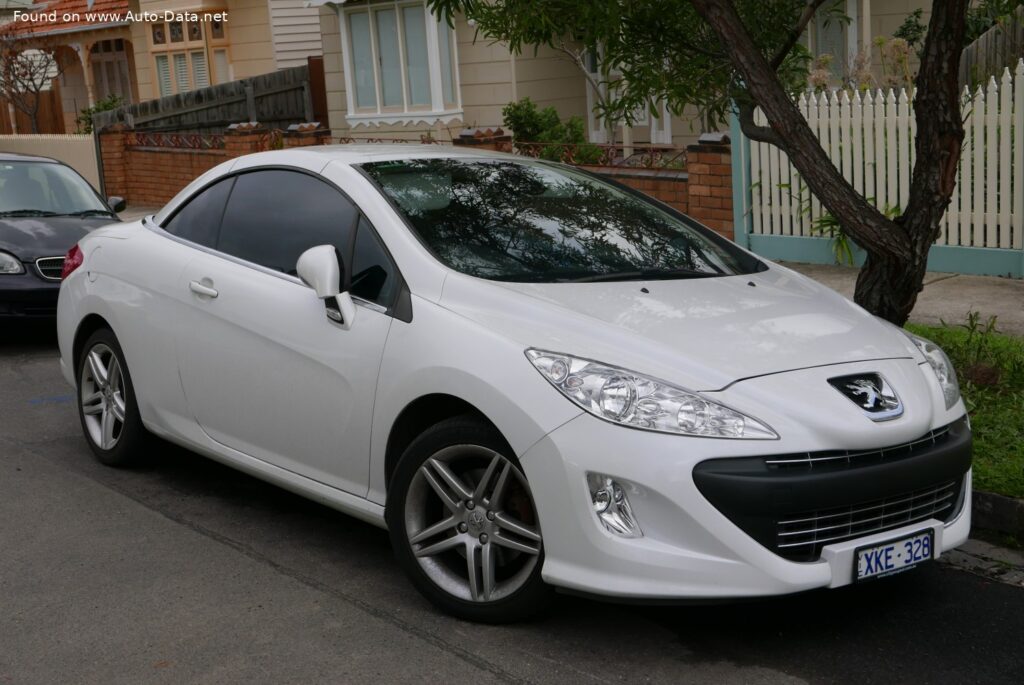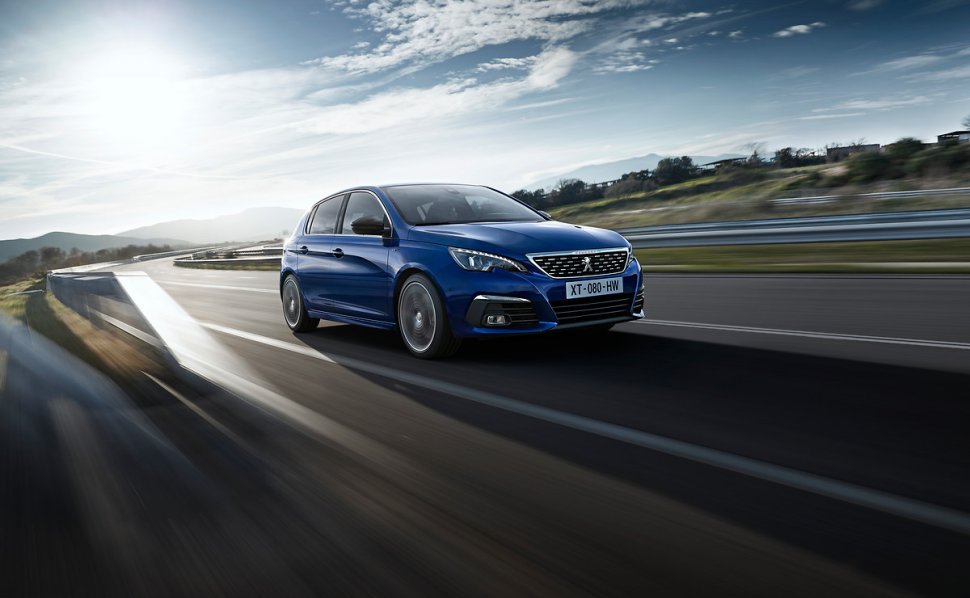
The Peugeot 308 SW II (Phase II), produced from 2017 to 2018, represents a refinement of the second-generation 308 station wagon. This model, particularly the GT 2.0 BlueHDi variant with its 180 horsepower engine and automatic transmission, was primarily aimed at the European market, where compact station wagons – known as estates – remain a popular body style. While not officially sold in the United States, the 308 SW offers a compelling blend of practicality, efficiency, and driving dynamics that exemplifies modern European automotive engineering. It competes with vehicles like the Volkswagen Golf Variant and Ford Focus Wagon in its segment.
Peugeot 308 SW II GT 2.0 BlueHDi: An Overview
The Phase II update brought styling revisions and technological enhancements to the 308 SW, further solidifying its position as a competitive offering in the crowded compact family car market. The “SW” designation signifies the station wagon body style, offering increased cargo capacity and versatility compared to the hatchback version. The GT trim level denotes a higher level of equipment and performance, featuring a more powerful engine and sport-tuned suspension. The 2.0 BlueHDi engine is a diesel powerplant designed to meet stringent Euro 6 emissions standards, prioritizing fuel efficiency and reduced environmental impact.
Engine & Performance
The heart of the 308 SW GT 2.0 BlueHDi is a 2.0-liter inline-four cylinder diesel engine, designated AHW DW10FC. This engine produces 180 horsepower at 3750 rpm and a substantial 400 Nm (295 lb-ft) of torque at 2000 rpm. This torque output provides strong acceleration and effortless cruising, particularly beneficial for long-distance journeys and when the vehicle is fully loaded. The engine features a turbocharger and intercooler to optimize performance and efficiency. Power is delivered to the front wheels via an eight-speed automatic transmission, contributing to smooth gear changes and responsive driving. The 308 SW GT 2.0 BlueHDi achieves a 0-100 km/h (0-62 mph) time of 8.4 seconds and a maximum speed of 223 km/h (138.57 mph). Fuel economy is a key strength, with combined cycle figures of 4.6 l/100 km (51.1 US mpg), and CO2 emissions of 120 g/km, adhering to Euro 6 emission standards.
Design & Features
The Peugeot 308 SW II is a five-door, five-seat station wagon. Its exterior design is characterized by a sleek profile, a sloping roofline, and Peugeot’s signature styling cues, including a prominent grille and distinctive headlight design. The Phase II update included minor cosmetic changes, such as revised bumpers and lighting elements. Inside, the 308 SW offers a modern and well-appointed cabin. The GT trim level typically includes features such as sport seats, aluminum pedals, and unique interior trim. A key feature of the SW is its spacious cargo area, offering 610 liters (21.54 cu ft) of space with the rear seats up and expanding to 1660 liters (58.62 cu ft) with the seats folded down. Safety features include ABS, electronic stability control, and multiple airbags. The vehicle’s dimensions are 4585 mm (180.51 in) in length, 1804 mm (71.02 in) in width, and 1457 mm (57.36 in) in height. The 308 SW prioritizes practicality and comfort, making it a suitable choice for families and individuals who require a versatile vehicle.
Technical Specifications
| Brand | Peugeot |
| Model | 308 |
| Generation | 308 SW II (Phase II, 2017) |
| Type (Engine) | GT 2.0 BlueHDi (180 Hp) Automatic |
| Start of production | 2017 |
| End of production | 2018 |
| Powertrain Architecture | Internal Combustion engine |
| Body type | Station wagon (estate) |
| Seats | 5 |
| Doors | 5 |
| Fuel consumption (urban) | 5.1 l/100 km (46.1 US mpg) |
| Fuel consumption (extra urban) | 4.2 l/100 km (56 US mpg) |
| Fuel consumption (combined) | 4.6 l/100 km (51.1 US mpg) |
| CO2 emissions | 120 g/km |
| Fuel Type | Diesel |
| Acceleration 0 – 100 km/h | 8.4 sec |
| Acceleration 0 – 62 mph | 8.4 sec |
| Acceleration 0 – 60 mph | 8 sec |
| Maximum speed | 223 km/h (138.57 mph) |
| Emission standard | Euro 6 |
| Weight-to-power ratio | 7.9 kg/Hp |
| Weight-to-torque ratio | 3.6 kg/Nm |
| Power | 180 Hp @ 3750 rpm |
| Torque | 400 Nm @ 2000 rpm (295.02 lb.-ft. @ 2000 rpm) |
| Engine layout | Front, Transverse |
| Engine Model/Code | AHW DW10FC |
| Engine displacement | 1997 cm3 (121.86 cu. in.) |
| Number of cylinders | 4 |
| Engine configuration | Inline |
| Number of valves per cylinder | 4 |
| Fuel injection system | Diesel Commonrail |
| Engine aspiration | Turbocharger, Intercooler |
| Engine oil capacity | 5 l (5.28 US qt | 4.4 UK qt) |
| Kerb Weight | 1425 kg (3141.59 lbs.) |
| Max. weight | 2020 kg (4453.34 lbs.) |
| Max load | 595 kg (1311.75 lbs.) |
| Trunk (boot) space – minimum | 610 l (21.54 cu. ft.) |
| Trunk (boot) space – maximum | 1660 l (58.62 cu. ft.) |
| Fuel tank capacity | 45 l (11.89 US gal | 9.9 UK gal) |
| Permitted trailer load with brakes (12%) | 1600 kg (3527.4 lbs.) |
| Length | 4585 mm (180.51 in.) |
| Width | 1804 mm (71.02 in.) |
| Width including mirrors | 2043 mm (80.43 in.) |
| Height | 1457 mm (57.36 in.) |
| Wheelbase | 2730 mm (107.48 in.) |
| Front track | 1559 mm (61.38 in.) |
| Rear track | 1553 mm (61.14 in.) |
| Front overhang | 863 mm (33.98 in.) |
| Rear overhang | 992 mm (39.06 in.) |
| Ride height (ground clearance) | 110 mm (4.33 in.) |
| Minimum turning circle | 11.2 m (36.75 ft.) |
| Drivetrain Architecture | Front wheel drive |
| Number of gears and type of gearbox | 8 gears, automatic transmission |
| Front suspension | Independent type McPherson |
| Rear suspension | Semi-independent, coil spring, Torsion |
| Front brakes | Ventilated discs |
| Rear brakes | Disc |
| Assisting systems | ABS (Anti-lock braking system) |
| Steering type | Steering rack and pinion |
| Power steering | Electric Steering |
| Tires size | 225/40 R18 W |
| Wheel rims size | 18 |