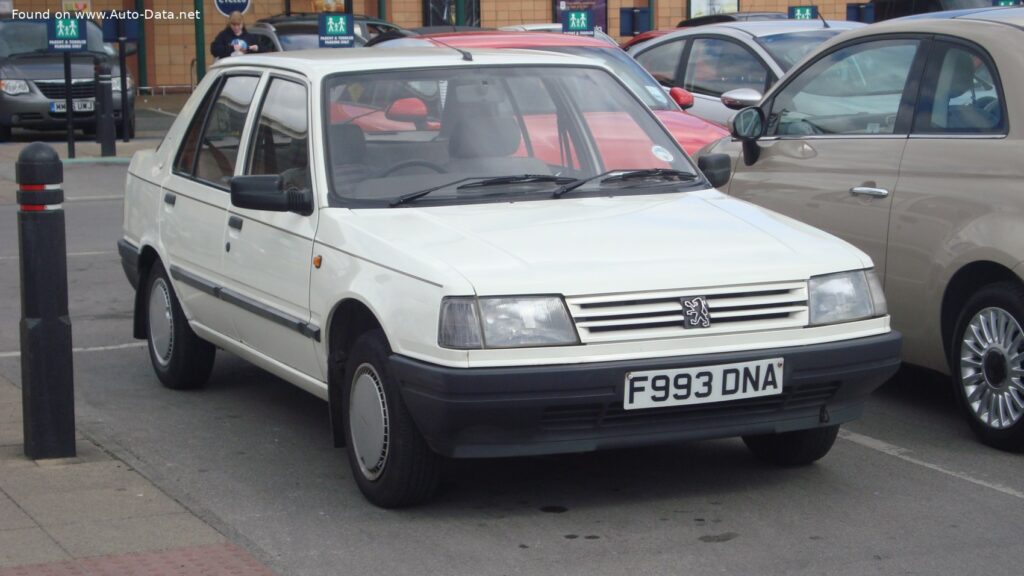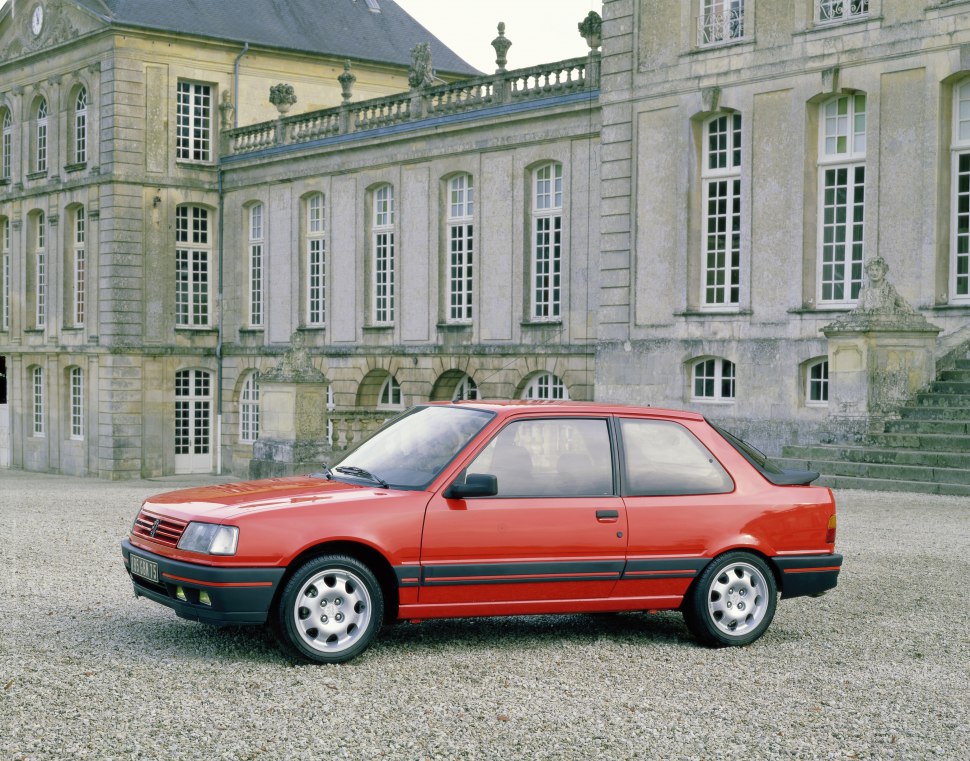
The Peugeot 309 is a small family car produced by the French manufacturer Peugeot between 1985 and 1993. Positioned as a replacement for the Peugeot 104, the 309 represented a significant step forward in design and engineering for the brand. Initially available as a three-door hatchback, a five-door version followed in 1986. This article focuses on the early models, specifically the 309 (10C, 10A) 3-door 1.6, produced from 1985 to 1987, and its technical specifications. The 309 was primarily a European market vehicle and wasn’t officially sold in the United States, but it offered a compelling package of practicality, affordability, and relatively modern styling for its time.
Peugeot 309: A European Compact
The Peugeot 309 was designed to compete in the increasingly popular compact hatchback segment in Europe. It aimed to offer a more sophisticated alternative to rivals like the Renault 9 and the Citroën BX. The 309 was notable for its use of a semi-trailing arm rear suspension, a design choice intended to balance handling and ride comfort. The early 309 models, like the 1.6 version detailed here, were characterized by their simple, functional design and focus on providing economical transportation. While not a performance car, the 309 offered a reasonable level of performance and practicality for everyday use.
Engine & Performance
The 1.6-liter engine powering the 309 (10C, 10A) is an inline four-cylinder unit, designated the XU51C. This engine produces 75 horsepower at 5,600 rpm and 125 Nm (92.2 lb.-ft.) of torque at 2,800 rpm. The engine’s power-to-liter ratio is 47.5 hp/l. It’s a naturally aspirated engine utilizing a carburetor fuel injection system, common for vehicles of this era. The engine’s transverse front-engine layout contributes to a front-wheel-drive configuration. Acceleration from 0 to 100 km/h (0-62 mph) takes 13.4 seconds, while 0 to 60 mph is achieved in approximately 12.7 seconds. The top speed is rated at 167 km/h (103.77 mph). The weight-to-power ratio is 11.5 kg/Hp, and the weight-to-torque ratio is 6.9 kg/Nm. Fuel economy is rated at 10.4 l/100 km (22.6 US mpg) in urban driving and 6.5 l/100 km (36.2 US mpg) in extra-urban conditions.
Design & Features
The Peugeot 309 is a three-door hatchback with a relatively boxy, yet aerodynamic, design. Its drag coefficient of 0.33 was respectable for the mid-1980s. The car seats five passengers and offers a practical interior layout. The trunk (boot) space ranges from 397 liters (14.02 cu. ft.) with the rear seats up to 1279 liters (45.17 cu. ft.) with the rear seats folded down. Safety features were relatively basic by modern standards, reflecting the era in which the car was designed. The 309 featured disc brakes on the front wheels and drum brakes on the rear. Steering is rack and pinion, providing reasonably precise control. The car rides on 165/70 R13 tires mounted on 13-inch wheel rims. The overall design prioritized functionality and affordability, making it a popular choice for budget-conscious buyers in Europe.
Technical Specifications
| Brand | Peugeot |
| Model | 309 |
| Generation | 309 (10C, 10A) 3-door |
| Type (Engine) | 1.6 (75 Hp) |
| Start of production | 1985 |
| End of production | 1987 |
| Powertrain Architecture | Internal Combustion engine |
| Body type | Hatchback |
| Seats | 5 |
| Doors | 3 |
| Fuel consumption (urban) | 10.4 l/100 km (22.6 US mpg, 27.2 UK mpg, 9.6 km/l) |
| Fuel consumption (extra urban) | 6.5 l/100 km (36.2 US mpg, 43.5 UK mpg, 15.4 km/l) |
| Fuel Type | Petrol (Gasoline) |
| Acceleration 0 – 100 km/h | 13.4 sec |
| Acceleration 0 – 62 mph | 13.4 sec |
| Acceleration 0 – 60 mph | 12.7 sec |
| Maximum speed | 167 km/h (103.77 mph) |
| Weight-to-power ratio | 11.5 kg/Hp |
| Weight-to-torque ratio | 6.9 kg/Nm |
| Power | 75 Hp @ 5600 rpm |
| Power per litre | 47.5 Hp/l |
| Torque | 125 Nm @ 2800 rpm (92.2 lb.-ft. @ 2800 rpm) |
| Engine layout | Front, Transverse |
| Engine Model/Code | XU51C |
| Engine displacement | 1580 cm3 (96.42 cu. in.) |
| Number of cylinders | 4 |
| Engine configuration | Inline |
| Cylinder Bore | 83 mm (3.27 in.) |
| Piston Stroke | 73 mm (2.87 in.) |
| Compression ratio | 8.65:1 |
| Number of valves per cylinder | 2 |
| Fuel injection system | Carburettor |
| Engine aspiration | Naturally aspirated |
| Valvetrain | OHC |
| Engine oil capacity | 5 l (5.28 US qt | 4.4 UK qt) |
| Coolant capacity | 7.5 l (7.93 US qt | 6.6 UK qt) |
| Kerb Weight | 862 kg (1900.38 lbs.) |
| Max. weight | 1310 kg (2888.06 lbs.) |
| Max load | 448 kg (987.67 lbs.) |
| Trunk (boot) space – minimum | 397 l (14.02 cu. ft.) |
| Trunk (boot) space – maximum | 1279 l (45.17 cu. ft.) |
| Fuel tank capacity | 55 l (14.53 US gal | 12.1 UK gal) |
| Permitted trailer load with brakes (12%) | 800 kg (1763.7 lbs.) |
| Length | 4051 mm (159.49 in.) |
| Width | 1628 mm (64.09 in.) |
| Height | 1380 mm (54.33 in.) |
| Wheelbase | 2469 mm (97.2 in.) |
| Front track | 1408 mm (55.43 in.) |
| Rear track | 1376 mm (54.17 in.) |
| Front overhang | 753 mm (29.65 in.) |
| Rear overhang | 829 mm (32.64 in.) |
| Drag coefficient (Cd) | 0.33 |
| Drivetrain Architecture | Front wheel drive |
| Number of gears and type of gearbox | 5 gears, manual transmission |
| Front suspension | Independent, type McPherson with coil spring and anti-roll bar |
| Rear suspension | Torsion |
| Front brakes | Disc |
| Rear brakes | Drum |
| Steering type | Steering rack and pinion |
| Tires size | 165/70 R13 |
| Wheel rims size | 13 |
The Peugeot 309, while not a groundbreaking vehicle, represented a solid and dependable option in the European compact car market. Its blend of practicality, affordability, and reasonable performance made it a popular choice for many buyers during its production run.