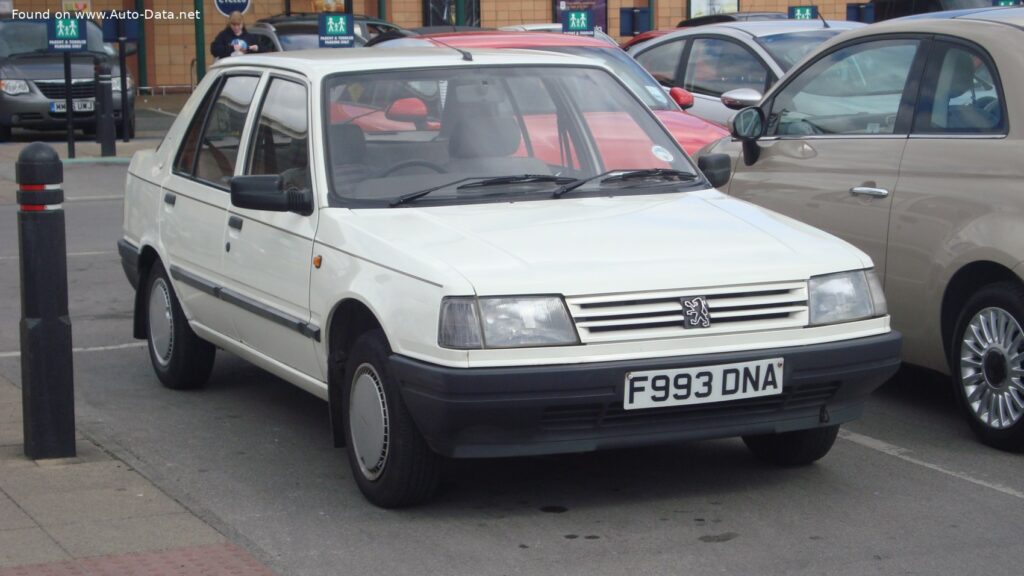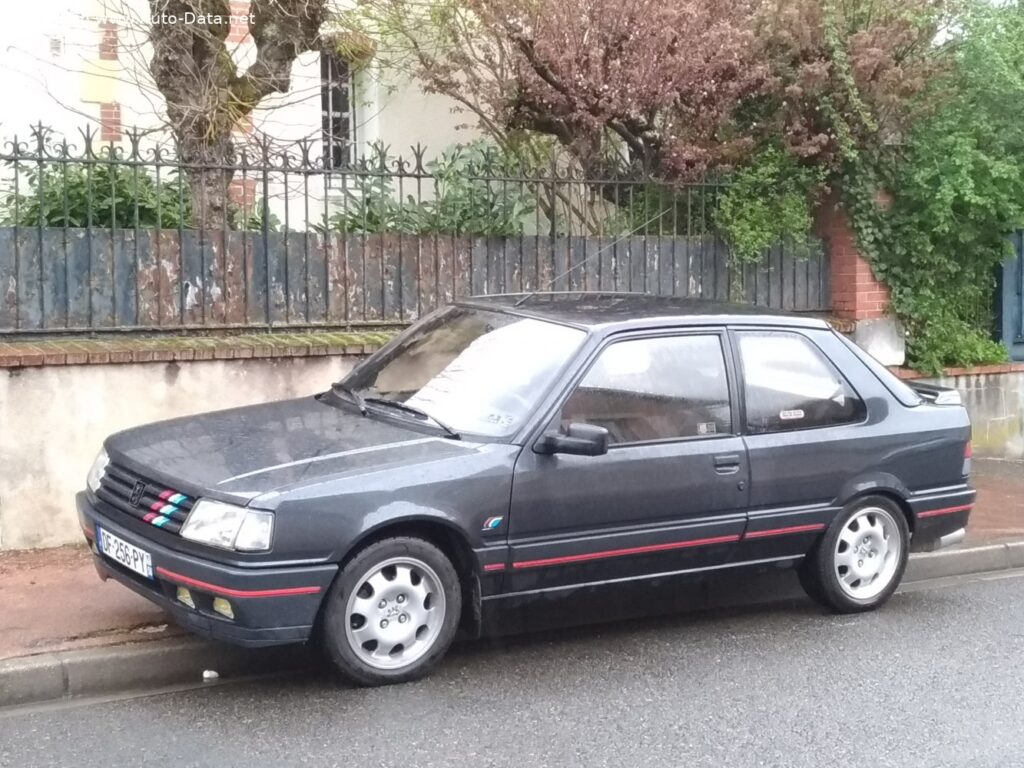
The Peugeot 309, specifically the 3-door 1.8 D (78 Hp) variant from the 1989 facelift generation (designated 3C,3A), represents a pivotal model in the French automaker’s history, particularly within the European compact car segment. Launched in 1985, the 309 was initially intended to be a Talbot, but with the demise of the brand, Peugeot rebadged and launched it, filling a crucial gap between the smaller 205 and the larger 405. The 1989 facelift introduced subtle yet significant updates, refining its aesthetics and mechanical offerings, ensuring its competitiveness through the early 1990s. This particular iteration, powered by a robust and economical diesel engine, epitomized the practicality and cost-effectiveness that many European consumers sought in a family hatchback. While never officially sold in the United States, the 309 played a vital role in Peugeot’s market strategy across the Atlantic, establishing a reputation for durability and efficient motoring in a compact, front-wheel-drive package. Its unpretentious design and focus on usability made it a popular choice for families and fleet operators alike, contributing to its status as a workhorse of its era.
Engine and Performance: The Heart of the Peugeot 309
At the core of the 1989 Peugeot 309 (3C,3A facelift) 3-door 1.8 D lies Peugeot’s renowned XUD7TE diesel engine. This 1.8-liter (1769 cm3 or 107.95 cu. in.) naturally aspirated inline four-cylinder unit was a testament to the brand’s expertise in diesel technology, which was highly valued in Europe for its fuel efficiency and longevity. Positioned transversely at the front, the engine delivered a modest but entirely adequate 78 horsepower at 4300 revolutions per minute (rpm). More importantly for a diesel of its time, it produced a respectable 115.8 lb.-ft. of torque at a low 2100 rpm. This low-end torque was crucial for everyday drivability, providing ample pulling power for urban commuting and highway cruising, even when the vehicle was fully laden.
The powertrain architecture, featuring an internal combustion engine driving the front wheels, was a standard and reliable setup for compact cars of this period. Power was channeled through a precise 5-speed manual transmission, offering drivers direct control over the engine’s output and contributing to the car’s overall efficiency. In terms of performance, the 1.8 D variant was not built for outright speed but rather for dependable and economical transport. It could accelerate from 0 to 60 miles per hour in a calculated 12.4 seconds, with a maximum speed of 108.74 mph (175 km/h). These figures were competitive for a family-oriented diesel hatchback of the late 1980s and early 1990s, especially considering its impressive fuel economy.
Fuel consumption was a significant selling point for the Peugeot 309 1.8 D. In urban driving conditions, it achieved an estimated 33.6 US mpg (7 liters per 100 km), a commendable figure for its class. On the open road, its extra-urban economy was even more impressive, reaching approximately 48 US mpg (4.9 liters per 100 km). This made the 309 1.8 D an exceptionally cost-effective vehicle to run, a primary concern for many European buyers. The engine’s robust design, featuring a compression ratio of 22:1 and a precombustion chamber injection system, contributed to its reputation for reliability and ease of maintenance. With an engine oil capacity of 5 liters and a coolant capacity of 8.5 liters, it was designed for straightforward servicing, further enhancing its appeal as a practical and economical choice.
Design and Features: The Practicality of the Peugeot 309 Hatchback
The 1989 Peugeot 309 (3C,3A facelift) 3-door model embodied the functional and understated design philosophy prevalent in European compact cars of its era. As a 3-door hatchback, it offered a blend of sporty aesthetics and practical utility. Its overall length measured 159.49 inches (4051 mm), with a width of 64.09 inches (1628 mm) and a height of 54.33 inches (1380 mm). These compact dimensions, coupled with a wheelbase of 97.2 inches (2469 mm), allowed for agile handling in congested city environments and easy parking, which were highly valued attributes in its primary markets.
The facelift introduced subtle refinements to the bodywork, typically including updated grille designs, revised lighting elements, and minor trim changes that kept the 309 looking fresh. Its drag coefficient (Cd) of 0.33 was a respectable figure for the time, indicating a degree of aerodynamic efficiency that contributed to its fuel economy and reduced wind noise at higher speeds. The interior, designed to accommodate five occupants, prioritized functionality. While not luxurious, the cabin was durable and well-laid out, featuring controls that were intuitive for the driver. The 3-door configuration, while sometimes less convenient for rear passenger access than its 5-door counterpart, often appealed to younger buyers or those who primarily used the rear seats for occasional passengers or cargo.
Practicality was a hallmark of the 309. The trunk (boot) offered a minimum cargo volume of 14.02 cubic feet (397 liters), expanding significantly to a generous 45.17 cubic feet (1279 liters) with the rear seats folded down. This flexibility made the 309 highly versatile, capable of swallowing substantial luggage or groceries, a key attribute for a family hatchback. With a curb weight of 2004 lbs (909 kg) and a maximum permissible weight of 2976.24 lbs (1350 kg), the 309 was a lightweight vehicle for its class, contributing to both its fuel efficiency and its nimble handling characteristics.
Underneath, the 309 featured a well-engineered chassis for its time. The front suspension utilized an independent McPherson strut setup with coil springs and an anti-roll bar, providing a good balance between ride comfort and dynamic stability. The rear employed a torsion beam suspension, a compact and effective solution for maximizing interior space while maintaining competent handling. Braking duties were handled by disc brakes at the front and drum brakes at the rear, a common and reliable configuration for vehicles of this segment. An Anti-lock Braking System (ABS) was available as an assisting system, enhancing safety by preventing wheel lock-up under hard braking, a significant feature for a car of the late 1980s. The steering system was a responsive rack and pinion setup, offering direct feedback to the driver. The vehicle rode on 175/65 R14 tires, providing a sensible balance of grip, comfort, and rolling resistance suitable for its intended purpose.
Technical Specifications: Peugeot 309 (3C,3A facelift 1989) 3-door 1.8 D (78 Hp)
| General Information | |
| Brand | Peugeot |
| Model | 309 |
| Generation | 309 (3C,3A facelift 1989) 3-door |
| Type (Engine) | 1.8 D (78 Hp) |
| Start of production | 1989 year |
| End of production | 1993 year |
| Powertrain Architecture | Internal Combustion engine |
| Body type | Hatchback |
| Seats | 5 |
| Doors | 3 |
| Performance Specifications | |
| Fuel consumption (economy) – urban | 33.6 US mpg (7 l/100 km) |
| Fuel consumption (economy) – extra urban | 48 US mpg (4.9 l/100 km) |
| Fuel Type | Diesel |
| Acceleration 0 – 60 mph | 12.4 sec |
| Maximum speed | 108.74 mph (175 km/h) |
| Weight-to-power ratio | 11.7 kg/Hp |
| Weight-to-torque ratio | 5.8 kg/Nm |
| Engine Specifications | |
| Power | 78 Hp @ 4300 rpm |
| Power per liter | 44.1 Hp/l |
| Torque | 115.8 lb.-ft. @ 2100 rpm (157 Nm) |
| Engine layout | Front, Transverse |
| Engine Model/Code | XUD7TE |
| Engine displacement | 107.95 cu. in. (1769 cm3) |
| Number of cylinders | 4 |
| Engine configuration | Inline |
| Cylinder Bore | 3.15 in. (80 mm) |
| Piston Stroke | 3.46 in. (88 mm) |
| Compression ratio | 22:1 |
| Number of valves per cylinder | 2 |
| Fuel injection system | Precombustion chamber injection |
| Engine aspiration | Naturally aspirated engine |
| Engine oil capacity | 5.28 US qt (5 l) |
| Coolant | 8.98 US qt (8.5 l) |
| Space, Volume and Weights | |
| Kerb Weight | 2004 lbs (909 kg) |
| Max. weight | 2976.24 lbs (1350 kg) |
| Max load | 972.24 lbs (441 kg) |
| Trunk (boot) space – minimum | 14.02 cu. ft. (397 l) |
| Trunk (boot) space – maximum | 45.17 cu. ft. (1279 l) |
| Fuel tank capacity | 14.53 US gal (55 l) |
| Permitted trailer load with brakes (12%) | 1984.16 lbs (900 kg) |
| Dimensions | |
| Length | 159.49 in. (4051 mm) |
| Width | 64.09 in. (1628 mm) |
| Height | 54.33 in. (1380 mm) |
| Wheelbase | 97.2 in. (2469 mm) |
| Front track | 55.31 in. (1405 mm) |
| Rear (Back) track | 54.33 in. (1380 mm) |
| Front overhang | 29.65 in. (753 mm) |
| Rear overhang | 32.64 in. (829 mm) |
| Drag coefficient (Cd) | 0.33 |
| Drivetrain, Brakes and Suspension | |
| Drivetrain Architecture | Front wheel drive (ICE drives front wheels) |
| Drive wheel | Front wheel drive |
| Number of gears and type of gearbox | 5 gears, manual transmission |
| Front suspension | Independent, McPherson with coil spring and anti-roll bar |
| Rear suspension | Torsion |
| Front brakes | Disc |
| Rear brakes | Drum |
| Assisting systems | ABS (Anti-lock braking system) |
| Steering type | Steering rack and pinion |
| Tires size | 175/65 R14 |