
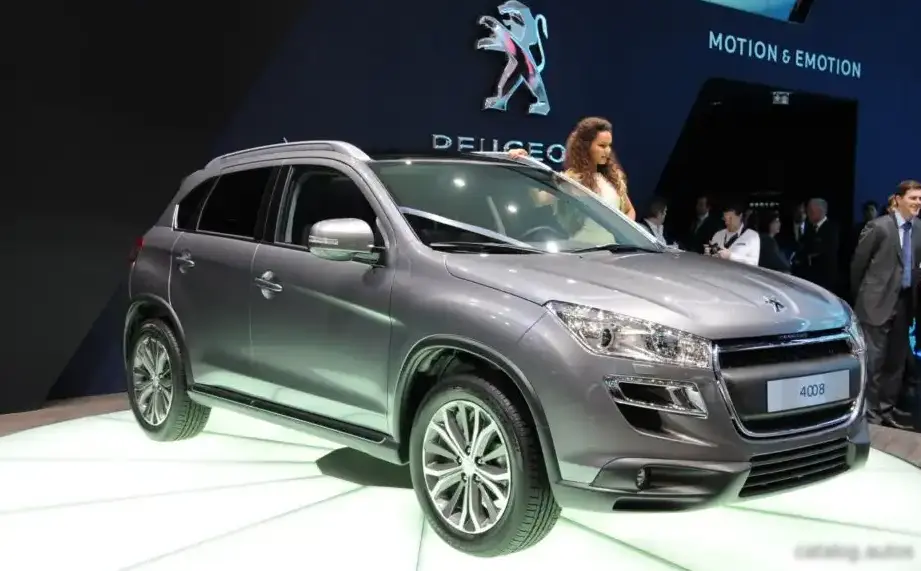
The Peugeot 4008 1.6 HDI STT (115 hp) FAP was a compact SUV produced by the French manufacturer Peugeot between 2012 and 2017. Part of the first generation 4008 series, this variant occupied a key position in the lineup as an entry-level diesel option, offering a balance of fuel efficiency and practicality. The 4008 itself was a rebadged version of the Mitsubishi Outlander, a result of the collaboration between the PSA Group (Peugeot-Citroën) and Mitsubishi Motors. It was primarily marketed in Europe and other international markets, aiming to compete with popular crossovers like the Nissan Qashqai and Volkswagen Tiguan.
Technical Specifications
| Brand | Peugeot |
| Model | 4008 |
| Generation | 4008 |
| Type (Engine) | 1.6 HDI STT (115 Hp) FAP |
| Start of production | 2012 |
| End of production | 2017 |
| Powertrain Architecture | Internal Combustion engine |
| Body type | SUV |
| Seats | 5 |
| Doors | 5 |
| Fuel consumption (urban) | 5.6 l/100 km (42 US mpg, 50.4 UK mpg, 17.9 km/l) |
| Fuel consumption (extra urban) | 4.5 l/100 km (52.3 US mpg, 62.8 UK mpg, 22.2 km/l) |
| Fuel consumption (combined) | 4.9 l/100 km (48 US mpg, 57.6 UK mpg, 20.4 km/l) |
| Fuel Type | Diesel |
| Acceleration 0 – 100 km/h | 11.6 sec |
| Acceleration 0 – 62 mph | 11.6 sec |
| Acceleration 0 – 60 mph | 11 sec |
| Maximum speed | 180 km/h (111.85 mph) |
| Emission standard | Euro 5 |
| Weight-to-power ratio | 12.4 kg/Hp, 80.7 Hp/tonne |
| Weight-to-torque ratio | 5.3 kg/Nm, 189.5 Nm/tonne |
| Power | 115 Hp @ 3600 rpm |
| Power per litre | 73.7 Hp/l |
| Torque | 270 Nm @ 1750 rpm (199.14 lb.-ft. @ 1750 rpm) |
| Engine layout | Front, Transverse |
| Engine Model/Code | 9HD DV6C |
| Engine displacement | 1560 cm3 (95.2 cu. in.) |
| Number of cylinders | 4 |
| Engine configuration | Inline |
| Number of valves per cylinder | 2 |
| Fuel injection system | Diesel Commonrail |
| Engine aspiration | Turbocharger, Intercooler |
| Engine oil capacity | 3.75 l (3.96 US qt | 3.3 UK qt) |
| Coolant capacity | 7.5 l (7.93 US qt | 6.6 UK qt) |
| Kerb Weight | 1425 kg (3141.59 lbs) |
| Max. weight | 2060 kg (4541.52 lbs) |
| Max load | 635 kg (1399.94 lbs) |
| Trunk (boot) space – minimum | 416 l (14.69 cu. ft.) |
| Trunk (boot) space – maximum | 1196 l (42.24 cu. ft.) |
| Fuel tank capacity | 60 l (15.85 US gal | 13.2 UK gal) |
| Length | 4340 mm (170.87 in) |
| Width | 1840 mm (72.44 in) |
| Height | 1635 mm (64.37 in) |
| Wheelbase | 2670 mm (105.12 in) |
| Minimum turning circle | 10.6 m (34.78 ft) |
| Drive wheel | All wheel drive (4×4) |
| Number of gears | 6 gears, manual transmission |
| Front suspension | Independent type McPherson |
| Rear suspension | Independent multi-link suspension |
| Front brakes | Ventilated discs |
| Rear brakes | Disc |
| Assisting systems | ABS (Anti-lock braking system) |
| Steering type | Steering rack and pinion |
| Tires size | 225/55 R18 |
| Wheel rims size | 18 |
Powertrain & Engine Architecture
The 4008 1.6 HDI STT utilized the PSA Group’s 9HD DV6C engine, a 1.6-liter inline-four cylinder diesel engine. This engine was a common sight in various Peugeot and Citroën models of the era. It featured a turbocharger with an intercooler to boost power and efficiency. The engine employed a diesel common rail direct injection system, delivering fuel directly into the combustion chamber at high pressure for optimized combustion. The DV6C engine is known for its relatively simple design and robust construction. The “STT” designation indicates a specific tuning of the engine, and the “FAP” denotes the presence of a Diesel Particulate Filter, designed to reduce harmful emissions and meet Euro 5 standards. The 6-speed manual transmission was the only gearbox option available with this engine, prioritizing fuel economy over outright performance.
Driving Characteristics
The 115 hp output and 270 Nm (199 lb-ft) of torque provided adequate, but not exhilarating, performance. Acceleration from 0-60 mph took around 11 seconds, and the top speed was 112 mph. The engine’s torque peak at 1750 rpm meant that it offered reasonable pulling power for everyday driving and overtaking maneuvers. However, compared to higher-powered versions of the 4008, such as those equipped with a 2.0-liter diesel engine, the 1.6 HDI felt noticeably slower, especially when fully loaded. The manual transmission, while efficient, required more driver involvement than an automatic. The gear ratios were tuned for fuel economy, meaning the engine could feel strained at higher speeds. The all-wheel-drive system provided enhanced traction in slippery conditions, making it a capable vehicle for varied weather conditions.
Equipment & Trim Levels
The 1.6 HDI STT trim typically included standard features such as air conditioning, electric front and rear windows, a basic audio system with USB connectivity, and alloy wheels. Safety features included ABS, electronic brakeforce distribution, and multiple airbags. Higher trim levels, available as options, added features like a touchscreen infotainment system, rear parking sensors, automatic climate control, and leather upholstery. Interior materials were generally durable but not luxurious, reflecting the vehicle’s positioning as an affordable crossover. The dashboard layout was functional and straightforward, prioritizing ease of use.
Chassis & Braking
The 4008 featured an independent McPherson strut suspension at the front and an independent multi-link suspension at the rear, providing a comfortable ride quality. The suspension was tuned to prioritize comfort over sporty handling. Braking duties were handled by ventilated discs at the front and solid discs at the rear. The ABS system helped to maintain control during emergency braking situations. The all-wheel-drive system contributed to stability and traction, particularly on loose surfaces. The steering was light and easy to use, making it well-suited for urban driving.
Market Reception & Comparison
The Peugeot 4008 1.6 HDI STT was generally well-received by critics as a practical and fuel-efficient crossover. Its fuel economy of around 48 US mpg combined was a major selling point. However, some reviewers criticized its relatively modest performance and the somewhat basic interior compared to rivals. Compared to the higher-powered 2.0-liter diesel versions of the 4008, the 1.6 HDI offered lower running costs but sacrificed performance. Against competitors like the Nissan Qashqai and Volkswagen Tiguan, the 4008 offered a competitive price point and a spacious interior, but lacked the brand prestige of some rivals.
Legacy
The Peugeot 4008, and specifically the 1.6 HDI STT variant, has proven to be a relatively reliable vehicle in the used car market. The DV6C engine, while not without its potential issues (such as potential EGR valve and DPF problems common to diesel engines of this era), is generally considered durable with proper maintenance. Parts availability is generally good, and repair costs are reasonable. Today, the 4008 1.6 HDI STT represents an affordable and practical option for buyers seeking a fuel-efficient and spacious crossover, though potential buyers should be aware of the typical maintenance requirements of a diesel vehicle and the potential for issues with the DPF system.
