
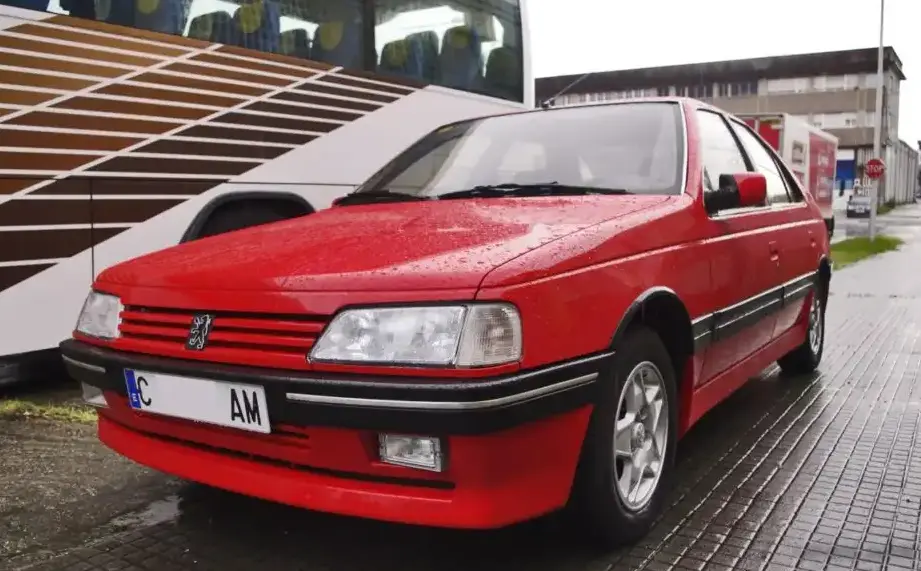
The Peugeot 405 1.9, produced between 1988 and 1992, represented a significant step forward for the French automaker, offering a blend of comfort, practicality, and relatively modern technology for its time. Part of the 405 I (15B) generation, this variant occupied a middle ground in the lineup, positioned as a more affordable and fuel-efficient alternative to the higher-performance models like the 2.0L and V6 options. It was primarily aimed at buyers seeking a comfortable and reliable family sedan, offering a balance between performance and economy. The 405, as a whole, was Peugeot’s replacement for the aging 505, and was intended to compete with vehicles like the Ford Sierra, Opel/Vauxhall Cavalier, and Renault 20.
Technical Specifications
| Brand | Peugeot |
| Model | 405 |
| Generation | 405 I (15B) |
| Type (Engine) | 1.9 (109 Hp) |
| Start of production | 1988 |
| End of production | 1992 |
| Powertrain Architecture | Internal Combustion engine |
| Body type | Sedan |
| Seats | 5 |
| Doors | 4 |
| Fuel consumption (urban) | 9.9 l/100 km (23.8 US mpg) |
| Fuel consumption (extra urban) | 6.1 l/100 km (38.6 US mpg) |
| Fuel Type | Petrol (Gasoline) |
| Acceleration 0 – 100 km/h | 10.4 sec |
| Acceleration 0 – 62 mph | 10.4 sec |
| Acceleration 0 – 60 mph | 9.9 sec |
| Maximum speed | 190 km/h (118.06 mph) |
| Weight-to-power ratio | 9.4 kg/Hp |
| Weight-to-torque ratio | 6.3 kg/Nm |
| Power | 109 Hp @ 6000 rpm |
| Torque | 162 Nm @ 3000 rpm (119.49 lb.-ft. @ 3000 rpm) |
| Engine layout | Front, Transverse |
| Engine Model/Code | DDZ XU9M |
| Engine displacement | 1905 cm3 (116.25 cu. in.) |
| Number of cylinders | 4 |
| Engine configuration | Inline |
| Cylinder Bore | 83 mm (3.27 in.) |
| Piston Stroke | 88 mm (3.46 in.) |
| Compression ratio | 9.18:1 |
| Number of valves per cylinder | 2 |
| Fuel injection system | Single-point injection |
| Engine aspiration | Naturally aspirated engine |
| Valvetrain | OHC |
| Engine oil capacity | 5 l (5.28 US qt | 4.4 UK qt) |
| Coolant capacity | 6.5 l (6.87 US qt | 5.72 UK qt) |
| Kerb Weight | 1026 kg (2261.94 lbs.) |
| Max. weight | 1550 kg (3417.17 lbs.) |
| Max load | 524 kg (1155.22 lbs.) |
| Trunk (boot) space – minimum | 470 l (16.6 cu. ft.) |
| Fuel tank capacity | 70 l (18.49 US gal | 15.4 UK gal) |
| Permitted trailer load with brakes (12%) | 1200 kg (2645.55 lbs.) |
| Length | 4408 mm (173.54 in.) |
| Width | 1714 mm (67.48 in.) |
| Height | 1406 mm (55.35 in.) |
| Wheelbase | 2669 mm (105.08 in.) |
| Front track | 1448 mm (57.01 in.) |
| Rear (Back) track | 1441 mm (56.73 in.) |
| Front overhang | 817 mm (32.17 in.) |
| Rear overhang | 922 mm (36.3 in.) |
| Drag coefficient (Cd) | 0.31 |
| Minimum turning circle (turning diameter) | 10.55 m (34.61 ft.) |
| Drivetrain Architecture | Front wheel drive |
| Number of gears and type of gearbox | 5 gears, manual transmission |
| Front suspension | Independent, type McPherson with coil spring and anti-roll bar |
| Rear suspension | Torsion |
| Front brakes | Ventilated discs |
| Rear brakes | Disc |
| Steering type | Steering rack and pinion |
| Tires size | 185/65 R14 |
| Wheel rims size | 14 |
Powertrain & Engine Architecture
The heart of the 405 1.9 was the XU9M engine, a 1.9-liter inline-four cylinder gasoline engine. This engine, designated DDZ, was a mainstay of Peugeot and Citroën vehicles throughout the late 1980s and early 1990s. It featured a single overhead camshaft (OHC) design and utilized a single-point fuel injection system, which was relatively common for the era. While not as sophisticated as multi-point injection, it provided a reasonable balance of fuel efficiency and performance. The engine produced 109 horsepower at 6000 rpm and 162 Nm (119.49 lb-ft) of torque at 3000 rpm. The engine’s robust construction and relatively simple design contributed to its overall reliability. The 405 1.9 was exclusively offered with a 5-speed manual transmission, providing drivers with full control over the engine’s power delivery.
Driving Characteristics
The 405 1.9 offered a comfortable and predictable driving experience. Acceleration from 0 to 60 mph took approximately 9.9 seconds, and it had a top speed of around 118 mph. While not particularly sporty, the engine provided adequate power for everyday driving and highway cruising. The 5-speed manual transmission allowed drivers to keep the engine in its optimal power band, making overtaking maneuvers relatively easy. Compared to the more powerful 2.0L and V6 versions, the 1.9 felt less eager to rev, but it offered better fuel economy and a more relaxed driving experience. The suspension, featuring McPherson struts at the front and a torsion beam at the rear, provided a comfortable ride, absorbing bumps and imperfections in the road effectively.
Equipment & Trim Levels
The 405 1.9 typically came with a reasonable level of standard equipment. This included central locking, power steering, and cloth upholstery. Higher trim levels offered options such as electric windows, a sunroof, and upgraded audio systems. Interior appointments were generally functional and well-built, reflecting Peugeot’s reputation for quality. The dashboard layout was straightforward and easy to use, with clearly labeled controls. The 405 1.9 was often seen as a practical and well-equipped family car, offering good value for money.
Chassis & Braking
The 405 1.9 featured a front-wheel-drive layout and a relatively lightweight chassis. The front suspension utilized McPherson struts with coil springs and an anti-roll bar, while the rear suspension employed a torsion beam. This setup provided a good balance of ride comfort and handling. The braking system consisted of ventilated discs at the front and solid discs at the rear, providing adequate stopping power for the vehicle’s weight and performance. The steering was a rack-and-pinion system, offering precise and responsive control.
Market Reception & Comparison
The Peugeot 405 1.9 was generally well-received by automotive critics. It was praised for its comfortable ride, spacious interior, and fuel efficiency. However, some critics noted that the engine lacked the refinement and performance of its competitors. Compared to other trims in the 405 lineup, the 1.9 offered a more affordable entry point, making it attractive to budget-conscious buyers. It provided a good balance between performance and economy, making it a practical choice for everyday driving. Fuel economy was a strong point, with the 1.9 achieving around 38.6 US mpg on the highway.
Legacy
The Peugeot 405 1.9 has proven to be a relatively reliable and durable vehicle. The XU9M engine is known for its robustness and longevity, and many examples are still on the road today. While parts availability can be a challenge, the engine’s simple design makes it relatively easy to maintain and repair. In the used car market, the 405 1.9 is often sought after by enthusiasts and collectors who appreciate its classic styling and practical nature. It represents a significant chapter in Peugeot’s history, showcasing the automaker’s commitment to building comfortable, reliable, and well-engineered vehicles.
