
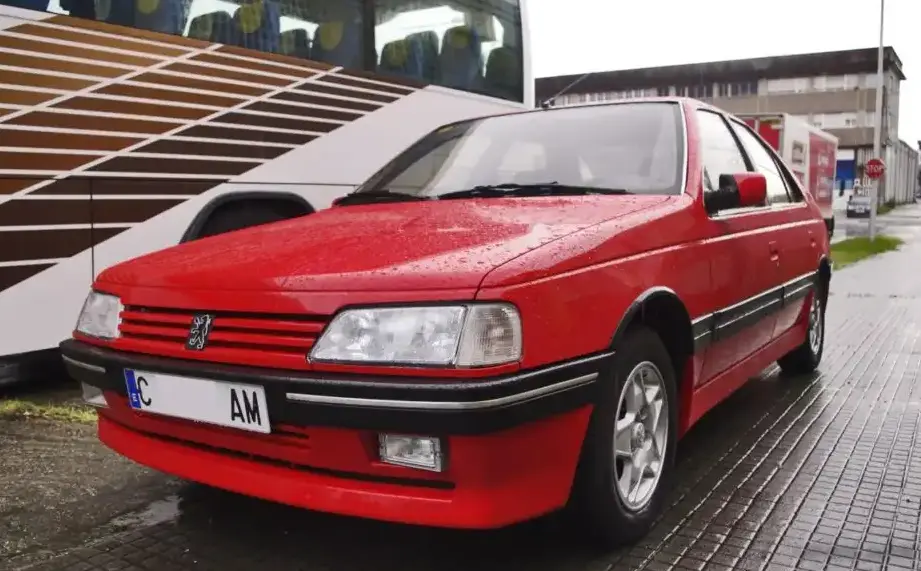
The Peugeot 405, launched in 1987, represented a significant step forward for the French automaker, replacing the aging 505. The 405 I (15B) series, produced from 1987 to 1992, was a popular choice in Europe, offering a blend of practicality, comfort, and relatively modern styling. Within this generation, the 1.9-liter (109 hp) 4×4 variant occupied a unique niche, providing all-wheel drive capability in a traditionally front-wheel drive segment. This model aimed to offer enhanced traction and stability, particularly appealing to drivers in regions with inclement weather or challenging road conditions. It was positioned as a more capable, though not overtly sporty, option within the 405 lineup.
Technical Specifications
| Brand | Peugeot |
| Model | 405 |
| Generation | 405 I (15B) |
| Type (Engine) | 1.9 (109 Hp) 4×4 |
| Start of production | 1988 |
| End of production | 1992 |
| Powertrain Architecture | Internal Combustion engine |
| Body type | Sedan |
| Seats | 5 |
| Doors | 4 |
| Fuel consumption (urban) | 10.9 l/100 km (21.6 US mpg) |
| Fuel consumption (extra urban) | 6.8 l/100 km (34.6 US mpg) |
| Fuel Type | Petrol (Gasoline) |
| Acceleration 0 – 100 km/h | 10.6 sec |
| Acceleration 0 – 62 mph | 10.6 sec |
| Acceleration 0 – 60 mph | 10.1 sec |
| Maximum speed | 187 km/h (116.2 mph) |
| Weight-to-power ratio | 10.7 kg/Hp |
| Weight-to-torque ratio | 7.2 kg/Nm |
| Power | 109 Hp @ 6000 rpm |
| Torque | 162 Nm @ 3000 rpm (119.49 lb.-ft. @ 3000 rpm) |
| Engine layout | Front, Transverse |
| Engine Model/Code | DDZ XU9M |
| Engine displacement | 1905 cm3 (116.25 cu. in.) |
| Number of cylinders | 4 |
| Engine configuration | Inline |
| Cylinder Bore | 83 mm (3.27 in.) |
| Piston Stroke | 88 mm (3.46 in.) |
| Compression ratio | 9.18:1 |
| Number of valves per cylinder | 2 |
| Fuel injection system | Single-point injection |
| Engine aspiration | Naturally aspirated engine |
| Valvetrain | OHC |
| Engine oil capacity | 5 l (5.28 US qt | 4.4 UK qt) |
| Coolant capacity | 6.5 l (6.87 US qt | 5.72 UK qt) |
| Kerb Weight | 1170 kg (2579.41 lbs.) |
| Max. weight | 1600 kg (3527.4 lbs.) |
| Max load | 430 kg (947.99 lbs.) |
| Trunk (boot) space – minimum | 470 l (16.6 cu. ft.) |
| Fuel tank capacity | 70 l (18.49 US gal | 15.4 UK gal) |
| Permitted trailer load with brakes (12%) | 1200 kg (2645.55 lbs.) |
| Length | 4408 mm (173.54 in.) |
| Width | 1714 mm (67.48 in.) |
| Height | 1406 mm (55.35 in.) |
| Wheelbase | 2669 mm (105.08 in.) |
| Front track | 1450 mm (57.09 in.) |
| Rear (Back) track | 1443 mm (56.81 in.) |
| Front overhang | 817 mm (32.17 in.) |
| Rear overhang | 922 mm (36.3 in.) |
| Drag coefficient (Cd) | 0.35 |
| Minimum turning circle | 10.55 m (34.61 ft.) |
| Drivetrain Architecture | All wheel drive (4×4) |
| Number of gears | 5 |
| Gearbox type | Manual transmission |
| Front suspension | Independent, type McPherson with coil spring and anti-roll bar |
| Rear suspension | Torsion |
| Front brakes | Ventilated discs |
| Rear brakes | Disc |
| Steering type | Steering rack and pinion |
| Power steering | Hydraulic |
| Tires size | 185/65 R14 |
| Wheel rims size | 14 |
Powertrain & Engine Architecture
The heart of the 405 1.9 4×4 is the XU9M engine, a 1.9-liter inline-four cylinder gasoline engine. Designated with the code DDZ, this engine featured a single-point fuel injection system, a relatively common setup for the era. This system, while less sophisticated than multi-point injection, offered a good balance of cost-effectiveness and efficiency. The engine produced 109 horsepower at 6000 rpm and 162 Nm (119.49 lb-ft) of torque at 3000 rpm. The engine utilized an overhead camshaft (OHC) valvetrain with two valves per cylinder. The all-wheel drive system employed a viscous coupling to transfer torque to the rear wheels when front wheel slip was detected. The transmission was a five-speed manual, chosen for its efficiency and driver engagement.
Driving Characteristics
The 1.9-liter engine, paired with the five-speed manual transmission, provided adequate, though not exhilarating, performance. Acceleration from 0 to 100 km/h (0-62 mph) took around 10.6 seconds, and the top speed was approximately 187 km/h (116 mph). The all-wheel drive system noticeably improved traction, especially on slippery surfaces, making the 405 1.9 4×4 a more confident performer in adverse weather conditions. Compared to the more powerful 2.0-liter versions, the 1.9 felt less responsive, but the all-wheel drive compensated for some of the power deficit. The gear ratios were tuned for a balance of fuel economy and usability, rather than outright performance.
Equipment & Trim Levels
The 405 1.9 4×4 typically came with a reasonable level of standard equipment. This included power steering, central locking, and cloth upholstery. Depending on the market and optional packages, features like electric windows, a sunroof, and upgraded audio systems were available. The interior was functional and well-built, reflecting Peugeot’s reputation for interior quality. The dashboard layout was straightforward and easy to use, with clearly marked controls. The 4×4 trim often included unique badging to distinguish it from other 405 models.
Chassis & Braking
The 405 1.9 4×4 utilized an independent McPherson strut suspension at the front, providing a comfortable ride and good handling. The rear suspension employed a torsion beam setup, which was cost-effective and space-efficient. The braking system consisted of ventilated discs at the front and discs at the rear, offering adequate stopping power for the vehicle’s weight and performance. The hydraulic power steering provided light and precise steering feel. The 185/65 R14 tires offered a good compromise between comfort and grip.
Market Reception & Comparison
The Peugeot 405 1.9 4×4 was generally well-received by automotive critics. It was praised for its comfortable ride, good handling, and enhanced traction. However, some reviewers noted that the 1.9-liter engine felt underpowered, especially when compared to the more potent 2.0-liter and V6 options. Fuel economy was considered reasonable for the time, but not exceptional. Compared to other all-wheel drive vehicles in the segment, the 405 4×4 offered a compelling combination of practicality, comfort, and affordability.
Legacy
The Peugeot 405 1.9 4×4 has proven to be a relatively reliable vehicle, with the XU9M engine being known for its durability. However, like any older vehicle, it requires regular maintenance to keep it in good condition. Parts availability can be a challenge in some regions, but many components are still available through specialist suppliers. Today, the 405 1.9 4×4 is gaining recognition as a classic car, appreciated for its unique blend of French style, practicality, and all-wheel drive capability. Well-maintained examples are becoming increasingly sought after by enthusiasts.
