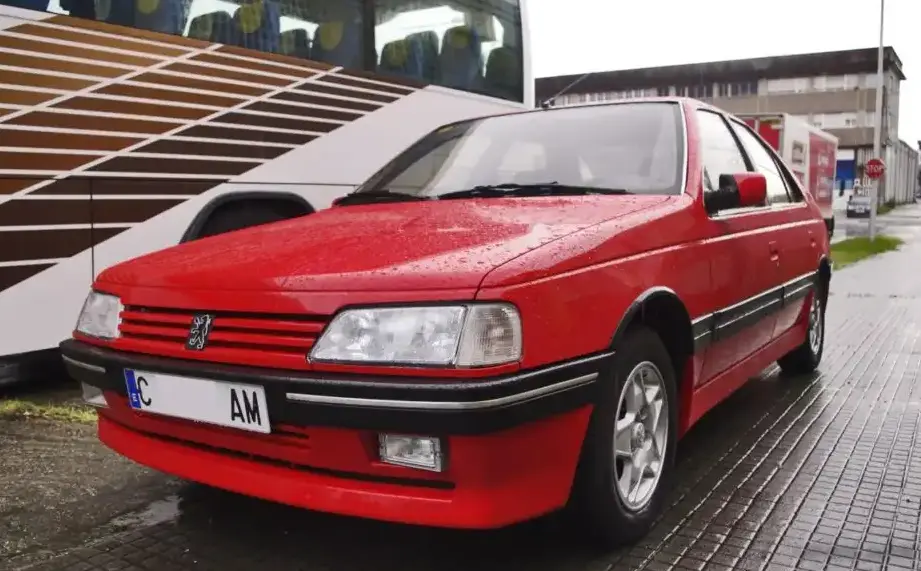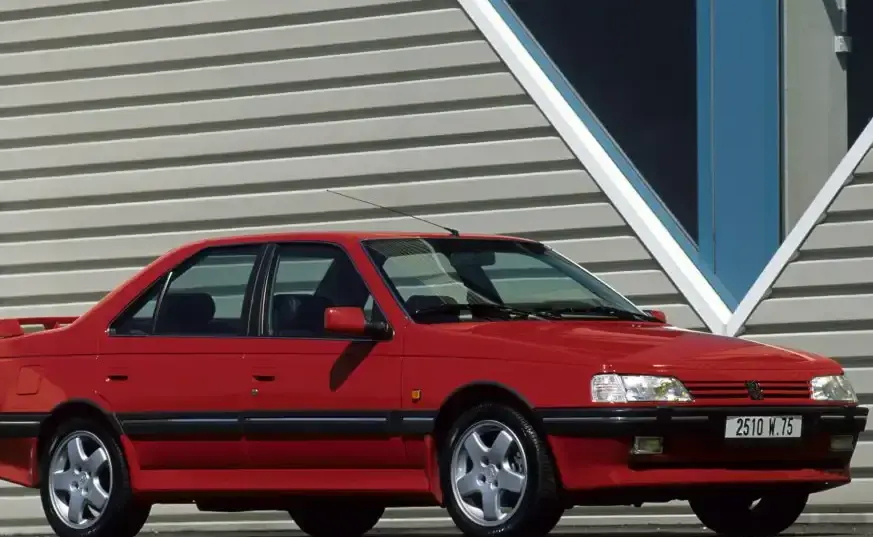
The Peugeot 405 1.8, produced from 1992 to 1995, represented a key variant within the 405 I (15B) facelift range. Positioned as a mainstream offering, it aimed to provide a balance of affordability, practicality, and reasonable performance for the average family car buyer. This model occupied a middle ground in the 405 lineup, slotting below the more powerful 2.0-liter and V6 options, and above the base 1.6-liter engine. The 405 itself was a significant vehicle for Peugeot, replacing the aging 505 and representing a move towards more modern design and engineering. It was a popular choice in Europe, particularly in France, and offered a compelling alternative to rivals like the Ford Sierra and Volkswagen Passat.
Technical Specifications
| Brand | Peugeot |
| Model | 405 |
| Generation | 405 I (15B, facelift 1992) |
| Type (Engine) | 1.8 (101 Hp) |
| Start of production | 1992 |
| End of production | 1995 |
| Powertrain Architecture | Internal Combustion engine |
| Body type | Sedan |
| Seats | 5 |
| Doors | 4 |
| Fuel consumption (combined) | 7.5 l/100 km (31.4 US mpg, 37.7 UK mpg, 13.3 km/l) |
| Fuel Type | Petrol (Gasoline) |
| Maximum speed | 185 km/h (114.95 mph) |
| Weight-to-power ratio | 10.9 kg/Hp, 91.8 Hp/tonne |
| Weight-to-torque ratio | 7.2 kg/Nm, 139.1 Nm/tonne |
| Power | 101 Hp @ 6000 rpm |
| Power per litre | 57.3 Hp/l |
| Torque | 153 Nm @ 3000 rpm (112.85 lb.-ft. @ 3000 rpm) |
| Engine layout | Front, Transverse |
| Engine Model/Code | LFZ XU7JP |
| Engine displacement | 1762 cm3 (107.52 cu. in.) |
| Number of cylinders | 4 |
| Engine configuration | Inline |
| Cylinder Bore | 83 mm (3.27 in.) |
| Piston Stroke | 81.4 mm (3.2 in.) |
| Compression ratio | 9.3:1 |
| Number of valves per cylinder | 2 |
| Fuel injection system | Multi-port manifold injection |
| Engine aspiration | Naturally aspirated engine |
| Valvetrain | OHC |
| Engine oil capacity | 4.3 l (4.54 US qt | 3.78 UK qt) |
| Coolant | 7 l (7.4 US qt | 6.16 UK qt) |
| Kerb Weight | 1100 kg (2425.08 lbs.) |
| Max. weight | 1580 kg (3483.3 lbs.) |
| Max load | 480 kg (1058.22 lbs.) |
| Trunk (boot) space – minimum | 470 l (16.6 cu. ft.) |
| Fuel tank capacity | 70 l (18.49 US gal | 15.4 UK gal) |
| Length | 4408 mm (173.54 in.) |
| Width | 1714 mm (67.48 in.) |
| Height | 1406 mm (55.35 in.) |
| Wheelbase | 2669 mm (105.08 in.) |
| Front track | 1440 mm (56.69 in.) |
| Rear (Back) track | 1443 mm (56.81 in.) |
| Drivetrain Architecture | The Internal combustion engine (ICE) drives the front wheels of the vehicle. |
| Drive wheel | Front wheel drive |
| Number of gears and type of gearbox | 5 gears, manual transmission |
| Front suspension | Wishbone |
| Rear suspension | Trailing arm |
| Front brakes | Ventilated discs |
| Rear brakes | Drum |
| Assisting systems | ABS (Anti-lock braking system) |
| Steering type | Steering rack and pinion |
| Power steering | Hydraulic Steering |
| Tires size | 175/75 R14 |
Powertrain & Engine Architecture
The heart of the 405 1.8 was the XU7JP engine, a 1.8-liter inline-four cylinder unit. This engine, a member of Peugeot-Citroën’s XU series, was known for its robustness and relatively simple design. The LFZ engine code specifically denotes this configuration. It featured a single overhead camshaft (OHC) operating two valves per cylinder. Fuel delivery was handled by a multi-port fuel injection system, a significant upgrade over earlier carbureted engines, contributing to improved fuel efficiency and smoother operation. The XU7JP produced 101 horsepower at 6000 rpm and 153 Nm (113 lb-ft) of torque at 3000 rpm. The engine’s transverse mounting and front-wheel drive configuration were typical for European family cars of the era. The 405 1.8 was typically paired with a five-speed manual transmission, although a three-speed automatic transmission was also available, albeit less common.
Driving Characteristics
The 405 1.8, particularly with the manual transmission, offered a reasonably engaging driving experience. While not a sports car, it provided adequate acceleration for everyday driving. The 101 hp engine, while not overly powerful, was sufficient for comfortable cruising and overtaking. The five-speed gearbox allowed drivers to keep the engine in its optimal power band. The automatic transmission, while offering convenience, noticeably dulled performance, resulting in slower acceleration and a less responsive feel. Gear ratios were tuned for fuel economy and relaxed cruising rather than outright speed. The car’s handling was generally considered good for its class, with a stable and predictable feel.
Equipment & Trim Levels
The 405 1.8 typically came equipped with a reasonable level of standard features. These included central locking, power steering, and a basic stereo system. Interior upholstery was typically cloth, with a relatively simple dashboard layout. Optional extras included air conditioning, electric windows, and a sunroof. Higher trim levels, such as the GR (Grand Réalisation) and SR (Super Réalisation), added more luxurious features like upgraded upholstery, alloy wheels, and additional soundproofing. The 1.8 model often served as a base for these higher trims, with customers adding options to tailor the car to their preferences.
Chassis & Braking
The 405 1.8 utilized a relatively conventional chassis design. Front suspension consisted of independent wishbones, providing a comfortable ride and decent handling. The rear suspension employed a trailing arm setup, which was simpler and more cost-effective. Braking was typically accomplished with ventilated discs on the front wheels and drum brakes on the rear. Anti-lock braking system (ABS) was available as an option, enhancing safety. The car’s weight of around 1100 kg (2425 lbs) contributed to its manageable handling characteristics. Stabilizer bars were fitted to both the front and rear axles to reduce body roll during cornering.
Market Reception & Comparison
The Peugeot 405 1.8 was generally well-received by automotive critics as a practical and affordable family car. It was praised for its comfortable ride, decent handling, and fuel efficiency. However, some critics noted that the engine lacked outright power, particularly when compared to the 2.0-liter and V6 models. Compared to the 1.6-liter version, the 1.8 offered a noticeable performance improvement, making it a more popular choice. The 1.8 automatic, while convenient, was often criticized for its sluggish performance and reduced fuel economy. In terms of reliability, the XU7JP engine proved to be quite durable, although regular maintenance was essential.
Legacy
The Peugeot 405 1.8, and the XU7JP engine in particular, has developed a reputation for long-term reliability. Many examples are still on the road today, testament to the engine’s robust design and Peugeot’s build quality. In the used car market, the 405 1.8 remains an affordable and practical option for those seeking a classic European sedan. Parts availability is generally good, and the car’s relatively simple mechanicals make it relatively easy to maintain. While not a collector’s item, the 405 1.8 is appreciated by enthusiasts for its classic styling, comfortable ride, and dependable powertrain.