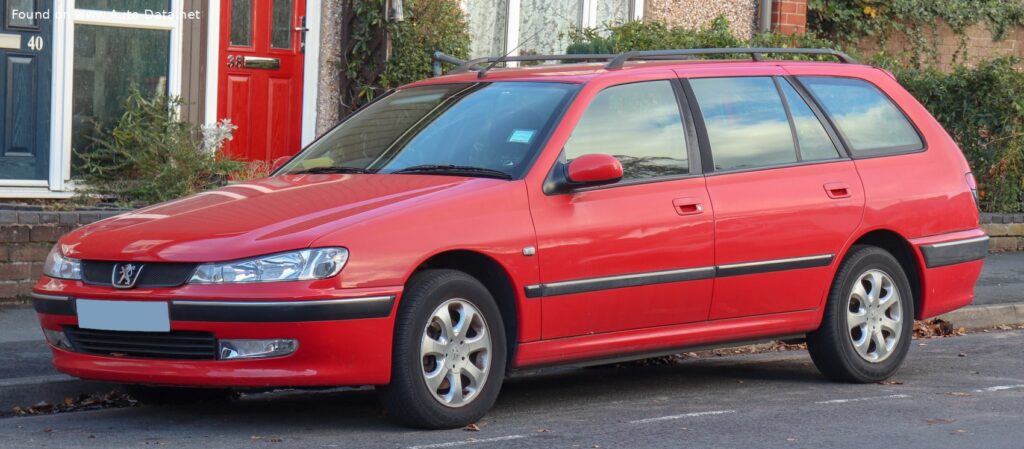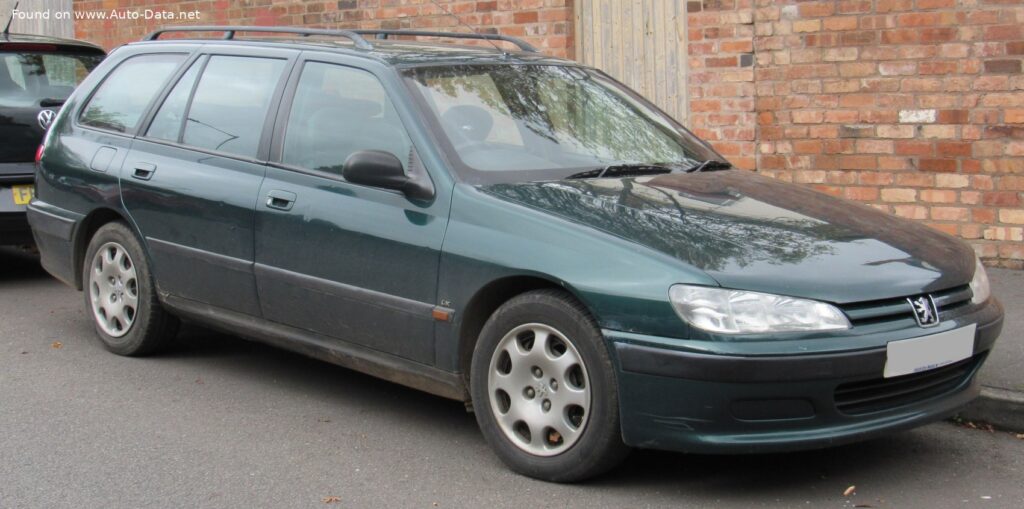
The Peugeot 406 Break, specifically the Phase I model produced from 1996 to 1999, represents a significant offering from the French automaker in the mid-size family car segment. As a station wagon (estate) variant of the popular 406 sedan, the Break prioritized practicality and cargo space without sacrificing the comfortable ride and stylish design that characterized the 406 range. While not officially sold in the United States, the 406 and its Break derivative were highly regarded in Europe for their blend of affordability, refinement, and versatility. This particular version, equipped with a 3.0-liter 24-valve V6 engine and an automatic transmission, was positioned as a premium offering within the 406 Break lineup.
Peugeot 406 Break: A Detailed Overview
The 406 was Peugeot’s replacement for the successful 405, aiming to build upon its predecessor’s reputation for reliability and driving enjoyment. The Break version, introduced alongside the sedan and coupe, catered to buyers needing more space for families or hobbies. It distinguished itself with a longer roofline extending to the rear, creating a generously sized cargo area. The Phase I models, produced from 1996-1999, represent the initial iteration of the 406 Break, featuring a distinctive front-end design and interior appointments.
Engine & Performance
The heart of this 406 Break is a naturally aspirated 3.0-liter V6 engine, designated XFZ ES9J4. This powerplant delivers 190 horsepower at 5500 rpm and 267 Nm (196.93 lb.-ft.) of torque at 4000 rpm. The engine’s configuration – a 60-degree V6 with four valves per cylinder – contributes to its smooth operation and responsive power delivery. Coupled with a four-speed automatic transmission, the Break achieves a 0-60 mph (0-96 km/h) time of approximately 9.4 seconds and a top speed of 220 km/h (136.7 mph). While not a performance-oriented vehicle, the 3.0 V6 provides ample power for comfortable cruising and effortless overtaking. The engine’s power-to-weight ratio is 8.1 kg/Hp, and the torque-to-weight ratio is 5.8 kg/Nm, indicating a reasonably balanced performance profile. Fuel economy is rated at 16.1 l/100 km (14.6 US mpg) in urban conditions and 8.2 l/100 km (28.7 US mpg) on the extra-urban cycle.
Design & Features
The Peugeot 406 Break is a five-door, five-seat station wagon. Its exterior design is characterized by flowing lines and a relatively low-slung profile for a vehicle of its type. The Phase I models feature a distinctive front grille and headlight arrangement. The interior prioritizes comfort and practicality, with a focus on ergonomics and user-friendly controls. Key features include comfortable seating, a well-appointed dashboard, and a spacious cargo area. The rear seats can be folded down to further expand the cargo capacity, ranging from a minimum of 525 liters (18.54 cu. ft.) to a maximum of 1740 liters (61.45 cu. ft.) with the seats folded. Safety features for the era included ABS (Anti-lock Braking System) as standard equipment. The hydraulic power steering provides a responsive and comfortable driving experience. The vehicle’s dimensions are 4725 mm (186.02 in.) in length, 1765 mm (69.49 in.) in width, and 1500 mm (59.06 in.) in height, with a wheelbase of 2700 mm (106.3 in.).
Technical Specifications
| Brand | Peugeot |
| Model | 406 |
| Generation | 406 Break (Phase I, 1996) |
| Type (Engine) | 3.0 24V (190 Hp) Automatic |
| Start of production | 1996 |
| End of production | 1999 |
| Powertrain Architecture | Internal Combustion engine |
| Body type | Station wagon (estate) |
| Seats | 5 |
| Doors | 5 |
| Fuel consumption (urban) | 16.1 l/100 km (14.6 US mpg) |
| Fuel consumption (extra urban) | 8.2 l/100 km (28.7 US mpg) |
| Fuel Type | Petrol (Gasoline) |
| Acceleration 0 – 100 km/h | 9.9 sec |
| Acceleration 0 – 62 mph | 9.9 sec |
| Acceleration 0 – 60 mph | 9.4 sec |
| Maximum speed | 220 km/h (136.7 mph) |
| Weight-to-power ratio | 8.1 kg/Hp |
| Weight-to-torque ratio | 5.8 kg/Nm |
| Power | 190 Hp @ 5500 rpm |
| Torque | 267 Nm @ 4000 rpm (196.93 lb.-ft. @ 4000 rpm) |
| Engine layout | Front, Transverse |
| Engine Model/Code | XFZ ES9J4 |
| Engine displacement | 2946 cm3 (179.78 cu. in.) |
| Number of cylinders | 6 |
| Engine configuration | V-engine |
| Cylinder Bore | 87 mm (3.43 in.) |
| Piston Stroke | 82.6 mm (3.25 in.) |
| Compression ratio | 10.5:1 |
| Number of valves per cylinder | 4 |
| Fuel injection system | Multi-port manifold injection |
| Engine oil capacity | 4.75 l (5.02 US qt | 4.18 UK qt) |
| Coolant capacity | 10.6 l (11.2 US qt | 9.33 UK qt) |
| Kerb Weight | 1540 kg (3395.12 lbs.) |
| Max. weight | 1960 kg (4321.06 lbs.) |
| Max load | 420 kg (925.94 lbs.) |
| Trunk (boot) space – minimum | 525 l (18.54 cu. ft.) |
| Trunk (boot) space – maximum | 1740 l (61.45 cu. ft.) |
| Fuel tank capacity | 70 l (18.49 US gal | 15.4 UK gal) |
| Length | 4725 mm (186.02 in.) |
| Width | 1765 mm (69.49 in.) |
| Height | 1500 mm (59.06 in.) |
| Wheelbase | 2700 mm (106.3 in.) |
| Front track | 1500 mm (59.06 in.) |
| Rear track | 1480 mm (58.27 in.) |
| Drivetrain Architecture | Front wheel drive |
| Number of gears | 4 |
| Gearbox type | Automatic transmission |
| Front suspension | Wishbone |
| Rear suspension | Several levers and rods |
| Front brakes | Disc |
| Rear brakes | Disc |
| Assisting systems | ABS (Anti-lock braking system) |
| Steering type | Steering rack and pinion |
| Power steering | Hydraulic |
| Tires size | 205/60 R15 |
| Wheel rims size | 15 |
The Peugeot 406 Break Phase I 3.0 V6 Automatic represents a well-rounded and practical family vehicle from a bygone era. Its combination of a smooth engine, comfortable ride, and generous cargo space made it a popular choice for those seeking a versatile and refined station wagon. While not currently available in the US market, the 406 Break remains a testament to Peugeot’s engineering prowess and design sensibilities.