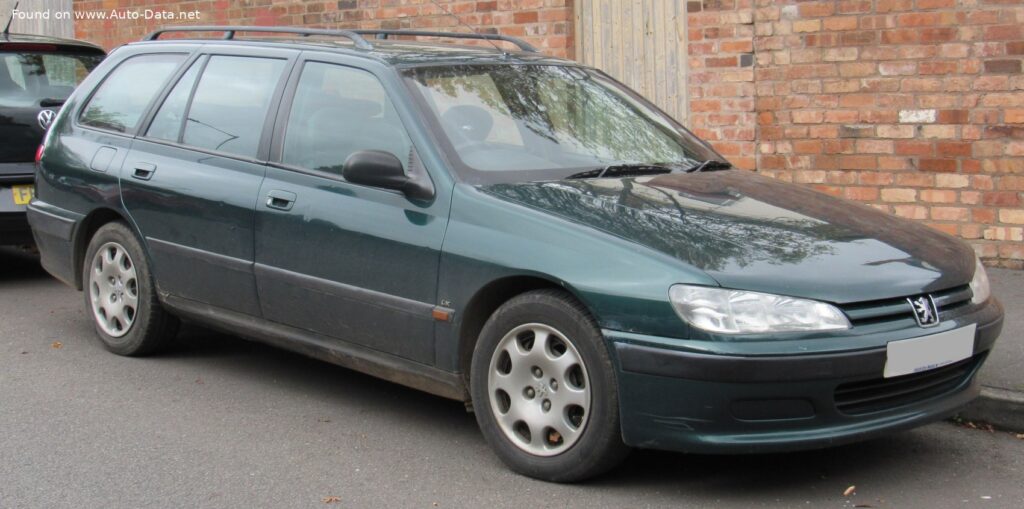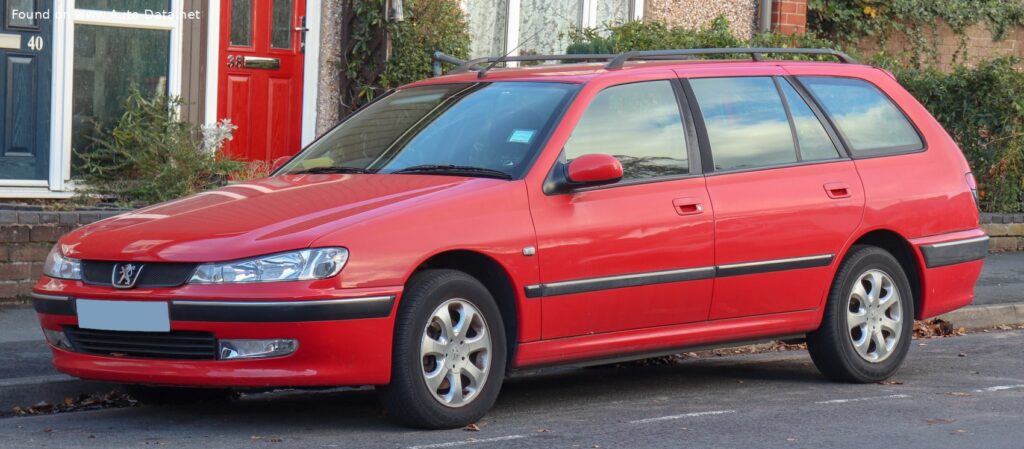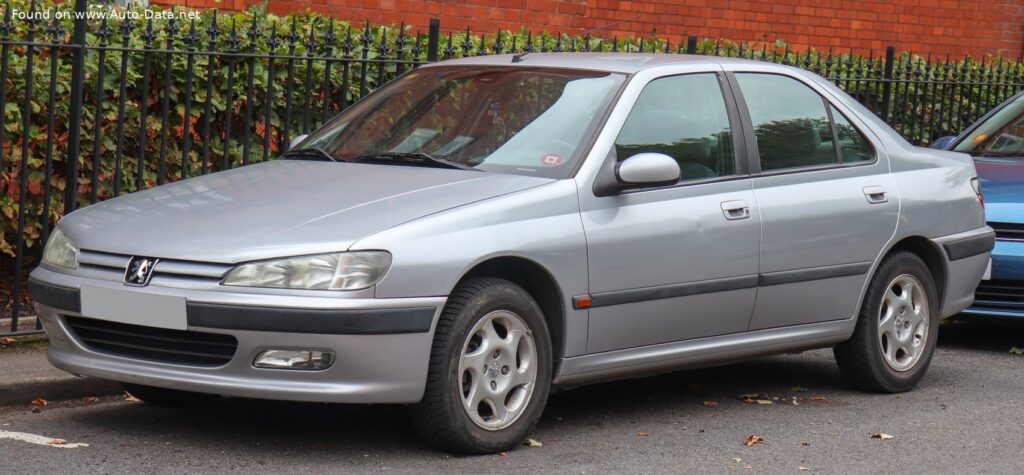
The Peugeot 406, launched in 1995, represented a significant step forward for the French automaker, aiming to compete directly with established mid-size offerings from manufacturers like Ford, Vauxhall (Opel), and Volkswagen. The 406, specifically the Phase I models produced between 1995 and 1999, was a four-door sedan designed to offer a blend of comfort, style, and practicality. This generation of the 406 was not officially sold in the United States, but it achieved considerable success in Europe, becoming a popular choice for families and company car fleets. The 1.8 16V variant, producing 110 horsepower, was a common engine choice, balancing performance with fuel efficiency.
Peugeot 406: A European Mid-Size Sedan
The Peugeot 406 was intended as a replacement for the Peugeot 405, building upon its predecessor’s reputation for reliability and driving dynamics. It was positioned in the D-segment, competing with cars like the Ford Mondeo, Opel Vectra, and Volkswagen Passat. Unlike many of its competitors, the 406 prioritized a more refined driving experience and a distinctive, Pininfarina-designed exterior. The Phase I models, produced from 1995 to 1999, established the core design and mechanical layout of the 406, with later phases introducing styling updates and revised engine options. The 406’s success lay in its ability to offer a compelling alternative to the more mainstream choices in the European market.
Engine & Performance
The 1.8 16V engine powering this variant of the Peugeot 406 is a 1761cc (107.46 cubic inches) inline four-cylinder unit, designated LFY XU7JP4. This naturally aspirated engine produces 110 horsepower at 6000 rpm and 155 Nm (114.32 lb-ft) of torque at 4250 rpm. The engine features a multi-port fuel injection system and a double overhead camshaft (DOHC) valvetrain, contributing to its relatively high power output for its displacement – 62.5 horsepower per liter. Power is delivered to the front wheels via a five-speed manual transmission. The 406 1.8 16V achieves a combined fuel economy of 8.5 liters per 100 kilometers (27.7 US mpg or 33.2 UK mpg), with CO2 emissions of 198 g/km. The weight-to-power ratio is 11.5 kg/Hp, and the weight-to-torque ratio is 8.1 kg/Nm, indicating a reasonably balanced performance profile for everyday driving.
Design & Features
The Peugeot 406 Phase I is a traditional four-door sedan with a sleek, aerodynamic profile penned by the renowned Italian design house Pininfarina. The exterior design was characterized by its flowing lines, relatively low roofline, and distinctive front end. Inside, the 406 offered seating for five passengers and a reasonably spacious cabin for its class. The interior design prioritized ergonomics and comfort, with a focus on providing a pleasant driving environment. Safety features for the time included an Anti-lock Braking System (ABS), which was becoming increasingly common on European vehicles. The trunk (boot) offers a minimum capacity of 430 liters (15.19 cubic feet), providing ample space for luggage and other cargo. The 406’s hydraulic power steering contributed to its ease of maneuverability, and the independent suspension systems – McPherson struts at the front and a multi-link setup at the rear – aimed to deliver a comfortable and controlled ride.
Technical Specifications
| Brand | Peugeot |
| Model | 406 |
| Generation | 406 (Phase I, 1995) |
| Type (Engine) | 1.8 16V (110 Hp) |
| Start of production | 1995 |
| End of production | 1999 |
| Powertrain Architecture | Internal Combustion engine |
| Body type | Sedan |
| Seats | 5 |
| Doors | 4 |
| Fuel consumption (urban) | 10 l/100 km (23.5 US mpg, 28.2 UK mpg, 10 km/l) |
| Fuel consumption (extra urban) | 6.6 l/100 km (35.6 US mpg, 42.8 UK mpg, 15.2 km/l) |
| Fuel consumption (combined) | 8.5 l/100 km (27.7 US mpg, 33.2 UK mpg, 11.8 km/l) |
| CO2 emissions | 198 g/km |
| Fuel Type | Petrol (Gasoline) |
| Weight-to-power ratio | 11.5 kg/Hp |
| Weight-to-torque ratio | 8.1 kg/Nm |
| Power | 110 Hp @ 6000 rpm |
| Torque | 155 Nm @ 4250 rpm (114.32 lb.-ft. @ 4250 rpm) |
| Engine layout | Front, Transverse |
| Engine Model/Code | LFY XU7JP4 |
| Engine displacement | 1761 cm3 (107.46 cu. in.) |
| Number of cylinders | 4 |
| Engine configuration | Inline |
| Cylinder Bore | 83 mm (3.27 in.) |
| Piston Stroke | 81.4 mm (3.2 in.) |
| Number of valves per cylinder | 4 |
| Fuel injection system | Multi-port manifold injection |
| Engine aspiration | Naturally aspirated |
| Valvetrain | DOHC |
| Engine oil capacity | 4.25 l (4.49 US qt | 3.74 UK qt) |
| Coolant capacity | 7.4 l (7.82 US qt | 6.51 UK qt) |
| Kerb Weight | 1260 kg (2777.82 lbs.) |
| Max. weight | 1790 kg (3946.27 lbs.) |
| Max load | 530 kg (1168.45 lbs.) |
| Trunk (boot) space (minimum) | 430 l (15.19 cu. ft.) |
| Fuel tank capacity | 70 l (18.49 US gal | 15.4 UK gal) |
| Length | 4600 mm (181.1 in.) |
| Width | 1765 mm (69.49 in.) |
| Height | 1396 mm (54.96 in.) |
| Wheelbase | 2700 mm (106.3 in.) |
| Front overhang | 937 mm (36.89 in.) |
| Rear overhang | 963 mm (37.91 in.) |
| Drivetrain Architecture | Front wheel drive, Internal Combustion engine |
| Number of gears | 5 |
| Gearbox type | Manual transmission |
| Front suspension | Independent, McPherson with coil spring and anti-roll bar |
| Rear suspension | Independent multi-link spring suspension with stabilizer |
| Front brakes | Ventilated discs |
| Rear brakes | Disc |
| Assisting systems | ABS (Anti-lock braking system) |
| Steering type | Steering rack and pinion |
| Power steering | Hydraulic |
| Tires size | 195/65 R15 |
| Wheel rims size | 15 |