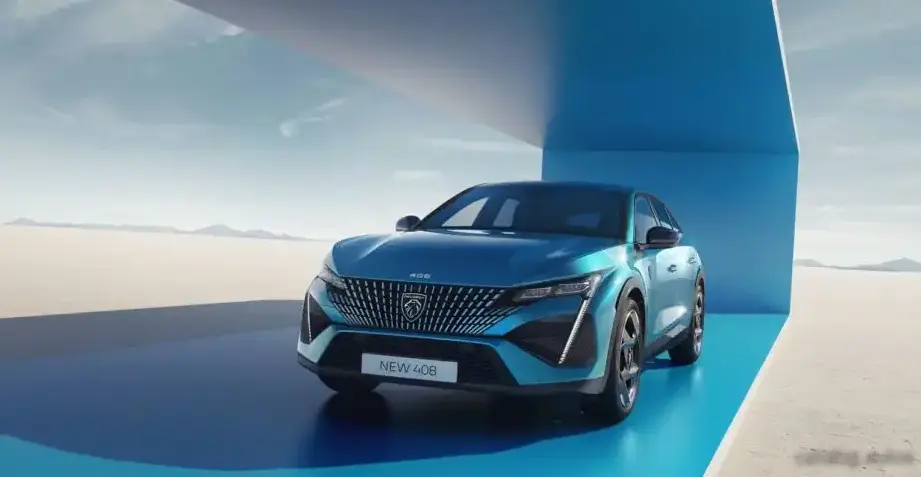
The Peugeot 408 Plug-in Hybrid 1.6 (225 hp) e-EAT8, launched in June 2022, is a key model in Peugeot’s expanding crossover lineup. This variant combines a 1.6-liter turbocharged gasoline engine with an electric motor and an 8-speed automatic transmission, offering a technologically advanced and efficient option. It’s part of the broader 408 series, designed to appeal to buyers seeking a stylish and practical vehicle with a focus on reduced emissions and fuel consumption. The 408 itself aims to bridge the gap between traditional sedans and SUVs, offering a coupe-like silhouette with crossover practicality. This plug-in hybrid version is central to Peugeot’s strategy of offering electrified options, responding to environmental regulations and consumer demand for sustainable transportation.
Technical Specifications
| Brand | Peugeot |
| Model | 408 (crossover) |
| Generation | 408 (crossover) |
| Type (Engine) | 1.6 (225 Hp) Plug-in Hybrid e-EAT8 |
| Start of production | June, 2022 |
| Powertrain Architecture | PHEV (Plug-in Hybrid Electric Vehicle) |
| Body type | Coupe, SUV, Crossover |
| Seats | 5 |
| Doors | 5 |
| Fuel Type | Petrol / electricity |
| Emission standard | Euro 6.4 |
| Weight-to-power ratio | 7.6 kg/Hp, 131.9 Hp/tonne |
| Weight-to-torque ratio | 4.7 kg/Nm, 211 Nm/tonne |
| Gross battery capacity | 12.4 kWh |
| Battery technology | Lithium-ion (Li-Ion) |
| Electric motor power | 110 Hp @ 2500 rpm |
| Electric motor Torque | 320 Nm @ 500-2500 rpm (236.02 lb.-ft. @ 500-2500 rpm) |
| Electric motor location | Between the combustion engine and the transmission |
| System power | 225 Hp |
| System torque | 360 Nm (265.52 lb.-ft.) |
| Power | 180 Hp @ 6000 rpm |
| Power per litre | 112.6 Hp/l |
| Torque | 250 Nm @ 1750 rpm (184.39 lb.-ft. @ 1750 rpm) |
| Engine layout | Front, Transverse |
| Engine Model/Code | DGY EP6FADTXHPD |
| Engine displacement | 1598 cm3 (97.52 cu. in.) |
| Number of cylinders | 4 |
| Engine configuration | Inline |
| Number of valves per cylinder | 4 |
| Fuel injection system | Direct injection |
| Engine aspiration | Turbocharger |
| Kerb Weight | 1706 kg (3761.09 lbs.) |
| Trunk (boot) space – minimum | 471 l (16.63 cu. ft.) |
| Trunk (boot) space – maximum | 1545 l (54.56 cu. ft.) |
| Fuel tank capacity | 40 l (10.57 US gal | 8.8 UK gal) |
| Permitted trailer load with brakes (12%) | 1400 kg (3086.47 lbs.) |
| Length | 4687 mm (184.53 in.) |
| Width | 1848 mm (72.76 in.) |
| Width with mirrors folded | 1859 mm (73.19 in.) |
| Width including mirrors | 2062 mm (81.18 in.) |
| Height | 1478 mm (58.19 in.) |
| Wheelbase | 2787 mm (109.72 in.) |
| Front track | 1589 mm (62.56 in.) |
| Rear (Back) track | 1604 mm (63.15 in.) |
| Front overhang | 904 mm (35.59 in.) |
| Rear overhang | 996 mm (39.21 in.) |
| Ride height (ground clearance) | 189 mm (7.44 in.) |
| Minimum turning circle (turning diameter) | 11.18 m (36.68 ft.) |
| Drive wheel | Front wheel drive |
| Number of gears and type of gearbox | 8 gears, automatic transmission e-EAT |
| Front brakes | Ventilated discs |
| Rear brakes | Disc |
| Tires size | 205/55 R19; 245/40 R20 |
| Wheel rims size | 19; 20 |
Powertrain & Engine Architecture
The Peugeot 408 Plug-in Hybrid 1.6 utilizes Peugeot’s PureTech 1.6-liter turbocharged four-cylinder gasoline engine, identified as the DGY EP6FADTXHPD. This engine employs direct fuel injection and a turbocharger to generate 180 horsepower at 6000 rpm and 250 Nm (184 lb-ft) of torque at 1750 rpm. It’s coupled with a 110 hp electric motor, positioned between the engine and the 8-speed e-EAT automatic transmission. This arrangement enables both all-electric driving and combined petrol-electric operation, achieving a combined system output of 225 horsepower and 360 Nm (265 lb-ft) of torque. The 12.4 kWh lithium-ion battery pack provides an all-electric range of approximately 36 miles (WLTP cycle). The e-EAT8 transmission is specifically calibrated for seamless integration with the electric motor, ensuring smooth gear changes and optimized efficiency. The engine also features a particulate filter to minimize emissions, complying with Euro 6.4 standards.
Driving Characteristics
The 408 Plug-in Hybrid 1.6 delivers a refined and comfortable driving experience. In electric mode, the vehicle operates almost silently, providing instant torque for brisk acceleration. When the gasoline engine engages, the transition is typically smooth and unobtrusive. The 8-speed automatic transmission contributes to efficient power delivery, and the gear ratios are well-suited for both urban and highway driving. Compared to non-hybrid 408 models, the plug-in hybrid offers quicker acceleration due to the combined power output. However, the battery pack’s added weight slightly impacts handling agility. The suspension is tuned for comfort, providing a smooth ride on various road surfaces. The steering is precise and responsive, offering good feedback. The overall driving experience prioritizes practicality and efficiency over outright sportiness.
Equipment & Trim Levels
The 408 Plug-in Hybrid 1.6 is generally well-equipped, even in its base configuration. Standard features commonly include a touchscreen infotainment system with Apple CarPlay and Android Auto, a digital instrument cluster, automatic climate control, and a suite of advanced driver-assistance systems (ADAS) like lane-keeping assist, adaptive cruise control, and automatic emergency braking. Interior upholstery is typically cloth or a combination of cloth and synthetic leather. Higher trim levels offer upgrades such as leather upholstery, a panoramic sunroof, a premium audio system, and heated/ventilated seats. Optional extras may include a hands-free parking assist system and a 360-degree camera.
Chassis & Braking
The 408 features a front-wheel-drive chassis with a MacPherson strut front suspension and a multi-link rear suspension. The suspension is tuned to balance comfort and handling. The braking system utilizes ventilated discs at the front and solid discs at the rear. Anti-lock braking system (ABS) and electronic stability control (ESC) are standard. The steering system is an electric power-assisted rack and pinion, providing precise steering feel. Tire sizes vary by trim level, ranging from 205/55 R19 to 245/40 R20.
Market Reception & Comparison
The Peugeot 408 Plug-in Hybrid 1.6 has received generally positive reviews from automotive critics. It’s praised for its stylish design, comfortable ride, and efficient powertrain. The plug-in hybrid system provides a compelling balance of fuel economy and performance. Compared to other plug-in hybrid crossovers, the 408 distinguishes itself with its unique styling and refined interior. Fuel economy is a significant advantage, with the ability to travel considerable distances on electric power alone. Reliability has been generally good, although some owners have reported minor issues with the infotainment system. Compared to petrol-only 408 versions, the plug-in hybrid is more expensive but offers lower running costs and reduced emissions.
Legacy
The Peugeot 408 Plug-in Hybrid 1.6 represents a significant advancement in Peugeot’s electrification strategy. As a relatively new model, its long-term reliability is still under evaluation. However, Peugeot has a reputation for building durable vehicles, and the powertrain components are generally well-regarded. In the used car market, the 408 Plug-in Hybrid 1.6 is expected to maintain its value, especially as demand for electric and hybrid vehicles increases. Its combination of style, efficiency, and technology makes it an appealing option for buyers seeking a modern and sustainable crossover.