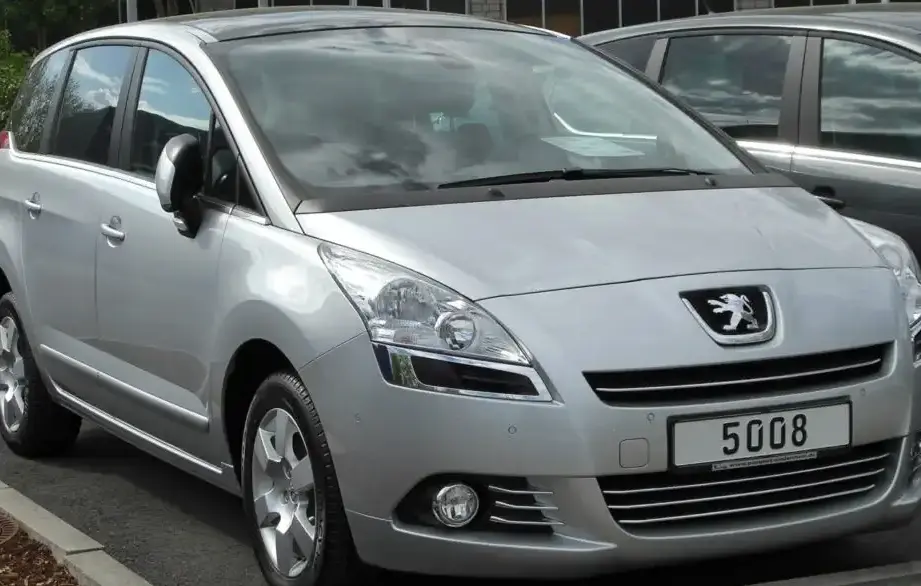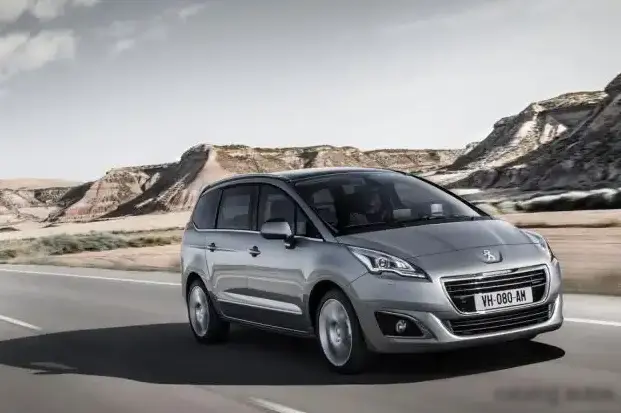
The Peugeot 5008 I (Phase II), specifically the 1.6 e-HDi 115 horsepower variant with the ETG automated manual transmission, was a popular choice in the European market from 2013 to 2015. Positioned as a mid-range offering within the 5008 lineup, it aimed to balance fuel efficiency with practicality for families. This version of the 5008, a compact Multi-Purpose Vehicle (MPV), represented Peugeot’s attempt to cater to buyers seeking a versatile vehicle with lower running costs. It built upon the initial 5008 launch, incorporating styling and technology updates in the Phase II refresh.
Technical Specifications
| Brand | Peugeot |
| Model | 5008 |
| Generation | 5008 I (Phase II, 2013) |
| Type (Engine) | 1.6 e-HDi (115 Hp) FAP ETG |
| Start of production | 2013 |
| End of production | 2015 |
| Powertrain Architecture | Internal Combustion engine |
| Body type | MPV |
| Seats | 5 |
| Doors | 5 |
| Fuel consumption (urban) | 4.6-4.7 l/100 km (51.1 – 50 US mpg, 61.4 – 60.1 UK mpg, 21.7 – 21.3 km/l) |
| Fuel consumption (extra urban) | 3.9-4.3 l/100 km (60.3 – 54.7 US mpg, 72.4 – 65.7 UK mpg, 25.6 – 23.3 km/l) |
| Fuel consumption (combined) | 4.2-4.5 l/100 km (56 – 52.3 US mpg, 67.3 – 62.8 UK mpg, 23.8 – 22.2 km/l) |
| CO2 emissions | 109-117 g/km |
| Fuel Type | Diesel |
| Acceleration 0 – 100 km/h | 13.2 sec |
| Acceleration 0 – 62 mph | 13.2 sec |
| Acceleration 0 – 60 mph | 12.5 sec |
| Maximum speed | 183 km/h (113.71 mph) |
| Emission standard | Euro 5 |
| Weight-to-power ratio | 12.8 kg/Hp, 78.2 Hp/tonne |
| Weight-to-torque ratio | 5.4 kg/Nm, 183.7 Nm/tonne |
| Power | 115 Hp @ 3600 rpm |
| Power per litre | 73.7 Hp/l |
| Torque | 270 Nm @ 1750 rpm (199.14 lb.-ft. @ 1750 rpm) |
| Engine layout | Front, Transverse |
| Engine Model/Code | 9HD DV6C |
| Engine displacement | 1560 cm3 (95.2 cu. in.) |
| Number of cylinders | 4 |
| Engine configuration | Inline |
| Number of valves per cylinder | 2 |
| Fuel injection system | Diesel Commonrail |
| Engine aspiration | Turbocharger, Intercooler |
| Engine oil capacity | 3.75 l (3.96 US qt | 3.3 UK qt) |
| Kerb Weight | 1470 kg (3240.8 lbs.) |
| Max. weight | 2070 kg (4563.57 lbs.) |
| Max load | 600 kg (1322.77 lbs.) |
| Trunk (boot) space – minimum | 679 l (23.98 cu. ft.) |
| Trunk (boot) space – maximum | 1754 l (61.94 cu. ft.) |
| Fuel tank capacity | 60 l (15.85 US gal | 13.2 UK gal) |
| Length | 4529 mm (178.31 in.) |
| Width with mirrors folded | 1888 mm (74.33 in.) |
| Width including mirrors | 2118 mm (83.39 in.) |
| Height | 1647 mm (64.84 in.) |
| Wheelbase | 2727 mm (107.36 in.) |
| Front overhang | 934 mm (36.77 in.) |
| Rear overhang | 868 mm (34.17 in.) |
| Ride height (ground clearance) | 115-137 mm (4.53 – 5.39 in.) |
| Minimum turning circle | 11.1 m (36.42 ft.) |
| Drivetrain Architecture | Front wheel drive |
| Number of gears and type of gearbox | 6 gears, automatic transmission ETG |
| Front suspension | Independent type McPherson |
| Rear suspension | Semi-independent, coil spring |
| Front brakes | Ventilated discs |
| Rear brakes | Disc |
| Assisting systems | ABS (Anti-lock braking system) |
| Steering type | Steering rack and pinion |
| Tires size | 215/55 R16; 215/50 R17; 215/45 R18 |
| Wheel rims size | 16; 17; 18 |
Powertrain & Engine Architecture
The heart of this 5008 variant is the PSA Group’s 9HD DV6C 1.6-liter four-cylinder diesel engine. This engine is part of the DV6 family, known for its relatively compact size and fuel efficiency. It utilizes a turbocharger with an intercooler to boost power output, achieving 115 horsepower at 3600 rpm and 270 Nm (199 lb-ft) of torque at 1750 rpm. The engine employs a diesel common rail direct injection system, delivering fuel directly into the cylinders at high pressure for optimized combustion. The engine also features a Diesel Particulate Filter (DPF), denoted by the “FAP” in the model name, to reduce particulate emissions and comply with Euro 5 standards.
Paired with the engine is the ETG (Efficient Tronic Gearbox), a six-speed automated manual transmission. Unlike a traditional automatic transmission with a torque converter, the ETG is essentially a conventional manual gearbox with robotic actuators controlling the clutch and gear changes. This design aims to provide the fuel efficiency of a manual transmission with the convenience of an automatic. However, it’s often criticized for its slower and sometimes jerky shifts compared to conventional automatics.
Driving Characteristics
The 1.6 e-HDi with the ETG transmission delivers adequate, but not exhilarating, performance. Acceleration from 0 to 62 mph takes around 13.2 seconds, and top speed is 183 km/h (113.71 mph). The ETG transmission’s gear ratios are tuned for fuel economy, meaning the engine often feels strained during quick acceleration. Compared to the more powerful 2.0-liter HDi variants, this 1.6L engine feels noticeably less responsive. The ETG transmission can also exhibit hesitation during downshifts and occasional jerky transitions, particularly at lower speeds. However, in steady-state cruising, the transmission operates smoothly and contributes to the vehicle’s impressive fuel economy.
Equipment & Trim Levels
The 1.6 e-HDi ETG trim typically included standard features such as air conditioning, electric front windows, a CD/radio system with USB connectivity, and ABS brakes. Higher trim levels offered options like rear parking sensors, automatic headlights and wipers, a panoramic sunroof, and upgraded upholstery. Interior materials were generally durable but not luxurious, reflecting the vehicle’s positioning as a practical family car. The dashboard layout was functional and straightforward, with easy-to-use controls.
Chassis & Braking
The 5008’s chassis features an independent McPherson strut suspension at the front and a semi-independent coil spring suspension at the rear. This setup provides a comfortable ride quality, absorbing bumps and imperfections in the road reasonably well. The front brakes are ventilated discs, while the rear brakes are solid discs. The steering is a rack and pinion system, offering decent precision and feedback. The weight distribution is fairly balanced, contributing to predictable handling characteristics.
Market Reception & Comparison
The 1.6 e-HDi ETG variant of the 5008 was well-received by buyers prioritizing fuel economy and practicality. Critics praised its low running costs and spacious interior, but often criticized the ETG transmission for its sluggishness and lack of refinement. Compared to the more powerful diesel options, this variant offered a lower price point but sacrificed performance. The 2.0-liter HDi models provided a more engaging driving experience but came with higher fuel consumption and purchase costs. The 1.6 e-HDi was often seen as a sensible choice for urban commuters and families who didn’t require high-speed performance.
Legacy
The 1.6 e-HDi engine and ETG transmission combination proved to be generally reliable, although the ETG gearbox did experience some reported issues with actuator failures and software glitches. Regular maintenance, including timely oil changes and DPF regeneration, is crucial for long-term reliability. In the used car market, this variant of the 5008 remains a popular choice due to its affordability and fuel efficiency. However, potential buyers should be aware of the ETG transmission’s quirks and ensure it has been properly maintained. The 5008, in general, established Peugeot as a strong contender in the compact MPV segment, and this 1.6 e-HDi variant played a significant role in its success.