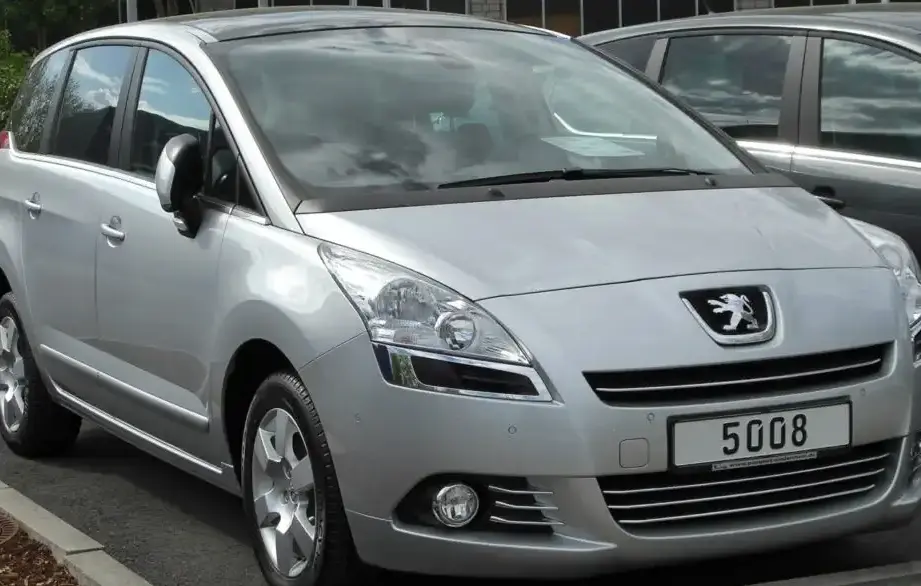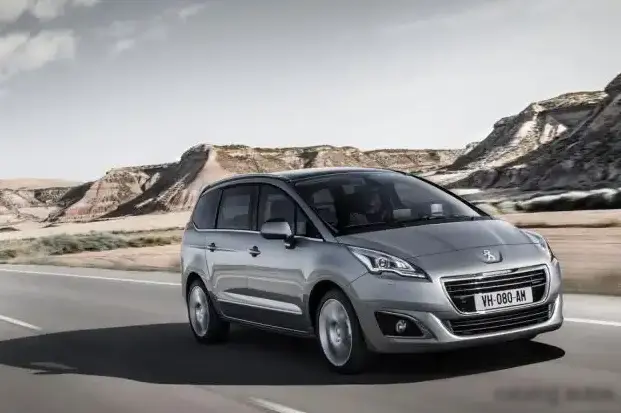
The Peugeot 5008 I (Phase II), specifically the 1.6 THP 156 horsepower variant with seven seats, represents a significant iteration of Peugeot’s popular multi-purpose vehicle (MPV). Introduced in 2013 as part of a mid-life refresh for the first-generation 5008 (produced from 2009-2015), this model aimed to balance practicality, fuel efficiency, and a more refined driving experience. Positioned as a mid-range offering within the 5008 lineup, it slotted between the lower-powered diesel options and the more expensive, fully-equipped trims. This version was primarily marketed in Europe, where MPVs remained a popular choice for families.
Technical Specifications
| Brand | Peugeot |
| Model | 5008 |
| Generation | 5008 I (Phase II, 2013) |
| Type (Engine) | 1.6 THP (156 Hp) 7 Seat |
| Start of production | 2013 |
| End of production | 2015 |
| Powertrain Architecture | Internal Combustion engine |
| Body type | MPV |
| Seats | 7 |
| Doors | 5 |
| Fuel consumption (urban) | 9.3-9.7 l/100 km (25.3 – 24.2 US mpg) |
| Fuel consumption (extra urban) | 5.5 l/100 km (42.8 US mpg) |
| Fuel consumption (combined) | 6.9-7.0 l/100 km (34.1 – 33.6 US mpg) |
| CO2 emissions | 159-163 g/km |
| Fuel Type | Petrol (Gasoline) |
| Acceleration 0 – 100 km/h | 9.6 sec |
| Acceleration 0 – 62 mph | 9.6 sec |
| Acceleration 0 – 60 mph | 9.1 sec |
| Maximum speed | 195 km/h (121.17 mph) |
| Emission standard | Euro 5 |
| Weight-to-power ratio | 9.6 kg/Hp |
| Weight-to-torque ratio | 6.2 kg/Nm |
| Power | 156 Hp @ 5800 rpm |
| Torque | 240 Nm @ 1400 rpm (177.01 lb.-ft. @ 1400 rpm) |
| Engine layout | Front, Transverse |
| Engine Model/Code | 5FV EP6CDT |
| Engine displacement | 1598 cm3 (97.52 cu. in.) |
| Number of cylinders | 4 |
| Engine configuration | Inline |
| Number of valves per cylinder | 4 |
| Fuel injection system | Direct injection |
| Engine aspiration | Turbocharger, Intercooler |
| Engine oil capacity | 4.25 l (4.49 US qt | 3.74 UK qt) |
| Coolant capacity | 6.4 l (6.76 US qt | 5.63 UK qt) |
| Kerb Weight | 1490 kg (3284.89 lbs.) |
| Max. weight | 2225 kg (4905.29 lbs.) |
| Max load | 735 kg (1620.4 lbs.) |
| Trunk (boot) space – minimum | 194 l (6.85 cu. ft.) |
| Trunk (boot) space – maximum | 1754 l (61.94 cu. ft.) |
| Fuel tank capacity | 60 l (15.85 US gal | 13.2 UK gal) |
| Permitted trailer load with brakes (12%) | 1500 kg (3306.93 lbs.) |
| Length | 4529 mm (178.31 in.) |
| Width with mirrors folded | 1888 mm (74.33 in.) |
| Width including mirrors | 2118 mm (83.39 in.) |
| Height | 1622 mm (63.86 in.) |
| Wheelbase | 2727 mm (107.36 in.) |
| Front overhang | 934 mm (36.77 in.) |
| Rear overhang | 868 mm (34.17 in.) |
| Ride height (ground clearance) | 108-112 mm (4.25 – 4.41 in.) |
| Minimum turning circle | 11.1 m (36.42 ft.) |
| Drivetrain Architecture | Front wheel drive |
| Number of gears and type of gearbox | 6 gears, manual transmission |
| Front suspension | Independent type McPherson |
| Rear suspension | Semi-independent, coil spring |
| Front brakes | Ventilated discs |
| Rear brakes | Disc |
| Assisting systems | ABS (Anti-lock braking system) |
| Steering type | Steering rack and pinion |
| Tires size | 215/55 R16; 215/50 R17; 215/45 R18 |
| Wheel rims size | 16; 17; 18 |
Powertrain & Engine Architecture
At the heart of the 5008 1.6 THP lies the EP6CDT engine, a 1.6-liter turbocharged four-cylinder petrol engine. This engine is part of Peugeot and Citroën’s Prince engine family, developed in collaboration with BMW. The “THP” designation stands for “Turbo High Pressure,” indicating the use of a twin-scroll turbocharger and direct fuel injection. The direct injection system, operating at pressures up to 190 bar, ensures precise fuel delivery for improved efficiency and performance. The engine features a DOHC (Double Overhead Camshaft) valvetrain with four valves per cylinder, contributing to its responsive nature. The 5008 1.6 THP utilized a six-speed manual transmission, delivering power to the front wheels. This transmission was chosen for its balance of efficiency and driver engagement.
Driving Characteristics
The 156 horsepower output of the 1.6 THP engine provided the 5008 with adequate performance for everyday driving. Acceleration from 0 to 60 mph took approximately 9.1 seconds, and the car could reach a top speed of 195 km/h (121 mph). While not a sports car, the turbocharger provided a noticeable boost in power, particularly at mid-range speeds. Compared to the diesel variants, the 1.6 THP offered a more linear power delivery and a more responsive feel. However, it lacked the low-end torque of the diesel engines, requiring more frequent gear changes to maintain momentum, especially when fully loaded. The six-speed manual transmission was well-matched to the engine’s characteristics, offering precise shifts and a reasonable spread of ratios.
Equipment & Trim Levels
The 1.6 THP 7-seat version of the 5008 typically came equipped with features such as air conditioning, a CD stereo with auxiliary input, electric front and rear windows, and remote central locking. Higher trim levels added features like alloy wheels, rear parking sensors, a panoramic sunroof, and a more advanced infotainment system. Interior upholstery was generally cloth, with options for leather upgrades. Safety features included ABS, ESP (Electronic Stability Program), and multiple airbags. The seven-seat configuration offered versatility for families, with the third-row seats folding flat into the floor when not in use.
Chassis & Braking
The 5008 utilized a McPherson strut front suspension and a semi-independent coil spring rear suspension. This setup provided a comfortable ride quality, well-suited for long journeys. The front brakes were ventilated discs, while the rear brakes were solid discs. ABS (Anti-lock Braking System) was standard, enhancing braking performance and stability. The steering was a rack and pinion system, offering reasonable precision and feedback. The suspension was tuned to prioritize comfort over sporty handling, resulting in a slight degree of body roll during cornering.
Market Reception & Comparison
The Peugeot 5008 1.6 THP was generally well-received by automotive critics. It was praised for its spacious interior, comfortable ride, and fuel-efficient engine. However, some reviewers noted that the engine could feel strained when fully loaded or driving uphill. Compared to the diesel versions, the 1.6 THP offered a more refined driving experience but slightly lower fuel economy. Against competitors like the Renault Grand Scenic and Citroën C4 Grand Picasso, the 5008 stood out with its distinctive styling and practical interior layout.
Legacy
The 1.6 THP engine, while generally reliable, has been known to exhibit issues with carbon buildup on the intake valves, particularly in vehicles that primarily undertake short journeys. Regular servicing and the use of quality fuel can help mitigate this risk. The 5008 I (Phase II) remains a popular choice in the used car market, offering a good balance of practicality, comfort, and affordability. The seven-seat configuration makes it a particularly attractive option for families. While newer generations of the 5008 have since been released, the first-generation model continues to hold its own as a versatile and dependable MPV.