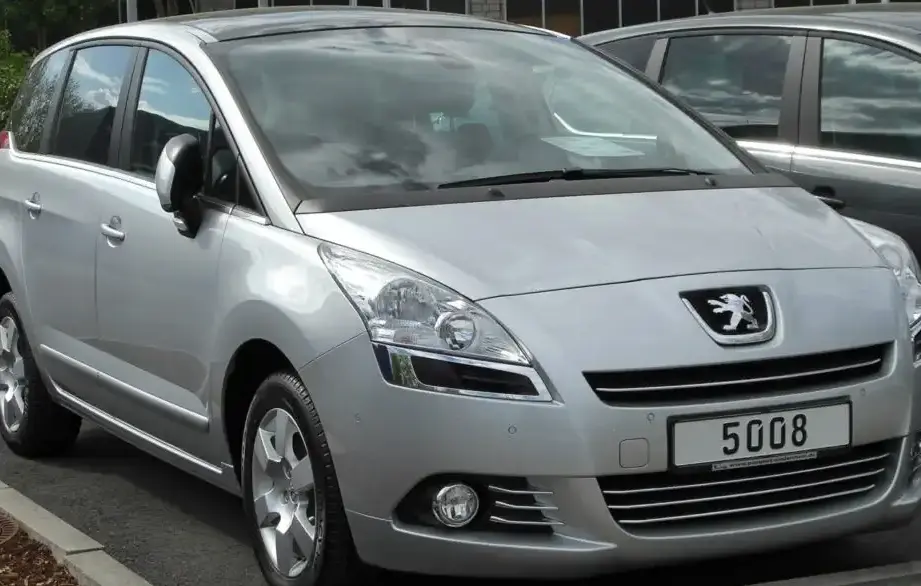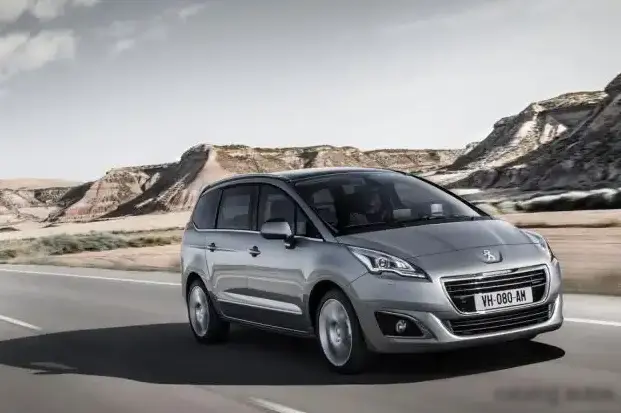
The Peugeot 5008 I (Phase II), specifically the 1.6 VTi variant producing 120 horsepower, was a popular choice in the European market from 2013 to 2015. This iteration of the 5008, built on the EMP2 platform, represented a mid-cycle refresh of the original 5008 introduced in 2009. Positioned as an entry-level to mid-range option within the 5008 lineup, it offered a more affordable alternative to the diesel-powered models and the higher-specification petrol engines. The Phase II update brought styling revisions, improved interior materials, and updated technology, aiming to enhance the vehicle’s appeal in a competitive segment.
Technical Specifications
| Brand | Peugeot |
| Model | 5008 |
| Generation | 5008 I (Phase II, 2013) |
| Type (Engine) | 1.6 VTi (120 Hp) |
| Start of production | 2013 |
| End of production | 2015 |
| Powertrain Architecture | Internal Combustion engine |
| Body type | MPV |
| Seats | 5 |
| Doors | 5 |
| Fuel consumption (urban) | 9.4 l/100 km (25 US mpg, 30.1 UK mpg, 10.6 km/l) |
| Fuel consumption (extra urban) | 5.5 l/100 km (42.8 US mpg, 51.4 UK mpg, 18.2 km/l) |
| Fuel consumption (combined) | 6.9 l/100 km (34.1 US mpg, 40.9 UK mpg, 14.5 km/l) |
| CO2 emissions | 159 g/km |
| Fuel Type | Petrol (Gasoline) |
| Acceleration 0 – 100 km/h | 12.2 sec |
| Acceleration 0 – 62 mph | 12.2 sec |
| Acceleration 0 – 60 mph | 11.6 sec |
| Maximum speed | 187 km/h (116.2 mph) |
| Emission standard | Euro 5 |
| Weight-to-power ratio | 11.7 kg/Hp, 85.4 Hp/tonne |
| Weight-to-torque ratio | 8.8 kg/Nm, 113.9 Nm/tonne |
| Power | 120 Hp @ 6000 rpm |
| Power per litre | 75.1 Hp/l |
| Torque | 160 Nm @ 4250 rpm (118.01 lb.-ft. @ 4250 rpm) |
| Engine layout | Front, Transverse |
| Engine Model/Code | EP6C |
| Engine displacement | 1598 cm3 (97.52 cu. in.) |
| Number of cylinders | 4 |
| Engine configuration | Inline |
| Number of valves per cylinder | 4 |
| Fuel injection system | Multi-port manifold injection |
| Engine aspiration | Naturally aspirated engine |
| Engine oil capacity | 4.25 l (4.49 US qt | 3.74 UK qt) |
| Coolant capacity | 6 l (6.34 US qt | 5.28 UK qt) |
| Kerb Weight | 1405 kg (3097.49 lbs.) |
| Max. weight | 2000 kg (4409.25 lbs.) |
| Max load | 595 kg (1311.75 lbs.) |
| Trunk (boot) space – minimum | 679 l (23.98 cu. ft.) |
| Trunk (boot) space – maximum | 1754 l (61.94 cu. ft.) |
| Fuel tank capacity | 60 l (15.85 US gal | 13.2 UK gal) |
| Permitted trailer load with brakes (12%) | 1500 kg (3306.93 lbs.) |
| Length | 4529 mm (178.31 in.) |
| Width with mirrors folded | 1888 mm (74.33 in.) |
| Width including mirrors | 2118 mm (83.39 in.) |
| Height | 1647 mm (64.84 in.) |
| Wheelbase | 2727 mm (107.36 in.) |
| Front overhang | 934 mm (36.77 in.) |
| Rear overhang | 868 mm (34.17 in.) |
| Ride height (ground clearance) | 108-112 mm (4.25 – 4.41 in.) |
| Minimum turning circle (turning diameter) | 11.1 m (36.42 ft.) |
| Drivetrain Architecture | The Internal combustion engine (ICE) drives the front wheels of the vehicle. |
| Drive wheel | Front wheel drive |
| Number of gears and type of gearbox | 5 gears, manual transmission |
| Front suspension | Independent type McPherson |
| Rear suspension | Semi-independent, coil spring |
| Front brakes | Ventilated discs |
| Rear brakes | Disc |
| Assisting systems | ABS (Anti-lock braking system) |
| Steering type | Steering rack and pinion |
| Tires size | 215/55 R16 |
| Wheel rims size | 16 |
Powertrain & Engine Architecture
The 1.6 VTi engine, designated EP6C, is a naturally aspirated, inline-four cylinder petrol engine. It features a multi-point fuel injection system and a double overhead camshaft (DOHC) valvetrain with four valves per cylinder. This engine is part of Peugeot’s Prince engine family, developed in collaboration with BMW. The 120 horsepower output is achieved at 6000 rpm, with a peak torque of 160 Nm (118 lb-ft) delivered at 4250 rpm. The engine’s relatively simple design contributes to its reliability, but it lacks the performance of turbocharged alternatives. The 5-speed manual transmission was the standard offering for this variant, providing a straightforward driving experience. The transmission’s gear ratios were tuned for fuel efficiency rather than outright acceleration.
Driving Characteristics
The 5008 1.6 VTi with a manual transmission offered a comfortable, if not particularly exciting, driving experience. Acceleration from 0-100 km/h (0-62 mph) took around 12.2 seconds, making it adequate for everyday driving but not ideal for spirited performance. The engine felt somewhat strained when fully loaded or climbing hills, requiring frequent downshifts to maintain speed. Compared to the diesel variants, the 1.6 VTi lacked low-end torque, but it offered a smoother and quieter operation. The manual gearbox was light and easy to use, enhancing driver engagement. The suspension provided a good balance between comfort and handling, absorbing bumps effectively while maintaining reasonable body control.
Equipment & Trim Levels
The 1.6 VTi trim typically included standard features such as air conditioning, electric front windows, a CD player with auxiliary input, and ABS brakes. Higher trim levels, available as options, added features like alloy wheels, rear parking sensors, a panoramic sunroof, and a more advanced infotainment system. Interior upholstery was typically cloth, with a functional and durable design. The dashboard layout was straightforward and user-friendly, with logically placed controls. Safety features included driver and passenger airbags, side airbags, and curtain airbags.
Chassis & Braking
The 5008’s chassis featured an independent McPherson strut suspension at the front and a semi-independent coil spring suspension at the rear. This setup provided a comfortable ride and decent handling characteristics. The front brakes were ventilated discs, while the rear brakes were solid discs. ABS (Anti-lock Braking System) was standard, enhancing braking performance and stability. The steering was a rack and pinion system, offering precise and responsive control. The 16-inch wheels and 215/55 R16 tires provided a good balance between comfort and grip.
Market Reception & Comparison
The 5008 1.6 VTi was generally well-received as an affordable and practical MPV. Critics praised its spacious interior, comfortable ride, and good fuel economy (around 6.9 l/100 km combined). However, some reviewers noted its lack of performance compared to the diesel models and the higher-powered petrol engines. Compared to the 2.0-liter HDi diesel variants, the 1.6 VTi offered lower running costs but significantly less torque and acceleration. The petrol engine was favored by drivers who primarily used the vehicle for shorter journeys and did not require the long-range capabilities of a diesel.
Legacy
The Peugeot 5008 1.6 VTi has proven to be a relatively reliable powertrain, with few major issues reported. The EP6C engine is known for its durability, and the 5-speed manual transmission is also generally robust. In the used car market, this variant represents a good value proposition for buyers seeking a practical and affordable MPV. However, potential buyers should be aware of the engine’s relatively low power output and the potential for timing chain wear, a common issue with the Prince engine family. Overall, the 5008 1.6 VTi remains a popular choice for families and individuals seeking a versatile and economical vehicle.