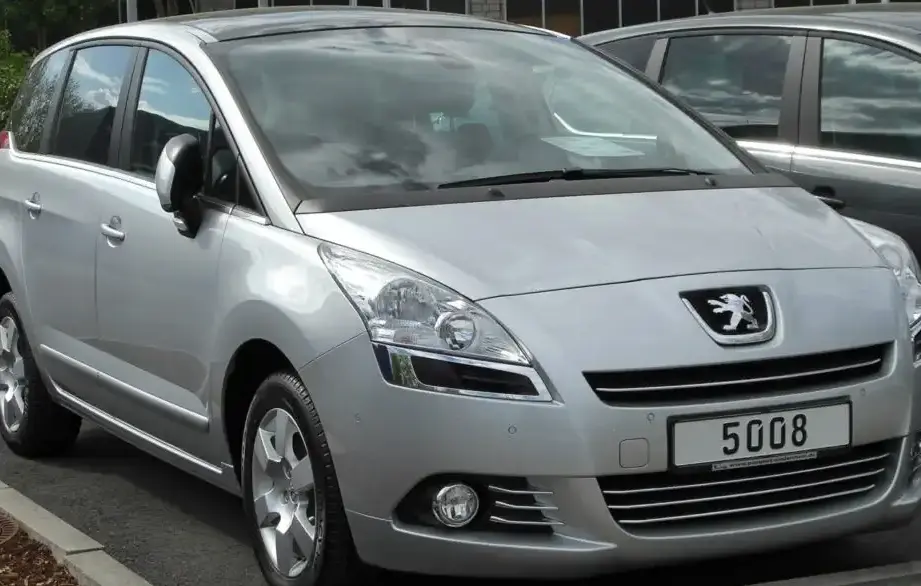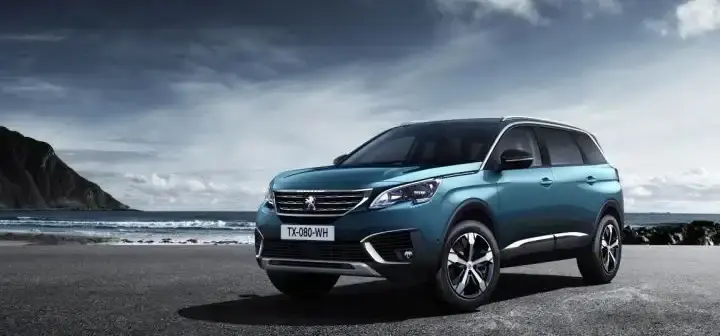
The Peugeot 5008 II, launched in 2016, represented a significant departure from its predecessor, moving from a minivan-like MPV to a more contemporary and stylish SUV. The 2.0 BlueHDi 150 horsepower variant, produced between 2016 and 2018 (Phase I), was a key offering in the 5008 lineup, particularly in European markets. Positioned as a mid-range option, it balanced fuel efficiency with respectable performance for family transport. This model aimed to appeal to buyers seeking a practical seven-seater with a more premium feel than the entry-level petrol options.
Technical Specifications
| Brand | Peugeot |
| Model | 5008 |
| Generation | 5008 II (Phase I, 2017) |
| Type (Engine) | 2.0 BlueHDi (150 Hp) |
| Start of production | 2016 |
| End of production | 2018 |
| Powertrain Architecture | Internal Combustion engine |
| Body type | SUV |
| Seats | 7 |
| Doors | 5 |
| Fuel consumption (urban) | 5.3 – 5.6 l/100 km (44.4 – 42 US mpg) |
| Fuel consumption (extra urban) | 4.2 – 4.4 l/100 km (56 – 53.5 US mpg) |
| Fuel consumption (combined) | 4.6 – 4.8 l/100 km (51.1 – 49 US mpg) |
| CO2 emissions | 118 – 125 g/km |
| Fuel Type | Diesel |
| Acceleration 0 – 100 km/h | 9.6 – 10.8 sec |
| Acceleration 0 – 62 mph | 9.6 – 10.8 sec |
| Acceleration 0 – 60 mph | 9.1 sec |
| Maximum speed | 206 km/h (128 mph) |
| Emission standard | Euro 6 |
| Weight-to-power ratio | 9.9 kg/Hp |
| Weight-to-torque ratio | 4 kg/Nm |
| Power | 150 Hp @ 4000 rpm |
| Torque | 370 Nm @ 2000 rpm (272.9 lb.-ft. @ 2000 rpm) |
| Engine layout | Front, Transverse |
| Engine Model/Code | AHX DW10FD |
| Engine displacement | 1997 cm3 (121.86 cu. in.) |
| Number of cylinders | 4 |
| Engine configuration | Inline |
| Cylinder Bore | 85 mm (3.35 in.) |
| Piston Stroke | 88 mm (3.46 in.) |
| Number of valves per cylinder | 4 |
| Fuel injection system | Diesel Commonrail |
| Engine aspiration | Turbocharger, Intercooler |
| Engine oil capacity | 5 l (5.28 US qt | 4.4 UK qt) |
| Kerb Weight | 1490 kg (3284.89 lbs.) |
| Max. weight | 2230 kg (4916.31 lbs.) |
| Max load | 740 kg (1631.42 lbs.) |
| Trunk (boot) space – minimum | 780 l (27.55 cu. ft.) |
| Trunk (boot) space – maximum | 1940 l (68.51 cu. ft.) |
| Fuel tank capacity | 56 l (14.79 US gal | 12.32 UK gal) |
| Max. roof load | 80 kg (176.37 lbs.) |
| Permitted trailer load with brakes (12%) | 1800 kg (3968.32 lbs.) |
| Permitted trailer load without brakes | 750 kg (1653.47 lbs.) |
| Permitted towbar download | 72 kg (158.73 lbs.) |
| Length | 4641 mm (182.72 in.) |
| Width | 1844 mm (72.6 in.) |
| Width with mirrors folded | 1906 mm (75.04 in.) |
| Width including mirrors | 2098 mm (82.6 in.) |
| Height | 1646 mm (64.8 in.) |
| Wheelbase | 2840 mm (111.81 in.) |
| Front track | 1593-1601 mm (62.72 – 63.03 in.) |
| Rear (Back) track | 1587-1610 mm (62.48 – 63.39 in.) |
| Front overhang | 926 mm (36.46 in.) |
| Rear overhang | 875 mm (34.45 in.) |
| Ride height (ground clearance) | 236 mm (9.29 in.) |
| Minimum turning circle | 11.2 m (36.75 ft.) |
| Front suspension | Coil spring, Independent type McPherson |
| Rear suspension | Semi-independent, coil spring |
| Front brakes | Ventilated discs |
| Rear brakes | Disc |
| Steering type | Steering rack and pinion |
| Power steering | Electric Steering |
| Tires size | 225/55 R18 |
| Wheel rims size | 18 |
Powertrain & Engine Architecture
The heart of this 5008 variant is the DW10FD engine, a 2.0-liter inline-four cylinder diesel engine. This engine, commonly found in PSA Group (Peugeot, Citroën, DS) vehicles, is known for its robust construction and relatively good fuel economy. The ‘BlueHDi’ designation indicates the inclusion of Selective Catalytic Reduction (SCR) technology, utilizing AdBlue (Diesel Exhaust Fluid) to reduce nitrogen oxide (NOx) emissions, ensuring compliance with stringent Euro 6 emission standards. The AHX engine code specifically denotes a version tuned to produce 150 horsepower at 4000 rpm and 370 Nm (272.9 lb-ft) of torque at 2000 rpm. This torque output is a key characteristic of modern diesel engines, providing strong pulling power at lower engine speeds. The engine employs a common rail direct injection system, delivering fuel directly into the cylinders at high pressure for efficient combustion. A turbocharger with an intercooler further enhances performance by forcing more air into the engine. The 5008 2.0 BlueHDi 150 typically came equipped with a six-speed manual transmission, although an optional six-speed automatic transmission was also available.
Driving Characteristics
The 2.0 BlueHDi 150 hp engine, when paired with the six-speed manual transmission, offered a comfortable and capable driving experience. Acceleration from 0-62 mph (0-100 km/h) took around 9.6 to 10.8 seconds, which is adequate for everyday driving and family transportation. The engine’s strong low-end torque made overtaking at highway speeds relatively effortless. Compared to the more powerful 180 hp BlueHDi variant, the 150 hp version felt less urgent in its acceleration, but it provided a more relaxed and fuel-efficient driving experience. The automatic transmission, while offering convenience, slightly dulled the responsiveness compared to the manual. Gear ratios were tuned for fuel economy, with a relatively long final drive. The 5008’s weight of approximately 1490 kg (3285 lbs) did impact overall performance, but the engine’s torque helped mitigate this.
Equipment & Trim Levels
The 2.0 BlueHDi 150 typically came in mid-range trim levels, such as ‘Allure’ or ‘Active’. Standard equipment often included air conditioning, a touchscreen infotainment system with Bluetooth connectivity, cruise control, rear parking sensors, and automatic headlights and wipers. Higher trim levels added features like leather upholstery, panoramic sunroof, navigation system, and advanced driver-assistance systems (ADAS) such as lane departure warning and automatic emergency braking. Interior upholstery was generally cloth in the base trims, with leather options available as upgrades. The dashboard layout was modern and driver-focused, featuring a compact steering wheel and a digital instrument cluster.
Chassis & Braking
The 5008 II utilized a McPherson strut front suspension and a semi-independent coil spring rear suspension. This setup provided a good balance between ride comfort and handling. The front brakes were ventilated discs, while the rear brakes were solid discs, providing adequate stopping power for the vehicle’s weight. Anti-lock Braking System (ABS) and Electronic Stability Control (ESC) were standard safety features. The steering was electrically assisted, offering light and precise control. The 5008’s relatively high ground clearance of 236 mm (9.29 in) made it suitable for tackling rough roads and uneven surfaces.
Market Reception & Comparison
The Peugeot 5008 II, and specifically the 2.0 BlueHDi 150 variant, received generally positive reviews from automotive critics. It was praised for its stylish design, spacious interior, and fuel efficiency. The diesel engine was noted for its refinement and strong torque output. Compared to petrol-powered versions, the BlueHDi offered significantly better fuel economy, making it a popular choice for long-distance drivers. However, some critics noted that the automatic transmission could feel sluggish at times. In terms of reliability, the DW10FD engine has a generally good reputation, although diesel particulate filter (DPF) issues can occur with infrequent long journeys.
Legacy
The Peugeot 5008 II 2.0 BlueHDi 150 remains a popular choice in the used car market, particularly for families seeking a practical and fuel-efficient SUV. The DW10FD engine is known for its durability, but regular maintenance, including timely AdBlue refills and DPF regeneration, is crucial to ensure long-term reliability. The 5008’s stylish design and spacious interior continue to appeal to buyers, making it a competitive option in the used SUV segment. While newer models offer more advanced technology and features, the Phase I 5008 2.0 BlueHDi 150 represents a well-rounded and capable vehicle that provides a good balance of performance, economy, and practicality.