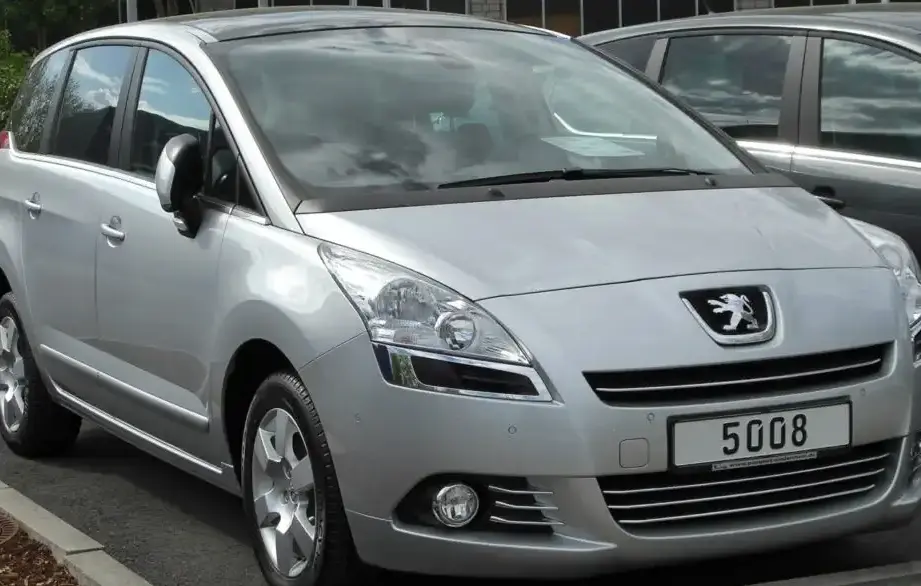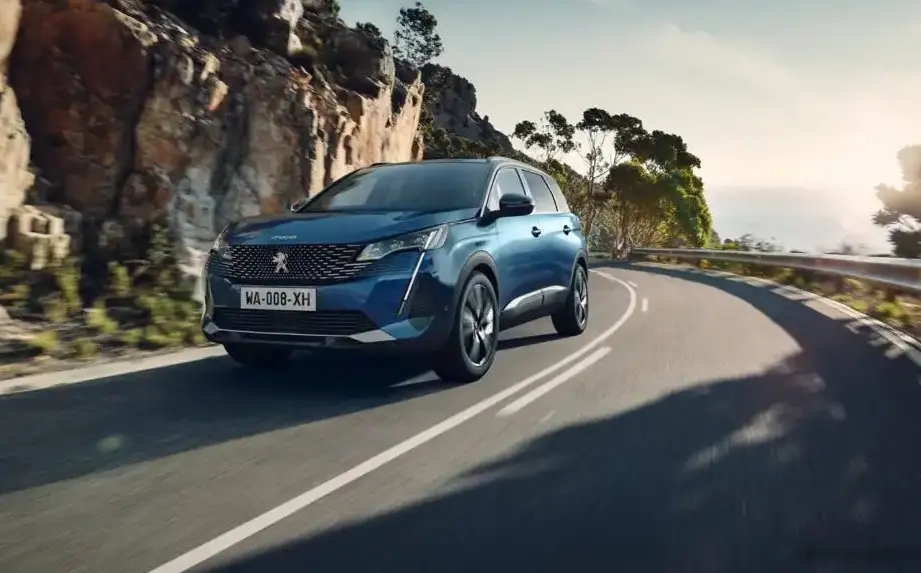
The Peugeot 5008 II, specifically the 1.5 BlueHDi 130 horsepower automatic variant, represents a significant offering within the compact SUV segment. Introduced in September 2020 as part of the Phase II refresh of the second-generation 5008 (internally designated as the P87 platform), this model aimed to balance fuel efficiency, practicality, and comfort for family buyers. Production continued through March 2024. This version occupied a mid-range position in the 5008 lineup, slotting between the lower-powered diesel options and the more potent gasoline engines.
Technical Specifications
| Brand | Peugeot |
| Model | 5008 |
| Generation | 5008 II (Phase II, 2020) |
| Type (Engine) | 1.5 BlueHDi (130 Hp) Automatic |
| Start of production | September, 2020 |
| End of production | March, 2024 |
| Powertrain Architecture | Internal Combustion engine |
| Body type | SUV |
| Seats | 7 |
| Doors | 5 |
| Fuel consumption at Low speed (WLTP) | 5.5-6.7 l/100 km (42.8 – 35.1 US mpg, 51.4 – 42.2 UK mpg, 18.2 – 14.9 km/l) |
| Fuel consumption at Medium speed (WLTP) | 4.8-5.7 l/100 km (49 – 41.3 US mpg, 58.9 – 49.6 UK mpg, 20.8 – 17.5 km/l) |
| Fuel consumption at high speed (WLTP) | 4.3-5.2 l/100 km (54.7 – 45.2 US mpg, 65.7 – 54.3 UK mpg, 23.3 – 19.2 km/l) |
| Fuel consumption at very high speed (WLTP) | 5.3-6.6 l/100 km (44.4 – 35.6 US mpg, 53.3 – 42.8 UK mpg, 18.9 – 15.2 km/l) |
| Combined fuel consumption (WLTP) | 4.9-6 l/100 km (48 – 39.2 US mpg, 57.6 – 47.1 UK mpg, 20.4 – 16.7 km/l) |
| CO2 emissions (WLTP) | 128 – 157 g/km |
| Fuel Type | Diesel |
| Acceleration 0 – 100 km/h | 11.8 sec |
| Acceleration 0 – 62 mph | 11.8 sec |
| Acceleration 0 – 60 mph | 11.2 sec |
| Maximum speed | 190 km/h (118.06 mph) |
| Emission standard | Euro 6 |
| Weight-to-power ratio | 11.8 kg/Hp, 84.6 Hp/tonne |
| Weight-to-torque ratio | 5.1 kg/Nm, 195.3 Nm/tonne |
| Power | 130 Hp @ 3750 rpm |
| Power per litre | 86.7 Hp/l |
| Torque | 300 Nm @ 1750 rpm (221.27 lb.-ft. @ 1750 rpm) |
| Engine layout | Front, Transverse |
| Engine Model/Code | YHZ DV5RC |
| Engine displacement | 1499 cm3 (91.47 cu. in.) |
| Number of cylinders | 4 |
| Engine configuration | Inline |
| Number of valves per cylinder | 4 |
| Fuel injection system | Diesel Commonrail |
| Engine aspiration | Turbocharger, Intercooler |
| Engine oil capacity | 4 l (4.23 US qt | 3.52 UK qt) |
| Kerb Weight | 1536 kg (3386.3 lbs.) |
| Max. weight | 2230 kg (4916.31 lbs.) |
| Max load | 694 kg (1530.01 lbs.) |
| Trunk (boot) space – minimum | 702 l (24.79 cu. ft.) |
| Trunk (boot) space – maximum | 2150 l (75.93 cu. ft.) |
| Fuel tank capacity | 56 l (14.79 US gal | 12.32 UK gal) |
| AdBlue tank | 17 l (4.49 US gal | 3.74 UK gal) |
| Permitted trailer load with brakes (12%) | 1200 kg (2645.55 lbs.) |
| Permitted towbar download | 70 kg (154.32 lbs.) |
| Length | 4641 mm (182.72 in.) |
| Width | 1844 mm (72.6 in.) |
| Height | 1646 mm (64.8 in.) |
| Wheelbase | 2840 mm (111.81 in.) |
| Front track | 1601 mm (63.03 in.) |
| Rear (Back) track | 1610 mm (63.39 in.) |
| Front overhang | 926 mm (36.46 in.) |
| Rear overhang | 875 mm (34.45 in.) |
| Ride height (ground clearance) | 236 mm (9.29 in.) |
| Minimum turning circle (turning diameter) | 11.2 m (36.75 ft.) |
| Drivetrain Architecture | The Internal combustion engine (ICE) drives the front wheels of the vehicle. |
| Drive wheel | Front wheel drive |
| Number of gears and type of gearbox | 8 gears, automatic transmission |
| Front suspension | Coil spring, Independent type McPherson |
| Rear suspension | Semi-independent, coil spring |
| Front brakes | Ventilated discs |
| Rear brakes | Disc |
| Assisting systems | ABS (Anti-lock braking system) |
| Steering type | Steering rack and pinion |
| Power steering | Electric Steering |
| Tires size | 215/65 R17 V; 225/55 R18 V; 205/55 R19 V |
| Wheel rims size | 17; 18; 19 |
INTRODUCTION
The Peugeot 5008 II, launched in 2016, represented a significant departure from its predecessor, moving from a minivan-like MPV to a more conventional and stylish SUV. The Phase II update in 2020 brought with it revised styling, updated technology, and continued refinement of the powertrain options. The 1.5 BlueHDi 130 Automatic variant was a key component of this lineup, designed to appeal to buyers seeking a balance between fuel economy, practicality, and ease of driving. It was positioned as a popular choice for families and those covering longer distances, offering a comfortable and efficient driving experience.
Powertrain & Engine Architecture
At the heart of this 5008 variant lies the PSA Group’s 1.5 BlueHDi engine, specifically the YHZ DV5RC variant. This is a four-cylinder, inline diesel engine displacing 1499cc. It utilizes a high-pressure common rail direct injection system, delivering fuel directly into the combustion chamber for improved efficiency and reduced emissions. The engine is turbocharged and intercooled, enhancing power output and torque. The 130 horsepower peak is achieved at 3750 rpm, while the 300 Nm (221 lb-ft) of torque is available from as low as 1750 rpm, providing good low-end responsiveness. Paired with this engine is an eight-speed automatic transmission, offering smooth gear changes and contributing to the vehicle’s overall refinement. This transmission was designed to optimize fuel efficiency and provide a comfortable driving experience. The engine also incorporates a particulate filter to meet stringent Euro 6 emission standards, and a Start & Stop system to further reduce fuel consumption in urban environments.
Driving Characteristics
The 1.5 BlueHDi 130 Automatic 5008 delivers a composed and comfortable driving experience. While not overtly sporty, the engine provides sufficient power for everyday driving and overtaking maneuvers. The eight-speed automatic transmission is well-tuned, offering smooth and timely gear changes. The relatively high gearing contributes to good fuel economy, particularly on longer journeys. Compared to the more powerful gasoline variants, the diesel offers superior fuel efficiency and torque, making it a better choice for those who prioritize economy and effortless cruising. However, it lacks the outright acceleration of the higher-powered engines. The 11.8-second 0-62 mph acceleration time reflects this. The automatic transmission, while convenient, can sometimes feel slightly hesitant in kickdown situations compared to a manual gearbox.
Equipment & Trim Levels
The 1.5 BlueHDi 130 Automatic typically came equipped with a generous level of standard features. These included Peugeot’s i-Cockpit interior design, featuring a compact multi-function steering wheel and a raised instrument panel. Standard equipment often included a touchscreen infotainment system with Apple CarPlay and Android Auto compatibility, automatic climate control, rear parking sensors, and a suite of safety features such as automatic emergency braking and lane departure warning. Higher trim levels offered additional features such as leather upholstery, panoramic sunroof, adaptive cruise control, and a more advanced infotainment system. Interior upholstery was typically cloth on base models, with leather options available on higher trims. The dashboard layout was modern and functional, with a focus on ergonomics.
Chassis & Braking
The 5008 II utilizes a McPherson strut front suspension and a semi-independent coil spring rear suspension. This setup provides a good balance between ride comfort and handling. The suspension is tuned to prioritize comfort, absorbing bumps and imperfections in the road surface effectively. Front brakes are ventilated discs, while rear brakes are solid discs, providing adequate stopping power for the vehicle’s weight. ABS (Anti-lock Braking System) is standard, enhancing safety during emergency braking situations. The electric power steering provides a light and precise feel, making it easy to maneuver in urban environments.
Market Reception & Comparison
The Peugeot 5008 II, and specifically the 1.5 BlueHDi 130 Automatic variant, received generally positive reviews from automotive critics. It was praised for its stylish design, spacious interior, comfortable ride, and fuel efficiency. Critics noted that the diesel engine provided a good balance between performance and economy, making it a practical choice for families. Compared to other trims in the 5008 lineup, the 1.5 BlueHDi Automatic offered a compelling value proposition, providing a good level of equipment and a refined driving experience at a competitive price point. Its fuel economy was notably better than the gasoline variants, while its performance was sufficient for most drivers’ needs.
Legacy
The 1.5 BlueHDi engine has proven to be a reliable and durable powertrain, although, like all diesel engines, it requires regular maintenance, including oil changes and adherence to recommended service intervals. The eight-speed automatic transmission has also demonstrated good reliability. In the used car market, the 5008 II 1.5 BlueHDi 130 Automatic remains a popular choice, offering a practical and affordable family SUV option. Its fuel efficiency and comfortable ride continue to appeal to buyers looking for a versatile and economical vehicle. However, potential buyers should be aware of the potential for diesel particulate filter (DPF) issues, particularly if the vehicle has been primarily used for short journeys.