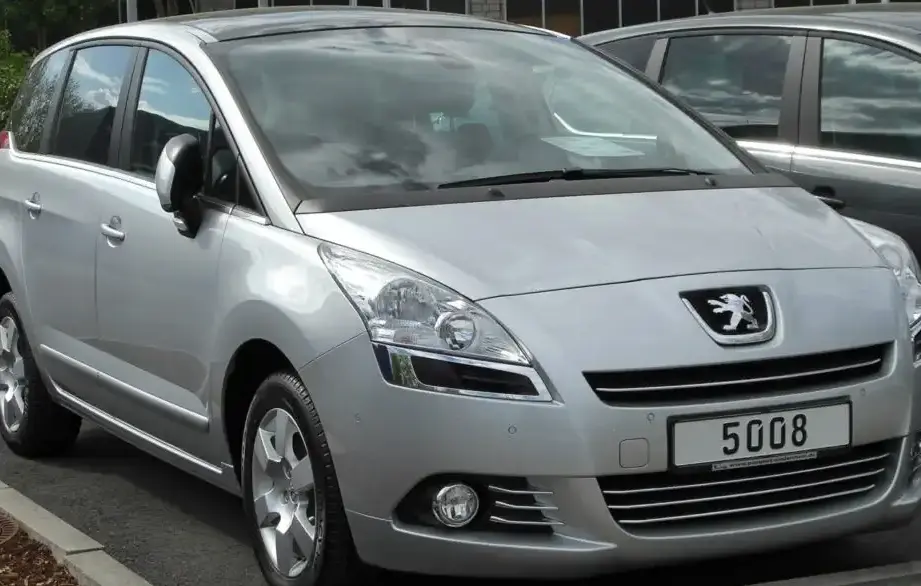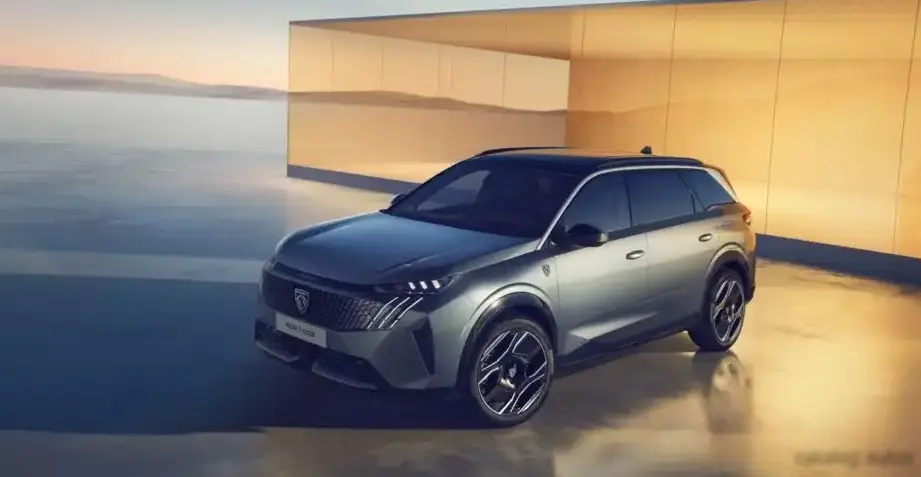
The Peugeot 5008 III, launched in 2024 (Phase I), represents the third generation of Peugeot’s popular seven-seater SUV. The 1.2 (145 hp) Mild Hybrid e-DCS variant, beginning production in March 2025, occupies a key position in the lineup, offering a balance between fuel efficiency, practicality, and affordability. This model is built on the STLA Medium platform, marking a significant shift towards electrified powertrains for the 5008. It’s primarily targeted at European markets, where demand for efficient family vehicles is high, but its design and technology reflect Peugeot’s global ambitions.
Technical Specifications
| Brand | Peugeot |
| Model | 5008 |
| Generation | 5008 III (Phase I, 2024) |
| Type (Engine) | 1.2 (145 Hp) Mild Hybrid e-DCS |
| Start of production | March, 2025 |
| Powertrain Architecture | MHEV (Mild Hybrid Electric Vehicle) |
| Body type | SUV |
| Seats | 7 |
| Doors | 5 |
| Combined fuel consumption (WLTP) | 5.8-5.9 l/100 km (40.6 – 39.9 US mpg, 48.7 – 47.9 UK mpg, 17.2 – 16.9 km/l) |
| CO2 emissions (WLTP) | 130-133 g/km |
| Fuel Type | Petrol (Gasoline) |
| Acceleration 0 – 100 km/h | 11.3 sec |
| Acceleration 0 – 62 mph | 11.3 sec |
| Acceleration 0 – 60 mph | 10.7 sec |
| Maximum speed | 200 km/h (124.27 mph) |
| Emission standard | Euro 6e |
| Weight-to-power ratio | 11.2 kg/Hp, 89.2 Hp/tonne |
| Weight-to-torque ratio | 7.1 kg/Nm, 141.5 Nm/tonne |
| Gross battery capacity | 0.4 kWh |
| Battery voltage | 48 V |
| Battery technology | Lithium nickel manganese cobalt oxides (Li-NMC) |
| Battery weight | 12 kg (26.46 lbs) |
| Battery location | Below the floor, under the front seats |
| Electric motor power | 21 Hp @ 4264 rpm |
| Electric motor Torque | 51 Nm @ 750-2499 rpm (37.62 lb.-ft. @ 750-2499 rpm) |
| Electric motor location | Integrated into the transmission |
| Electric motor type | Synchronous |
| System power | 145 Hp |
| Power | 136 Hp @ 5500 rpm |
| Power per litre | 113.4 Hp/l |
| Torque | 230 Nm @ 1750 rpm (169.64 lb.-ft. @ 1750 rpm) |
| Engine layout | Front, Transverse |
| Engine Model/Code | EB2LTD |
| Engine displacement | 1199 cm3 (73.17 cu. in.) |
| Number of cylinders | 3 |
| Engine configuration | Inline |
| Number of valves per cylinder | 4 |
| Fuel injection system | Direct injection |
| Engine aspiration | Turbocharger, Intercooler |
| Engine oil capacity | 3.5 l (3.7 US qt | 3.08 UK qt) |
| Kerb Weight | 1625 kg (3582.51 lbs) |
| Max. weight | 2330 kg (5136.77 lbs) |
| Max load | 705 kg (1554.26 lbs) |
| Trunk (boot) space – minimum | 259 l (9.15 cu. ft.) |
| Trunk (boot) space – maximum | 1815 l (64.1 cu. ft.) |
| Fuel tank capacity | 55 l (14.53 US gal | 12.1 UK gal) |
| Permitted trailer load with brakes (12%) | 1000 kg (2204.62 lbs) |
| Length | 4791 mm (188.62 in) |
| Width | 1895 mm (74.61 in) |
| Width with mirrors folded | 1934 mm (76.14 in) |
| Width including mirrors | 2108 mm (82.99 in) |
| Height | 1694 mm (66.69 in) |
| Wheelbase | 2901 mm (114.21 in) |
| Front track | 1630 mm (64.17 in) |
| Rear (Back) track | 1636 mm (64.41 in) |
| Front overhang | 940 mm (37.01 in) |
| Rear overhang | 950 mm (37.4 in) |
| Ride height (ground clearance) | 204 mm (8.03 in) |
| Minimum turning circle (turning diameter) | 11.2 m (36.75 ft) |
| Drivetrain Architecture | Front wheel drive. MHEV. ICE and electric motor drive the front wheels. |
| Number of gears and type of gearbox | 6 gears, automatic transmission e-DCS |
| Front suspension | Independent type McPherson |
| Rear suspension | Elastic beam |
| Front brakes | Disc, 304×28 mm |
| Rear brakes | Disc, 290×12 mm |
| Tires size | 225/55 R19 103V |
| Wheel rims size | 19 |
INTRODUCTION
The Peugeot 5008 III 1.2 PureTech 145 e-DCS represents a significant step in Peugeot’s strategy to offer a fully electrified range. Introduced as part of the Phase I update, this variant combines a 1.2-liter three-cylinder turbocharged gasoline engine with a 48V mild-hybrid system. Positioned as a mid-range option, it slots between the lower-powered, non-hybrid versions and the plug-in hybrid models. The ‘e-DCS’ designation refers to the dual-clutch six-speed automatic transmission, a key component of the mild-hybrid setup. This model is designed to appeal to families seeking a practical, fuel-efficient, and technologically advanced SUV.
Powertrain & Engine Architecture
At the heart of the 5008 1.2 e-DCS lies the EB2LTD engine, a 1.2-liter three-cylinder gasoline engine. This engine utilizes direct fuel injection and is equipped with a turbocharger and intercooler to boost power and efficiency. The engine produces 136 hp, with the electric motor adding an additional 21 hp for a combined system output of 145 hp. The 48V mild-hybrid system incorporates a small electric motor integrated with the e-DCS six-speed dual-clutch transmission. This system provides regenerative braking, allowing energy to be recovered during deceleration and stored in a 0.4 kWh lithium-ion battery located under the front seats. The electric motor assists the engine during acceleration, reducing load and improving fuel economy. The e-DCS transmission itself is designed for smooth and efficient gear changes, contributing to the overall driving experience.
Driving Characteristics
The 1.2-liter engine, while offering adequate performance for everyday driving, isn’t designed for outright speed. Acceleration from 0-100 km/h takes 11.3 seconds. The mild-hybrid system provides a noticeable boost during initial acceleration, smoothing out the power delivery. The e-DCS transmission shifts quickly and efficiently, although some drivers may notice slight hesitation at lower speeds. Compared to higher-powered versions of the 5008, this variant feels less responsive, particularly when fully loaded. However, the focus is on fuel efficiency and comfort, and in this regard, the 1.2 e-DCS performs well. The gear ratios are optimized for fuel economy, resulting in a relaxed cruising experience. The electric motor assistance helps to reduce engine noise and vibration, enhancing the overall refinement.
Equipment & Trim Levels
The 5008 1.2 e-DCS typically comes with a generous level of standard equipment. This includes Peugeot’s i-Cockpit interior design, featuring a compact multi-function steering wheel and a raised instrument panel. Standard features often include a touchscreen infotainment system with Apple CarPlay and Android Auto compatibility, automatic climate control, rear parking sensors, and a suite of safety features such as lane departure warning and automatic emergency braking. Higher trim levels offer additional features such as panoramic sunroof, leather upholstery, adaptive cruise control, and a premium sound system. Interior upholstery is typically cloth on base models, with leather options available on higher trims. The dashboard layout is modern and functional, with a focus on ease of use.
Chassis & Braking
The 5008 1.2 e-DCS utilizes an independent McPherson strut suspension at the front and an elastic beam suspension at the rear. This setup provides a good balance between ride comfort and handling. The suspension is tuned to prioritize comfort, absorbing bumps and imperfections in the road surface effectively. The front brakes are disc brakes measuring 304x28mm, while the rear brakes are also disc brakes at 290x12mm. The braking system is equipped with ABS, EBD, and ESC for enhanced safety. Electric power steering provides light and precise steering feel. The vehicle’s weight of 1625 kg is relatively moderate for a seven-seater SUV, contributing to its manageable handling characteristics.
Market Reception & Comparison
The Peugeot 5008 1.2 e-DCS has been generally well-received by critics, who praise its fuel efficiency, comfortable ride, and spacious interior. However, some reviewers have noted that the engine can feel underpowered, particularly when carrying a full load of passengers or luggage. Compared to the 1.5 BlueHDi diesel variant, the 1.2 e-DCS offers slightly less torque but better fuel economy in urban driving conditions. The plug-in hybrid versions of the 5008 offer even greater fuel efficiency and electric range, but at a higher price point. The mild-hybrid system provides a good compromise between cost and efficiency, making it an attractive option for buyers who are not ready to fully commit to an electric vehicle.
Legacy
The Peugeot 5008 1.2 e-DCS represents a transitional step in Peugeot’s electrification strategy. While not a fully electric vehicle, it demonstrates the brand’s commitment to reducing emissions and improving fuel efficiency. The long-term reliability of the EB2LTD engine and the e-DCS transmission remains to be fully established, but Peugeot has a generally good reputation for build quality and reliability. In the used car market, this variant is likely to appeal to buyers seeking a practical, fuel-efficient, and well-equipped family SUV. Its mild-hybrid technology may also make it eligible for certain government incentives or tax benefits, further enhancing its appeal.