
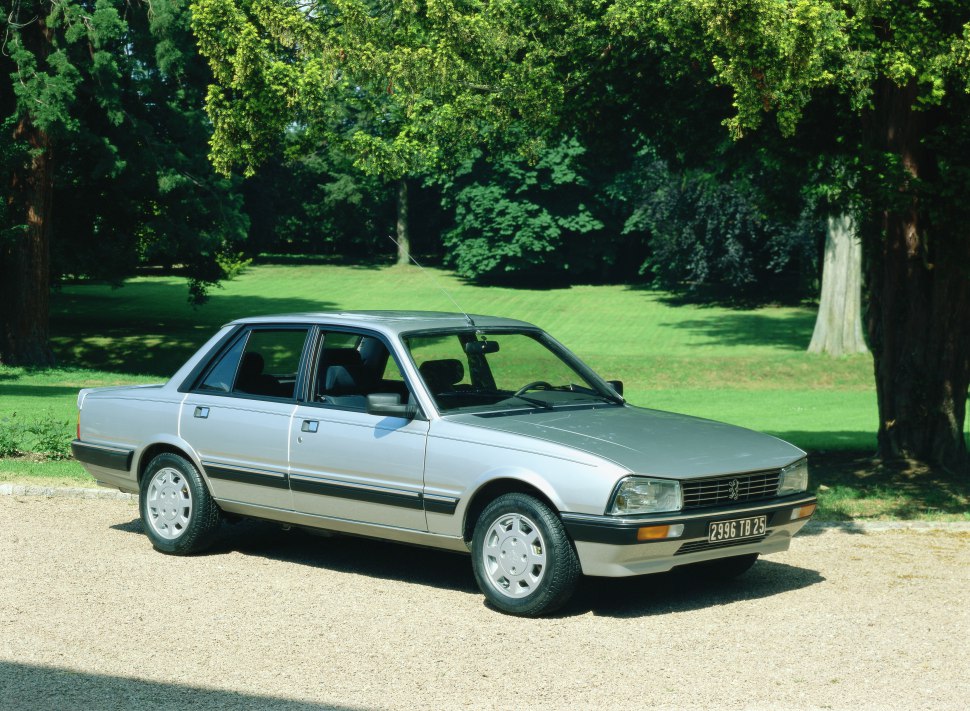
The Peugeot 505, specifically the 551A variant with the 2.0-liter engine producing 97 horsepower, represents a significant step forward for the French automaker in the executive car segment. Introduced in 1980 and continuing production through 1985, the 505 was designed as a replacement for the Peugeot 504, a car renowned for its ruggedness and reliability. While never achieving substantial sales figures in the United States – Peugeot withdrew from the US market in 1991 – the 505 gained a reputation in Europe and other international markets as a comfortable, well-engineered, and stylish sedan. It competed with vehicles like the Mercedes-Benz W123, BMW E28 5 Series, and Ford Granada, offering a distinctly French alternative with a focus on ride quality and distinctive design.
Peugeot 505: A Detailed Overview
Origins and Market Positioning
The 505 was conceived during a period of significant change for Peugeot. The 504, while successful, was aging, and the company needed a modern successor to maintain its presence in the increasingly competitive executive car class. The 505 aimed to blend the robustness of the 504 with improved refinement, safety, and contemporary styling. It was primarily marketed towards buyers seeking a comfortable and practical family sedan with a touch of sophistication. Unlike some of its German rivals, the 505 prioritized a softer ride and a more relaxed driving experience. The 551A designation refers to the early production models, characterized by the 2.0-liter engine and specific trim levels.
Engine & Performance
The heart of the Peugeot 505 (551A) 2.0 is the 106 XN1 engine, a naturally aspirated 1,995 cc (2.0L) inline-four cylinder gasoline engine. This engine produced 97 horsepower (Hp) at approximately 5,500 rpm and around 138 Nm (102 lb-ft) of torque. While not a powerhouse by modern standards, the engine provided adequate performance for comfortable cruising and everyday driving. The engine featured a single overhead camshaft (SOHC) design and a two-barrel carburetor. It was known for its smooth operation and relative reliability. The 505 utilized a rear-wheel-drive layout, contributing to its balanced handling characteristics. Transmission options typically included a four-speed manual gearbox or a three-speed automatic transmission. Performance figures for the 2.0-liter model were modest, with a 0-60 mph time estimated around 12-13 seconds and a top speed of approximately 105 mph. The focus was less on outright speed and more on providing a refined and comfortable driving experience.
Design & Features
The Peugeot 505’s design, penned by Pininfarina, was a departure from the more angular styling of the 504. It featured a more streamlined and modern aesthetic, with a long hood, a sloping roofline, and a relatively spacious interior. The sedan body style was the most common, although station wagon (estate) versions were also available in some markets. The 505’s interior was characterized by its comfortable seats, well-laid-out dashboard, and generally high-quality materials for the time. Features included power-assisted steering, disc brakes on all four wheels, and a relatively generous amount of standard equipment. Safety features, while limited by the standards of today, included a reinforced passenger compartment and side impact protection. The 505’s suspension system, featuring independent front suspension and a rigid rear axle with trailing arms, was tuned for ride comfort, providing a smooth and controlled driving experience. The car’s overall design reflected a blend of French elegance and Italian flair, making it a visually appealing vehicle in its era. The exterior trim and detailing were relatively understated, emphasizing the car’s overall sophistication.
Mechanical Innovations and Legacy
The Peugeot 505 introduced several notable mechanical features. The rear-wheel-drive configuration, while becoming less common in the 1980s, provided a balanced driving experience. The independent front suspension contributed to improved handling and ride comfort. The braking system, with disc brakes on all four wheels, offered good stopping power for the time. The 505 also benefited from Peugeot’s experience in building durable and reliable vehicles. While not without its flaws, the 505 proved to be a relatively dependable car, earning a reputation for longevity. The 505’s legacy lies in its ability to offer a compelling alternative to the German dominance of the executive car segment. It demonstrated Peugeot’s engineering capabilities and its commitment to providing a comfortable and stylish driving experience. Although its sales in the US were limited, the 505 remains a fondly remembered car among enthusiasts, particularly those who appreciate its unique blend of French design and engineering.
Technical Specifications
| Brand | Peugeot |
| Model | 505 |
| Generation | 505 (551A) |
| Type (Engine) | 2.0 (97 Hp) |
| Start of production | 1980 |
| End of production | 1985 |
| Powertrain Architecture | Internal Combustion engine |
| Body type | Sedan |
| Fuel Type | Petrol (Gasoline) |
| Power | 97 Hp |
| Engine Model/Code | 106 XN1 |
| Engine aspiration | Naturally aspirated engine |
