
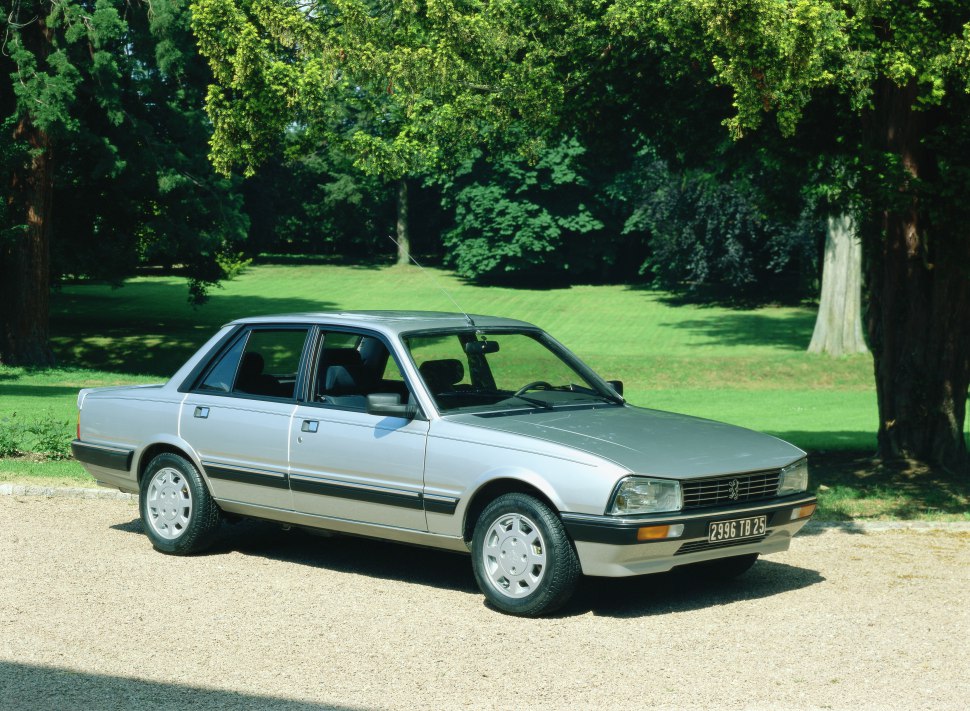
The Peugeot 505, specifically the 551A variant powered by a 2.3-liter Turbo Diesel engine, represents a significant evolution in Peugeot’s large family car lineage. Produced from 1980 to 1986, the 505 was intended as a replacement for the popular Peugeot 504, offering a more modern design, improved comfort, and enhanced mechanical sophistication. While not officially sold in the United States, the 505 gained a reputation in Europe, Africa, and other international markets for its robust construction, fuel efficiency, and surprisingly capable performance, particularly in its turbocharged diesel guise. The 505 aimed to compete with vehicles like the Mercedes-Benz W123 and BMW E28, offering a French alternative with a distinct character.
Peugeot 505: A Legacy of French Engineering
The 505 marked a departure from the Pininfarina-designed 504, adopting a more angular and contemporary aesthetic. It was available in various body styles, including a sedan, station wagon (Familiale), and a coupe (though the coupe was less common). The 505 was praised for its comfortable ride, spacious interior, and relatively advanced features for its time. The introduction of the 2.3-liter Turbo Diesel engine in the early 1980s further broadened the 505’s appeal, offering a compelling blend of economy and performance. This engine became particularly popular in markets where fuel costs were high and long-distance travel was common.
Engine & Performance
The heart of the 505 2.3 Turbo Diesel is the 147 XD2S engine, a 2.3-liter inline-four cylinder diesel powerplant. This engine produces 80 horsepower, a respectable figure for a diesel engine of that era. The key to its performance is the addition of a turbocharger, which forces more air into the cylinders, increasing power output and torque. While 80 horsepower might seem modest by modern standards, the engine delivers a substantial amount of torque, making it well-suited for hauling passengers and luggage, and for tackling challenging road conditions. The turbocharger significantly improved acceleration and provided a more relaxed driving experience, especially when fully loaded.
The 505’s drivetrain is a rear-wheel drive configuration, a traditional layout for European sedans of this period. This contributes to balanced handling and a responsive feel. The transmission options typically included a four- or five-speed manual gearbox, and a three-speed automatic transmission was also available. The 505’s suspension system, featuring independent front suspension and a rigid axle rear suspension, was designed to provide a comfortable ride while maintaining good handling characteristics. The diesel engine, combined with the 505’s relatively lightweight construction, resulted in impressive fuel economy, making it a practical choice for long journeys.
Design & Features
The Peugeot 505 551A is a four-door sedan characterized by its sharp lines and relatively large dimensions. The exterior design, while angular, was considered elegant for its time. Key design features include a prominent front grille, rectangular headlights, and a relatively flat roofline. The interior of the 505 was designed with comfort and practicality in mind. The seats were typically upholstered in cloth or vinyl, and the dashboard featured a straightforward layout with clearly labeled controls.
Features available on the 505 varied depending on the trim level and market. However, common features included power-assisted steering, disc brakes on all four wheels, and a comprehensive instrument panel. Safety features, while not as advanced as those found on modern vehicles, included seat belts and a robust body structure designed to protect occupants in the event of a collision. The 505’s spacious interior and large trunk provided ample room for passengers and luggage. The station wagon variant, known as the Familiale, offered even greater cargo capacity, making it a popular choice for families. The 505’s build quality was generally considered to be good, contributing to its longevity and reliability.
Technical Specifications
| Brand | Peugeot |
| Model | 505 |
| Generation | 505 (551A) |
| Type (Engine) | 2.3 Turbo Diesel (80 Hp) |
| Start of production | 1980 |
| End of production | 1986 |
| Powertrain Architecture | Internal Combustion engine |
| Body type | Sedan |
| Fuel Type | Diesel |
| Power | 80 Hp |
| Engine Model/Code | 147 XD2S |
| Engine aspiration | Turbocharger |
| Engine oil capacity | 5 l (5.28 US qt | 4.4 UK qt) |
| Coolant capacity | 10 l (10.57 US qt | 8.8 UK qt) |
The Peugeot 505 2.3 Turbo Diesel, while never officially available in the US market, remains a respected and admired vehicle among enthusiasts. Its combination of French design, robust engineering, and fuel-efficient diesel power made it a popular choice in Europe and beyond. The 505’s legacy continues today, as a testament to Peugeot’s commitment to innovation and quality. Its durable construction and relatively simple mechanicals also make it a popular choice for restoration projects and classic car rallies. The 505 represents a significant chapter in Peugeot’s history, bridging the gap between the classic 504 and the more modern vehicles that followed.
