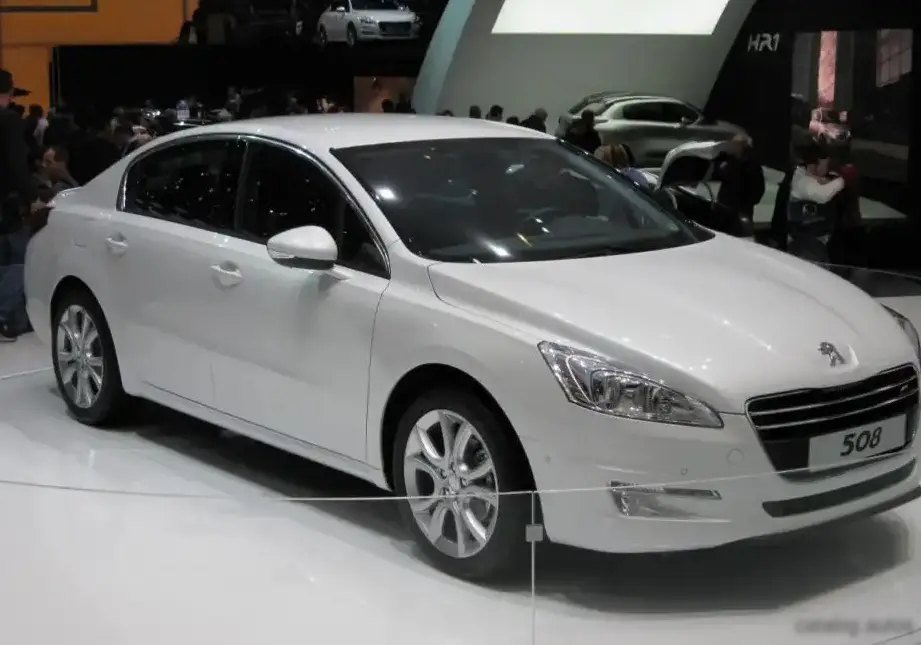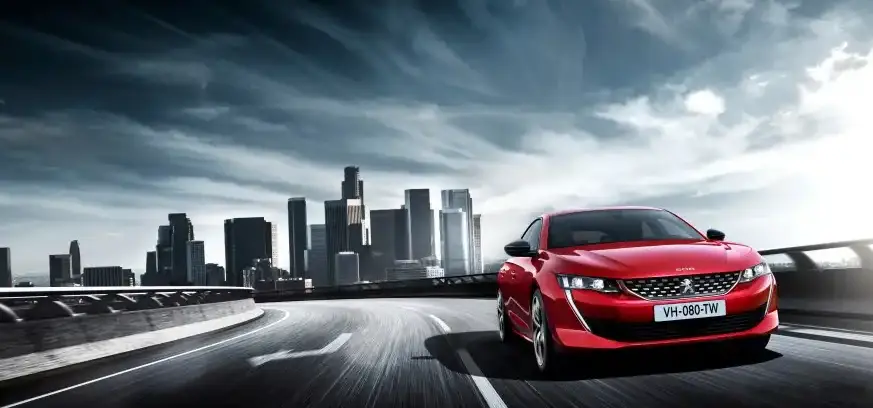
The Peugeot 508 II, launched in 2018, represented a significant departure for the French automaker, moving towards a more premium and stylish offering in the mid-size segment. The 2.0 BlueHDi 180 Automatic variant, produced from 2018 to 2023, was a key component of the Phase I lineup, positioned as a strong contender for buyers seeking a blend of performance, efficiency, and comfort. This fastback model aimed to compete with established players like the Volkswagen Passat, Ford Mondeo, and Mazda 6, offering a distinctly French alternative with a focus on design and driving experience.
Technical Specifications
| Brand | Peugeot |
| Model | 508 |
| Generation | 508 II (Phase I, 2018) |
| Type (Engine) | 2.0 BlueHDi (180 Hp) Automatic |
| Start of production | 2018 |
| End of production | 2023 |
| Powertrain Architecture | Internal Combustion engine |
| Body type | Fastback |
| Seats | 5 |
| Doors | 5 |
| Fuel consumption (urban) | 6 l/100 km (39.2 US mpg, 47.1 UK mpg, 16.7 km/l) |
| Fuel consumption (extra urban) | 3.9 l/100 km (60.3 US mpg, 72.4 UK mpg, 25.6 km/l) |
| Fuel consumption (combined) | 4.7 l/100 km (50 US mpg, 60.1 UK mpg, 21.3 km/l) |
| CO2 emissions | 123 g/km |
| Fuel Type | Diesel |
| Acceleration 0 – 100 km/h | 8.3 sec |
| Acceleration 0 – 62 mph | 8.3 sec |
| Acceleration 0 – 60 mph | 7.9 sec |
| Maximum speed | 235 km/h (146.02 mph) |
| Emission standard | Euro 6 |
| Weight-to-power ratio | 8.5 kg/Hp, 117.3 Hp/tonne |
| Weight-to-torque ratio | 3.8 kg/Nm, 260.6 Nm/tonne |
| Power | 180 Hp @ 3750 rpm |
| Power per litre | 90.1 Hp/l |
| Torque | 400 Nm @ 2000 rpm (295.02 lb.-ft. @ 2000 rpm) |
| Engine layout | Front, Transverse |
| Engine Model/Code | EHZ DW10FC |
| Engine displacement | 1997 cm3 (121.86 cu. in.) |
| Number of cylinders | 4 |
| Engine configuration | Inline |
| Number of valves per cylinder | 4 |
| Fuel injection system | Diesel Commonrail |
| Engine aspiration | Turbocharger, Intercooler |
| Engine oil capacity | 5 l (5.28 US qt | 4.4 UK qt) |
| Kerb Weight | 1535 kg (3384.1 lbs.) |
| Max. weight | 2125 kg (4684.82 lbs.) |
| Max load | 590 kg (1300.73 lbs.) |
| Trunk (boot) space – minimum | 487 l (17.2 cu. ft.) |
| Trunk (boot) space – maximum | 1537 l (54.28 cu. ft.) |
| Fuel tank capacity | 55 l (14.53 US gal | 12.1 UK gal) |
| Permitted trailer load with brakes (12%) | 1800 kg (3968.32 lbs.) |
| Length | 4750 mm (187.01 in.) |
| Width | 1859 mm (73.19 in.) |
| Height | 1403 mm (55.24 in.) |
| Wheelbase | 2793 mm (109.96 in.) |
| Front track | 1601 mm (63.03 in.) |
| Rear (Back) track | 1597 mm (62.87 in.) |
| Front overhang | 948 mm (37.32 in.) |
| Rear overhang | 1009 mm (39.72 in.) |
| Minimum turning circle (turning diameter) | 10.8 m (35.43 ft.) |
| Drivetrain Architecture | The Internal combustion engine (ICE) drives the front wheels of the vehicle. |
| Drive wheel | Front wheel drive |
| Number of gears and type of gearbox | 8 gears, automatic transmission |
| Front suspension | Independent type McPherson |
| Rear suspension | Independent multi-link suspension |
| Front brakes | Ventilated discs |
| Rear brakes | Disc |
| Assisting systems | ABS (Anti-lock braking system) |
| Steering type | Steering rack and pinion |
| Power steering | Electric Steering |
| Tires size | 215/55 R17; 235/45 R18; 235/40 R19 |
| Wheel rims size | 17; 18; 19 |
Powertrain & Engine Architecture
The heart of the 508 II 2.0 BlueHDi 180 Automatic is the DW10FC engine, a 2.0-liter inline-four cylinder diesel. This engine, often identified by the EHZ engine code, is a member of Peugeot’s BlueHDi family, incorporating advanced technologies to reduce emissions and improve efficiency. It features a common-rail direct injection system, delivering fuel at extremely high pressure for optimized combustion. A turbocharger with an intercooler further enhances performance by forcing more air into the cylinders. The engine produces 180 horsepower at 3750 rpm and a substantial 400 Nm (295 lb-ft) of torque at just 2000 rpm. This torque output is a key characteristic of modern diesel engines, providing strong pulling power and effortless cruising. The engine is paired with an Aisin-sourced eight-speed automatic transmission, known for its smooth shifts and responsiveness. This transmission was chosen for its ability to handle the engine’s torque and contribute to overall fuel economy.
Driving Characteristics
The 2.0 BlueHDi 180 Automatic offers a refined and comfortable driving experience. The abundance of torque allows for brisk acceleration, with a 0-60 mph time of around 7.9 seconds. While not a sports car, the 508 feels confident and capable on the road. The eight-speed automatic transmission contributes to smooth gear changes, and the engine remains relatively quiet and refined even under load. Compared to the lower-powered 1.5 BlueHDi variants, the 180 hp version provides noticeably more punch, making overtaking and highway cruising easier. It doesn’t offer the same level of engagement as the six-speed manual transmission available on some models, but the automatic prioritizes comfort and ease of use. The gear ratios are well-chosen to maximize fuel efficiency while still providing adequate performance.
Equipment & Trim Levels
The 2.0 BlueHDi 180 Automatic typically came well-equipped, often positioned in the mid-to-upper range of the 508 II lineup. Standard features included automatic climate control, a touchscreen infotainment system with Apple CarPlay and Android Auto compatibility, and a suite of safety features such as automatic emergency braking, lane departure warning, and traffic sign recognition. Higher trim levels added features like leather upholstery, a panoramic sunroof, adaptive cruise control, and a premium sound system. Interior upholstery was typically a mix of cloth and synthetic leather, with optional full leather available. The dashboard design was modern and driver-focused, with a compact steering wheel and a high-resolution instrument cluster.
Chassis & Braking
The 508 II utilizes a McPherson strut front suspension and a multi-link rear suspension, providing a good balance between comfort and handling. The suspension is tuned to prioritize ride quality, absorbing bumps and imperfections in the road effectively. Front brakes are ventilated discs, while rear brakes are solid discs. ABS (Anti-lock Braking System) is standard, along with electronic stability control. The steering is electric power-assisted, offering a light and precise feel. Wheel sizes varied depending on the trim level, ranging from 17 to 19 inches.
Market Reception & Comparison
The Peugeot 508 II 2.0 BlueHDi 180 Automatic was generally well-received by automotive critics. It was praised for its stylish design, comfortable ride, and efficient engine. The diesel engine offered excellent fuel economy, with combined figures around 50 US mpg. Compared to the petrol-powered variants, the BlueHDi offered significantly better fuel efficiency, although it came with a slightly higher purchase price. Reliability was generally good, although some owners reported issues with the diesel particulate filter (DPF) system, a common concern with modern diesel engines. Compared to rivals like the Volkswagen Passat, the 508 offered a more distinctive and stylish alternative, but the Passat often had a reputation for slightly better build quality.
Legacy
The Peugeot 508 II 2.0 BlueHDi 180 Automatic remains a popular choice in the used car market. The DW10FC engine is known for its durability and longevity, provided it has been properly maintained. Regular servicing, including oil changes and DPF regeneration, is crucial to ensure long-term reliability. The eight-speed automatic transmission has also proven to be reliable. As diesel engines face increasing scrutiny due to emissions concerns, the 508 II 2.0 BlueHDi 180 Automatic represents a relatively efficient and refined option for those seeking a comfortable and economical mid-size car.