
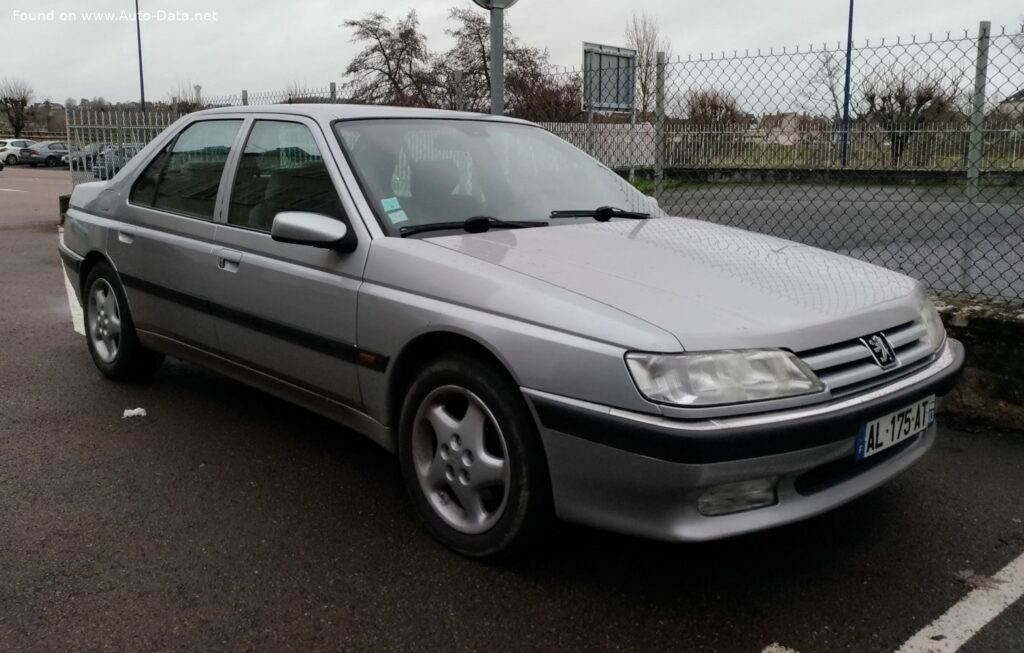
The Peugeot 605 (6B), produced between 1992 and 2000, represents the final iteration of Peugeot’s large, executive sedan lineage, succeeding the popular 505. Positioned as a competitor to vehicles like the BMW 5 Series, Mercedes-Benz E-Class, and Audi 100, the 605 aimed to offer a blend of French comfort, sophisticated technology, and respectable performance. While never officially sold in the United States, the 605 was a significant model in Europe, known for its advanced features and refined driving experience for its time. The 2.0 Turbo variant, equipped with a 141 horsepower engine, offered a balance between fuel efficiency and performance, making it a popular choice within the 605 range.
Peugeot 605 (6B) 2.0 Turbo: An Overview
The 605 marked a departure for Peugeot in terms of design and engineering. It was the first Peugeot to feature fully independent suspension on all four wheels, enhancing ride quality and handling. The 2.0 Turbo model, specifically, was designed to appeal to drivers seeking a more spirited driving experience without sacrificing the comfort expected from a large Peugeot sedan. This model utilized a turbocharged 2.0-liter inline-four engine, providing a noticeable performance boost over the naturally aspirated options.
Engine & Performance
The heart of the 605 2.0 Turbo is the RGY XU10J2TE engine, a 1998 cc (121.93 cu. in.) inline-four cylinder powerplant. This engine produces 141 horsepower at 6200 rpm and 225 Nm (165.95 lb.-ft.) of torque at 2200 rpm. The turbocharger significantly enhances the engine’s output, providing increased power and responsiveness. The engine’s power-to-liter ratio is 70.6 hp/l, demonstrating a relatively efficient design for the era. Acceleration from 0 to 100 km/h (0-62 mph) takes approximately 10 seconds, with a 0-60 mph time calculated at 9.5 seconds. The 605 2.0 Turbo achieves a maximum speed of 210 km/h (130.49 mph). The weight-to-power ratio of 10.1 kg/Hp and a weight-to-torque ratio of 6.4 kg/Nm contribute to a reasonably agile feel for a car of its size. Fuel consumption figures are 12.7 l/100 km (18.5 US mpg) in urban settings, 7.1 l/100 km (33.1 US mpg) on the extra-urban cycle, and 8.9 l/100 km (26.4 US mpg) combined.
Design & Features
The Peugeot 605 is a four-door sedan with a classic, understated design. Its body is characterized by clean lines and a relatively low profile for a car of its time. The interior is spacious and comfortable, offering seating for five passengers. Key features of the 605 included power steering (hydraulic), ventilated front disc brakes, and disc brakes on the rear axle. A significant safety feature for the period was the inclusion of ABS (Anti-lock Braking System), enhancing braking performance and stability. The 605 also boasted a relatively large trunk capacity of 497 liters (17.55 cu. ft.). The car’s suspension, featuring wishbone setups both front and rear, was designed to provide a smooth and controlled ride. The 2.0 Turbo model often included upgraded interior trim and features compared to the base models, reflecting its position as a more premium offering.
Technical Specifications
| Brand | Peugeot |
| Model | 605 |
| Generation | 605 (6B) |
| Type (Engine) | 2.0 Turbo (141 Hp) |
| Start of production | 1992 |
| End of production | 2000 |
| Powertrain Architecture | Internal Combustion engine |
| Body type | Sedan |
| Seats | 5 |
| Doors | 4 |
| Fuel consumption (urban) | 12.7 l/100 km (18.5 US mpg) |
| Fuel consumption (extra urban) | 7.1 l/100 km (33.1 US mpg) |
| Fuel consumption (combined) | 8.9 l/100 km (26.4 US mpg) |
| Fuel Type | Petrol (Gasoline) |
| Acceleration 0 – 100 km/h | 10 sec |
| Acceleration 0 – 62 mph | 10 sec |
| Acceleration 0 – 60 mph | 9.5 sec |
| Maximum speed | 210 km/h (130.49 mph) |
| Weight-to-power ratio | 10.1 kg/Hp |
| Weight-to-torque ratio | 6.4 kg/Nm |
| Power | 141 Hp @ 6200 rpm |
| Power per litre | 70.6 Hp/l |
| Torque | 225 Nm @ 2200 rpm (165.95 lb.-ft. @ 2200 rpm) |
| Engine layout | Front, Transverse |
| Engine Model/Code | RGY XU10J2TE |
| Engine displacement | 1998 cm3 (121.93 cu. in.) |
| Number of cylinders | 4 |
| Engine configuration | Inline |
| Cylinder Bore | 86 mm (3.39 in.) |
| Piston Stroke | 86 mm (3.39 in.) |
| Compression ratio | 8.8:1 |
| Number of valves per cylinder | 2 |
| Fuel injection system | Multi-port manifold injection |
| Engine aspiration | Turbocharger |
| Valvetrain | OHC |
| Engine oil capacity | 4.25 l (4.49 US qt | 3.74 UK qt) |
| Coolant capacity | 7.3 l (7.71 US qt | 6.42 UK qt) |
| Kerb Weight | 1430 kg (3152.61 lbs.) |
| Max. weight | 1930 kg (4254.92 lbs.) |
| Max load | 500 kg (1102.31 lbs.) |
| Trunk (boot) space – minimum | 497 l (17.55 cu. ft.) |
| Fuel tank capacity | 80 l (21.13 US gal | 17.6 UK gal) |
| Length | 4765 mm (187.6 in.) |
| Width | 1799 mm (70.83 in.) |
| Height | 1417 mm (55.79 in.) |
| Wheelbase | 2800 mm (110.24 in.) |
| Front track | 1527 mm (60.12 in.) |
| Rear (Back) track | 1528 mm (60.16 in.) |
| Drivetrain Architecture | Front wheel drive |
| Number of gears and type of gearbox | 5 gears, manual transmission |
| Front suspension | Wishbone |
| Rear suspension | Double wishbone |
| Front brakes | Ventilated discs |
| Rear brakes | Disc |
| Assisting systems | ABS (Anti-lock braking system) |
| Steering type | Steering rack and pinion |
| Power steering | Hydraulic Steering |
| Tires size | 205/60 R15 |
The Peugeot 605 2.0 Turbo, while not officially available in the US market, remains a respected and admired vehicle among enthusiasts. It represents a high point in Peugeot’s engineering and design capabilities, offering a compelling combination of comfort, performance, and advanced features for its time. Its legacy continues to influence Peugeot’s approach to building sophisticated and refined automobiles.
