
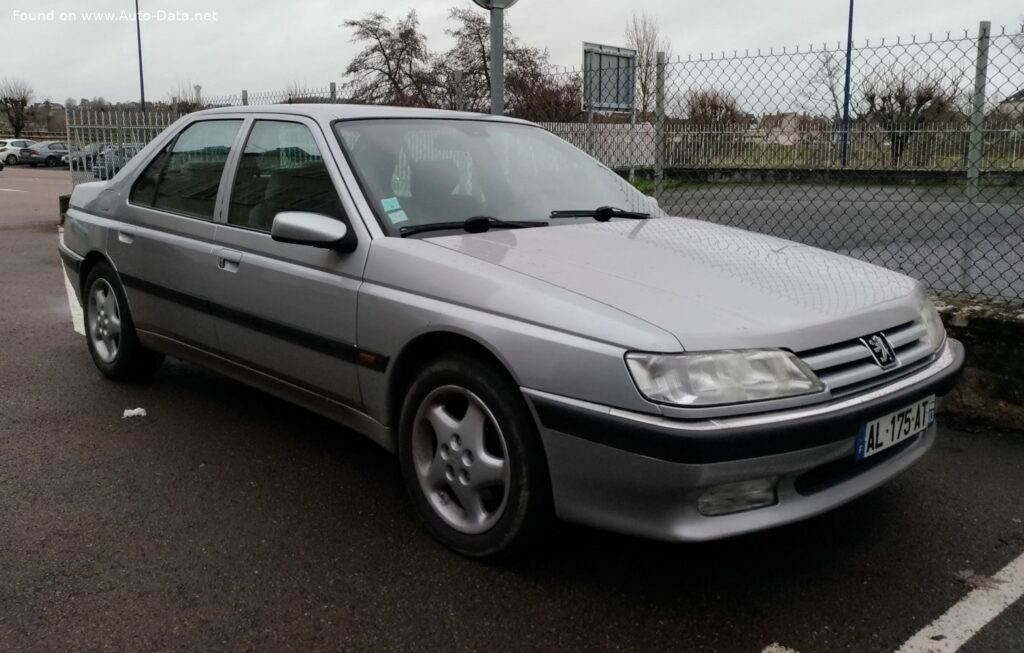
The Peugeot 605 (6B) 2.0 Turbo, produced from 1992 to 2000, represents a significant step forward for the French automaker, embodying a blend of luxury, performance, and advanced technology for its time. Positioned as a large, executive sedan, the 605 aimed to compete with established German rivals like the BMW 5 Series and Mercedes-Benz E-Class. While not widely sold in the United States, the 605 was a popular and respected vehicle in Europe, known for its comfortable ride, sophisticated styling, and robust engineering. This article details the specifications and characteristics of the 2.0 Turbo variant, equipped with an automatic transmission.
Peugeot 605 (6B) 2.0 Turbo: An Overview
The 605 was Peugeot’s flagship sedan during its production run, replacing the aging 505 and showcasing the company’s commitment to innovation. The 2.0 Turbo model, powered by a turbocharged four-cylinder engine, offered a compelling balance between performance and fuel efficiency. It was particularly favored by those seeking a refined driving experience without sacrificing power. The 605’s design, penned by Pininfarina, was a departure from previous Peugeot models, adopting a more streamlined and modern aesthetic. It was a car that aimed to project an image of sophistication and technological prowess.
Engine & Performance
The heart of the 605 2.0 Turbo is its 1998 cc (121.93 cu. in.) inline-four cylinder engine, designated RGY XU10J2TE. This engine utilizes a turbocharger and multi-port fuel injection to produce 141 horsepower at 6200 rpm and 225 Nm (165.95 lb.-ft.) of torque at 2200 rpm. This configuration delivers a respectable power-to-weight ratio of 10.1 kg/Hp (98.6 Hp/tonne) and a torque-to-weight ratio of 6.4 kg/Nm (157.3 Nm/tonne). The engine’s power per liter is 70.6 Hp/l. Power is delivered to the front wheels via a four-speed automatic transmission. Performance figures include a 0-100 km/h (0-62 mph) acceleration time of 10 seconds, and a 0-60 mph time of approximately 9.5 seconds. The vehicle boasts a maximum speed of 210 km/h (130.49 mph).
Design & Features
The Peugeot 605 is a four-door sedan with a spacious interior designed to comfortably accommodate five passengers. Its body length measures 4765 mm (187.6 in), with a width of 1799 mm (70.83 in) and a height of 1417 mm (55.79 in). The wheelbase is 2800 mm (110.24 in). The car’s design emphasized aerodynamic efficiency and a sleek profile. Inside, the 605 offered a level of refinement uncommon in its class. Features included comfortable seating, a well-appointed dashboard, and a range of convenience options. Safety features, while not as comprehensive as modern standards, included an Anti-lock Braking System (ABS). The trunk offers a minimum capacity of 497 liters (17.55 cu. ft.). The 605’s suspension system, featuring wishbone setups both front and rear, was tuned to provide a comfortable and controlled ride. Hydraulic power steering further enhanced the driving experience.
Technical Specifications
| Brand | Peugeot |
| Model | 605 |
| Generation | 605 (6B) |
| Type (Engine) | 2.0 Turbo (141 Hp) Automatic |
| Start of production | 1992 |
| End of production | 2000 |
| Powertrain Architecture | Internal Combustion engine |
| Body type | Sedan |
| Seats | 5 |
| Doors | 4 |
| Fuel consumption (urban) | 12.7 l/100 km (18.5 US mpg, 22.2 UK mpg, 7.9 km/l) |
| Fuel consumption (extra urban) | 7.1 l/100 km (33.1 US mpg, 39.8 UK mpg, 14.1 km/l) |
| Fuel consumption (combined) | 8.9 l/100 km (26.4 US mpg, 31.7 UK mpg, 11.2 km/l) |
| Fuel Type | Petrol (Gasoline) |
| Acceleration 0 – 100 km/h | 10 sec |
| Acceleration 0 – 62 mph | 10 sec |
| Acceleration 0 – 60 mph | 9.5 sec |
| Maximum speed | 210 km/h (130.49 mph) |
| Weight-to-power ratio | 10.1 kg/Hp |
| Weight-to-torque ratio | 6.4 kg/Nm |
| Power | 141 Hp @ 6200 rpm |
| Torque | 225 Nm @ 2200 rpm (165.95 lb.-ft. @ 2200 rpm) |
| Engine layout | Front, Transverse |
| Engine Model/Code | RGY XU10J2TE |
| Engine displacement | 1998 cm3 (121.93 cu. in.) |
| Number of cylinders | 4 |
| Engine configuration | Inline |
| Cylinder Bore | 86 mm (3.39 in.) |
| Piston Stroke | 86 mm (3.39 in.) |
| Compression ratio | 8.8:1 |
| Number of valves per cylinder | 2 |
| Fuel injection system | Multi-port manifold injection |
| Engine aspiration | Turbocharger |
| Valvetrain | OHC |
| Engine oil capacity | 4.25 l (4.49 US qt | 3.74 UK qt) |
| Coolant capacity | 7.3 l (7.71 US qt | 6.42 UK qt) |
| Kerb Weight | 1430 kg (3152.61 lbs.) |
| Max. weight | 1930 kg (4254.92 lbs.) |
| Max load | 500 kg (1102.31 lbs.) |
| Trunk (boot) space – minimum | 497 l (17.55 cu. ft.) |
| Fuel tank capacity | 80 l (21.13 US gal | 17.6 UK gal) |
| Length | 4765 mm (187.6 in.) |
| Width | 1799 mm (70.83 in.) |
| Height | 1417 mm (55.79 in.) |
| Wheelbase | 2800 mm (110.24 in.) |
| Front track | 1527 mm (60.12 in.) |
| Rear (Back) track | 1528 mm (60.16 in.) |
| Drivetrain Architecture | Front wheel drive |
| Number of gears and type of gearbox | 4 gears, automatic transmission |
| Front suspension | Wishbone |
| Rear suspension | Double wishbone |
| Front brakes | Ventilated discs |
| Rear brakes | Disc |
| Assisting systems | ABS (Anti-lock braking system) |
| Steering type | Steering rack and pinion |
| Power steering | Hydraulic Steering |
| Tires size | 205/60 R15 |
| Wheel rims size | 15 |
The Peugeot 605 2.0 Turbo, while not a common sight in North America, remains a significant vehicle in the history of the French automaker. It represented a bold attempt to challenge the established luxury car market and offered a compelling combination of performance, comfort, and style. Its advanced features and robust engineering ensured its popularity among European drivers seeking a sophisticated and reliable executive sedan.
