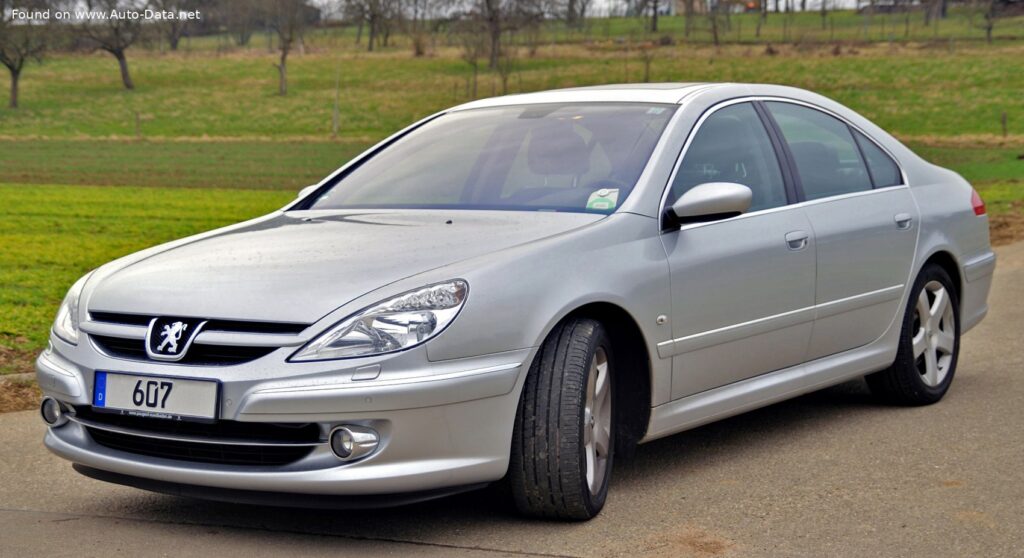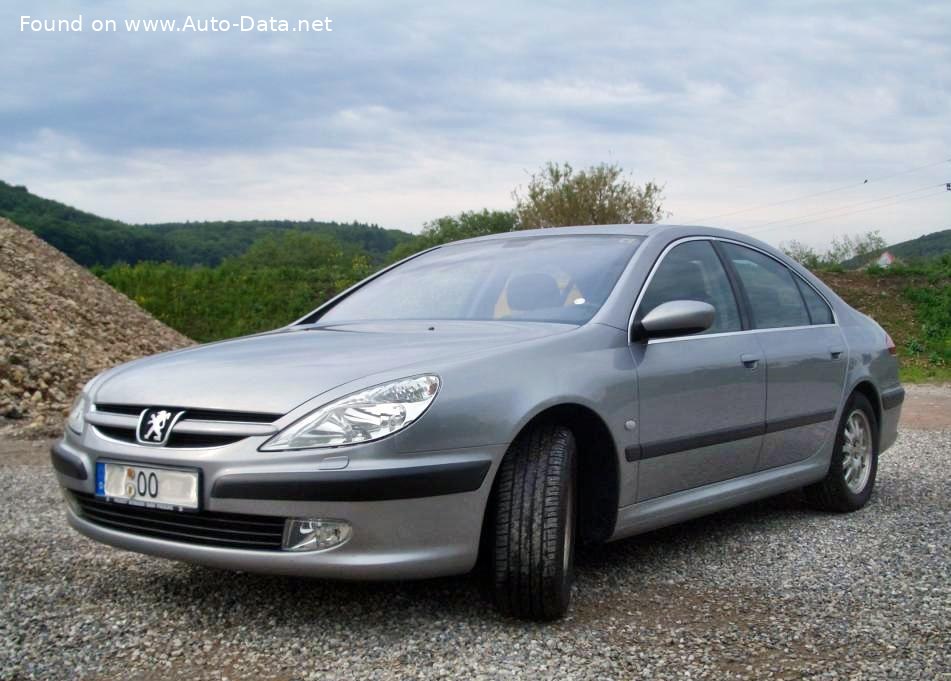
The Peugeot 607 3.0 V6 24V, produced between 1999 and 2004, represents Peugeot’s ambitious entry into the executive car segment. Designed to compete with established German and British rivals like the BMW 5 Series, Mercedes-Benz E-Class, and Jaguar XJ, the 607 aimed to offer a blend of French style, comfort, and technology. While not a major sales success in all markets, particularly outside of Europe, it showcased Peugeot’s engineering capabilities and commitment to building a genuinely sophisticated large sedan. The 607 was Peugeot’s flagship model during its production run, embodying the brand’s aspirations for a more premium image.
Peugeot 607: A Detailed Overview
The 607 was the successor to the Peugeot 605, and it represented a significant step forward in terms of design, technology, and refinement. It was available with a range of engines, including petrol (gasoline) and diesel options, catering to different market preferences. The 3.0 V6 24V variant, detailed here, was a popular choice, offering a balance of performance and fuel economy. The car’s design was distinctly French, characterized by elegant lines and a spacious interior. It was positioned as a comfortable and technologically advanced vehicle, appealing to drivers seeking a refined driving experience.
Engine & Performance
The heart of the Peugeot 607 3.0 V6 24V is a naturally aspirated 2.9-liter (2946 cm3 or 179.78 cu. in.) V6 engine, designated XFX ES9J4S. This engine produces 207 horsepower (Hp) at 6000 rpm and 285 Newton-meters (210.21 lb.-ft.) of torque at 3750 rpm. The engine features a multi-port fuel injection system and a double overhead camshaft (DOHC) valvetrain with four valves per cylinder. This configuration allows for a good balance of power and responsiveness. The engine’s power-to-liter ratio is 70.3 Hp/l.
Performance figures are respectable for its class and era. Acceleration from 0 to 100 km/h (0-62 mph) takes 8.1 seconds, while the 0 to 60 mph sprint is achieved in approximately 7.7 seconds. The car has a maximum speed of 240 km/h (149.13 mph). The weight-to-power ratio of 7.9 kg/Hp and a weight-to-torque ratio of 5.7 kg/Nm contribute to a reasonably engaging driving experience. The engine is transversely mounted at the front of the vehicle and drives the front wheels through a 5-speed manual transmission.
Design & Features
The Peugeot 607 is a four-door sedan with a spacious interior designed to comfortably accommodate five passengers. Its exterior styling is characterized by flowing lines and a relatively understated elegance, avoiding the more flamboyant designs sometimes seen in the executive car segment. The car’s dimensions are: length 4877 mm (192.01 in), width 1800 mm (70.87 in), height 1437 mm (56.57 in), and wheelbase 2800 mm (110.24 in).
Inside, the 607 offered a well-appointed cabin with a focus on comfort and practicality. Features included comfortable seating, a generous trunk (boot) space of 481 liters (16.99 cu. ft.), and a range of convenience features. Safety was also a priority, with the inclusion of an Anti-lock Braking System (ABS) as standard equipment. The suspension system utilizes wishbones at the front and a double wishbone setup at the rear, providing a comfortable ride. Steering is rack and pinion with hydraulic power assistance. The car rides on 225/50 ZR17 tires.
Technical Specifications
| Brand | Peugeot |
| Model | 607 |
| Generation | 607 |
| Type (Engine) | 3.0 V6 24V (207 Hp) |
| Start of production | 1999 |
| End of production | 2004 |
| Powertrain Architecture | Internal Combustion engine |
| Body type | Sedan |
| Seats | 5 |
| Doors | 4 |
| Fuel consumption (urban) | 13.9 l/100 km (16.9 US mpg, 20.3 UK mpg, 7.2 km/l) |
| Fuel consumption (extra urban) | 7.4 l/100 km (31.8 US mpg, 38.2 UK mpg, 13.5 km/l) |
| Fuel consumption (combined) | 9.8 l/100 km (24 US mpg, 28.8 UK mpg, 10.2 km/l) |
| Fuel Type | Petrol (Gasoline) |
| Acceleration 0 – 100 km/h | 8.1 sec |
| Acceleration 0 – 62 mph | 8.1 sec |
| Acceleration 0 – 60 mph | 7.7 sec |
| Maximum speed | 240 km/h (149.13 mph) |
| Weight-to-power ratio | 7.9 kg/Hp |
| Weight-to-torque ratio | 5.7 kg/Nm |
| Power | 207 Hp @ 6000 rpm |
| Torque | 285 Nm @ 3750 rpm (210.21 lb.-ft. @ 3750 rpm) |
| Engine layout | Front, Transverse |
| Engine Model/Code | XFX ES9J4S |
| Engine displacement | 2946 cm3 (179.78 cu. in.) |
| Number of cylinders | 6 |
| Engine configuration | V-engine |
| Cylinder Bore | 87 mm (3.43 in.) |
| Piston Stroke | 82.6 mm (3.25 in.) |
| Compression ratio | 10.9:1 |
| Number of valves per cylinder | 4 |
| Fuel injection system | Multi-port manifold injection |
| Engine aspiration | Naturally aspirated engine |
| Valvetrain | DOHC |
| Engine oil capacity | 4.5 l (4.76 US qt | 3.96 UK qt) |
| Coolant capacity | 10 l (10.57 US qt | 8.8 UK qt) |
| Kerb Weight | 1635 kg (3604.56 lbs.) |
| Max. weight | 2140 kg (4717.89 lbs.) |
| Max load | 505 kg (1113.33 lbs.) |
| Trunk (boot) space – minimum | 481 l (16.99 cu. ft.) |
| Fuel tank capacity | 80 l (21.13 US gal | 17.6 UK gal) |
| Length | 4877 mm (192.01 in.) |
| Width | 1800 mm (70.87 in.) |
| Height | 1437 mm (56.57 in.) |
| Wheelbase | 2800 mm (110.24 in.) |
| Front track | 1539 mm (60.59 in.) |
| Rear (Back) track | 1537 mm (60.51 in.) |
| Drivetrain Architecture | Front wheel drive |
| Number of gears and type of gearbox | 5 gears, manual transmission |
| Front suspension | Wishbone |
| Rear suspension | Double wishbone |
| Front brakes | Ventilated discs |
| Rear brakes | Disc |
| Assisting systems | ABS (Anti-lock braking system) |
| Steering type | Steering rack and pinion |
| Power steering | Hydraulic Steering |
| Tires size | 225/50 ZR17 |