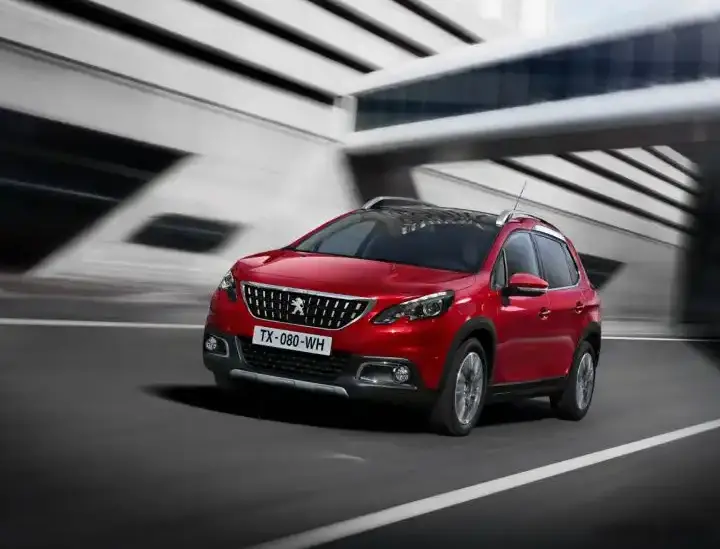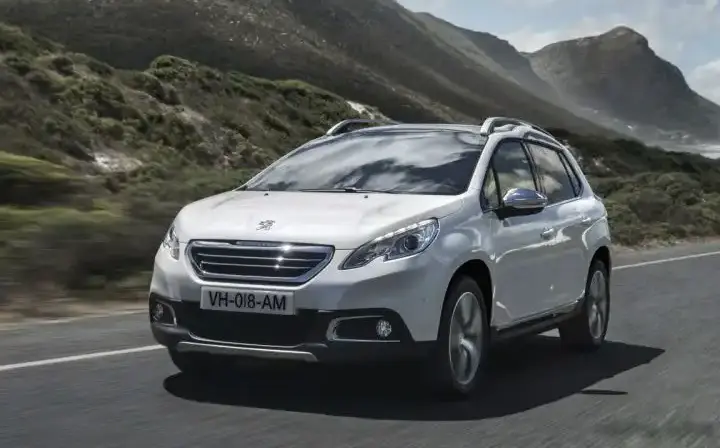
The Peugeot 2008 1.6 BlueHDi, producing 120 horsepower, was a key variant in the first generation (2013-2016) of Peugeot’s successful subcompact crossover SUV. Introduced in 2014, this model aimed to provide a balance between fuel efficiency and reasonable performance for European buyers, fitting into the mid-range of the 2008 lineup. It was positioned as a more economical alternative to the petrol-powered versions and a slightly more accessible entry point than the higher-output diesel options. The 2008, built on the PF1 platform (shared with the Citroën C4 Cactus and other Peugeot/Citroën models), represented Peugeot’s attempt to capitalize on the growing popularity of the crossover segment.
Technical Specifications
| Brand | Peugeot |
| Model | 2008 |
| Generation | 2008 I |
| Type (Engine) | 1.6 BlueHDi (120 Hp) |
| Start of production | 2014 |
| End of production | 2015 |
| Powertrain Architecture | Internal Combustion engine |
| Body type | SUV, Crossover |
| Seats | 5 |
| Doors | 5 |
| Fuel consumption (urban) | 4.3 l/100 km (54.7 US mpg, 65.7 UK mpg, 23.3 km/l) |
| Fuel consumption (extra urban) | 3.3 l/100 km (71.3 US mpg, 85.6 UK mpg, 30.3 km/l) |
| Fuel consumption (combined) | 3.7 l/100 km (63.6 US mpg, 76.3 UK mpg, 27 km/l) |
| CO2 emissions | 96 g/km |
| Fuel Type | Diesel |
| Acceleration 0 – 100 km/h | 10.4 sec |
| Acceleration 0 – 62 mph | 10.4 sec |
| Acceleration 0 – 60 mph | 9.9 sec |
| Maximum speed | 192 km/h (119.3 mph) |
| Emission standard | Euro 6 |
| Weight-to-power ratio | 10 kg/Hp, 100 Hp/tonne |
| Weight-to-torque ratio | 4 kg/Nm, 250 Nm/tonne |
| Power | 120 Hp @ 3500 rpm |
| Power per litre | 76.9 Hp/l |
| Torque | 300 Nm @ 1750 rpm (221.27 lb.-ft. @ 1750 rpm) |
| Engine layout | Front, Transverse |
| Engine Model/Code | BHZ DV6FC |
| Engine displacement | 1560 cm3 (95.2 cu. in.) |
| Number of cylinders | 4 |
| Engine configuration | Inline |
| Cylinder Bore | 75 mm (2.95 in.) |
| Piston Stroke | 88.3 mm (3.48 in.) |
| Number of valves per cylinder | 2 |
| Fuel injection system | Diesel Commonrail |
| Engine aspiration | Turbocharger, Intercooler |
| Engine oil capacity | 3.75 l (3.96 US qt | 3.3 UK qt) |
| Coolant | 6 l (6.34 US qt | 5.28 UK qt) |
| Kerb Weight | 1200 kg (2645.55 lbs.) |
| Max. weight | 1726 kg (3805.18 lbs.) |
| Max load | 526 kg (1159.63 lbs.) |
| Trunk (boot) space – minimum | 350 l (12.36 cu. ft.) |
| Trunk (boot) space – maximum | 1194 l (42.17 cu. ft.) |
| Fuel tank capacity | 50 l (13.21 US gal | 11 UK gal) |
| Length | 4159 mm (163.74 in.) |
| Width | 1739 mm (68.46 in.) |
| Height | 1556 mm (61.26 in.) |
| Wheelbase | 2537 mm (99.88 in.) |
| Front track | 1477 mm (58.15 in.) |
| Rear (Back) track | 1488 mm (58.58 in.) |
| Ride height (ground clearance) | 165 mm (6.5 in.) |
| Minimum turning circle | 11.2 m (36.75 ft.) |
| Drivetrain Architecture | Front wheel drive |
| Number of gears and type of gearbox | 6 gears, manual transmission |
| Front suspension | Independent, type McPherson with coil spring and anti-roll bar |
| Rear suspension | Semi-independent, coil spring |
| Front brakes | Ventilated discs |
| Rear brakes | Ventilated discs |
| Assisting systems | ABS (Anti-lock braking system) |
| Steering type | Steering rack and pinion |
| Tires size | 195/60 R16 H |
| Wheel rims size | 16 |
Powertrain & Engine Architecture
The 1.6 BlueHDi engine, specifically the BHZ DV6FC variant, is a four-cylinder diesel engine utilizing common rail direct injection and a turbocharger with intercooling. This engine is part of the DV6 family, a widely used engine in PSA Group (Peugeot-Citroën) vehicles. The BlueHDi designation indicates the inclusion of Selective Catalytic Reduction (SCR) technology, utilizing AdBlue (Diesel Exhaust Fluid) to reduce nitrogen oxide (NOx) emissions, ensuring compliance with stringent Euro 6 emission standards. The engine features a cast iron block and aluminum cylinder head, with two valves per cylinder. The common rail system delivers fuel at extremely high pressure, optimizing combustion efficiency and reducing particulate matter. The six-speed manual transmission was the standard offering for this variant, chosen for its fuel efficiency and relatively low cost.
Driving Characteristics
The 120 horsepower and 300 Nm (221 lb-ft) of torque provided by the 1.6 BlueHDi engine offered a reasonable driving experience for the 2008. Acceleration from 0-60 mph took around 9.9 seconds, which was adequate for everyday driving but not particularly sporty. The engine’s torque peak at 1750 rpm meant that there was ample pulling power for overtaking and navigating hills. Compared to the 1.6 petrol variants, the diesel offered significantly better fuel economy and a more relaxed driving experience, particularly on longer journeys. However, it lacked the responsiveness of the petrol engines and the higher performance of the 1.6 BlueHDi with 120 hp. The manual transmission, while efficient, had a slightly longer throw than some competitors.
Equipment & Trim Levels
The 1.6 BlueHDi 120 hp variant typically came equipped with features such as air conditioning, electric front windows, a basic audio system with USB connectivity, and steel wheels with wheel covers. Higher trim levels, such as Active and Allure, added features like alloy wheels, rear parking sensors, cruise control, a touchscreen infotainment system, and automatic headlights and wipers. Interior upholstery was typically cloth, with options for upgraded materials on higher trims. Safety features included ABS, ESP (Electronic Stability Program), and multiple airbags.
Chassis & Braking
The Peugeot 2008 featured a McPherson strut front suspension and a semi-independent torsion beam rear suspension. This setup provided a comfortable ride quality, suitable for everyday use. The front brakes were ventilated discs, while the rear brakes were typically solid discs on this weight class. The steering was a power-assisted rack and pinion system, offering reasonable precision. The 2008’s relatively lightweight construction contributed to its agility and handling.
Market Reception & Comparison
The Peugeot 2008 1.6 BlueHDi 120 hp was well-received by European consumers and automotive critics alike. It was praised for its fuel efficiency, low emissions, and comfortable ride. Compared to the petrol-powered 2008 models, the diesel offered a significant advantage in fuel economy, making it a popular choice for drivers covering long distances. However, some critics noted that the engine could be somewhat noisy and lacked the refinement of some competitors. Compared to other diesel-powered crossovers, the 2008 offered a competitive price point and a stylish design.
Legacy
The 1.6 BlueHDi engine proved to be a reliable and durable powertrain, with many examples still on the road today. While diesel engines have faced increasing scrutiny in recent years due to emissions concerns, the BlueHDi technology helped to mitigate these issues. The Peugeot 2008, in general, established itself as a popular and well-regarded subcompact crossover, paving the way for the successful second-generation model. On the used car market, the 1.6 BlueHDi 120 hp variant remains a sensible and economical choice for buyers seeking a practical and fuel-efficient crossover.