Technical Specifications
| Brand | Peugeot |
| Model | 2008 |
| Generation | 2008 I |
| Type (Engine) | 1.6 e-HDi (92 Hp) FAP STT |
| Start of production | 2013 |
| End of production | 2015 |
| Powertrain Architecture | Internal Combustion engine |
| Body type | SUV, Crossover |
| Seats | 5 |
| Doors | 5 |
| Fuel consumption (urban) | 4.7 l/100 km (50 US mpg, 60.1 UK mpg, 21.3 km/l) |
| Fuel consumption (extra urban) | 3.6 l/100 km (65.3 US mpg, 78.5 UK mpg, 27.8 km/l) |
| Fuel consumption (combined) | 4 l/100 km (58.8 US mpg, 70.6 UK mpg, 25 km/l) |
| Fuel Type | Diesel |
| Acceleration 0 – 100 km/h | 11.5 sec |
| Acceleration 0 – 62 mph | 11.5 sec |
| Acceleration 0 – 60 mph | 10.9 sec |
| Maximum speed | 181 km/h (112.47 mph) |
| Emission standard | Euro 5 |
| Weight-to-power ratio | 12.6 kg/Hp, 79.3 Hp/tonne |
| Weight-to-torque ratio | 5 kg/Nm, 198.3 Nm/tonne |
| Power | 92 Hp @ 4000 rpm |
| Power per litre | 59 Hp/l |
| Torque | 230 Nm @ 1750 rpm (169.64 lb.-ft. @ 1750 rpm) |
| Engine layout | Front, Transverse |
| Engine Model/Code | 9HP DV6DTED |
| Engine displacement | 1560 cm3 (95.2 cu. in.) |
| Number of cylinders | 4 |
| Engine configuration | Inline |
| Number of valves per cylinder | 2 |
| Fuel injection system | Diesel Commonrail |
| Engine aspiration | Turbocharger, Intercooler |
| Engine oil capacity | 3.75 l (3.96 US qt | 3.3 UK qt) |
| Coolant capacity | 6 l (6.34 US qt | 5.28 UK qt) |
| Kerb Weight | 1160 kg (2557.36 lbs.) |
| Max. weight | 1684 kg (3712.58 lbs.) |
| Max load | 524 kg (1155.22 lbs.) |
| Trunk (boot) space – minimum | 350 l (12.36 cu. ft.) |
| Trunk (boot) space – maximum | 1194 l (42.17 cu. ft.) |
| Fuel tank capacity | 50 l (13.21 US gal | 11 UK gal) |
| Length | 4159 mm (163.74 in.) |
| Width | 1739 mm (68.46 in.) |
| Height | 1556 mm (61.26 in.) |
| Wheelbase | 2537 mm (99.88 in.) |
| Minimum turning circle | 10.4 m (34.12 ft.) |
| Drivetrain Architecture | Front wheel drive |
| Number of gears | 5 |
| Gearbox type | Manual transmission |
| Front suspension | Independent type McPherson |
| Rear suspension | Elastic beam |
| Front brakes | Ventilated discs |
| Rear brakes | Ventilated discs |
| Assisting systems | ABS (Anti-lock braking system) |
| Steering type | Steering rack and pinion |
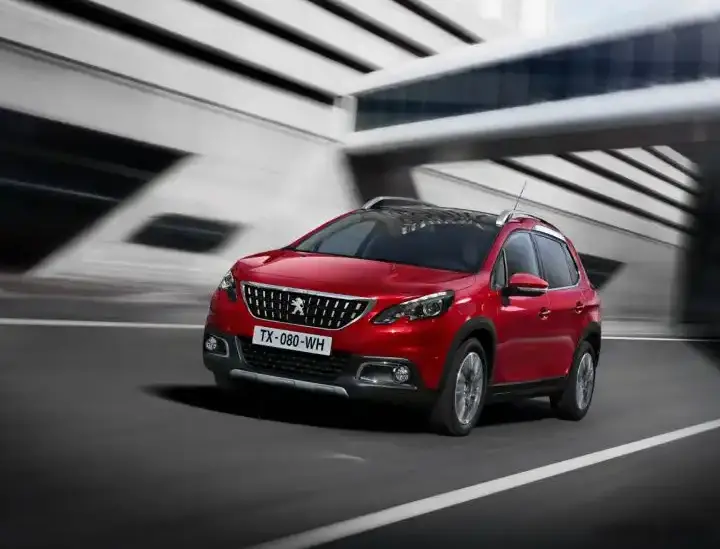
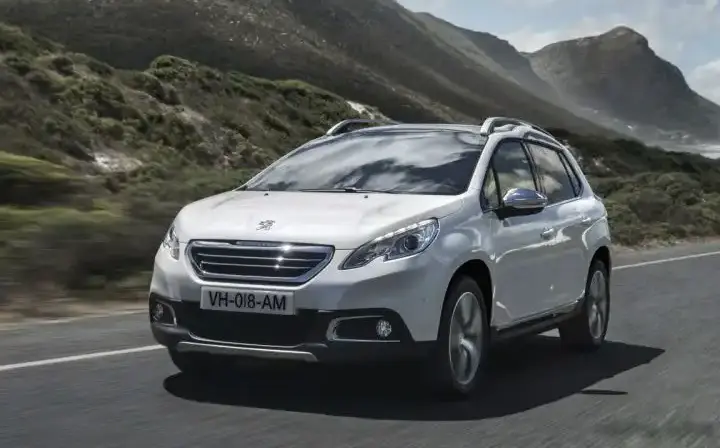
The Peugeot 2008 1.6 e-HDi (92 hp) FAP STT was a front-wheel-drive subcompact crossover SUV manufactured by Peugeot from 2013 to 2015. It served as the entry-level model within the first generation (2008 I) of the 2008, positioned below the more potent petrol and diesel options. This variant was designed to offer an economical and practical SUV choice, particularly appealing to European buyers where diesel engines were common. The “e-HDi” designation highlighted Peugeot’s fuel-efficient diesel technology, while “FAP STT” indicated the inclusion of a diesel particulate filter and Stop & Start technology, improving its environmental performance.
Powertrain & Engine Architecture
The 2008 1.6 e-HDi utilized the PSA Group’s DV6 engine family, specifically the 9HP DV6DTED variant. This 1.6-liter inline-four diesel engine incorporated a turbocharger with an intercooler to enhance both power and efficiency. The engine featured a common rail direct injection system, delivering fuel at high pressure for optimized combustion. It produced 92 horsepower at 4000 rpm and 230 Nm (169.64 lb-ft) of torque at 1750 rpm. The “e-HDi” technology included Stop & Start functionality, automatically shutting off the engine when the vehicle stopped to reduce fuel consumption and emissions. A five-speed manual transmission was paired with the engine, chosen for its simplicity and cost-effectiveness in this base trim. The engine was mounted in a front transverse layout, typical for front-wheel-drive vehicles.
Driving Characteristics
The 1.6 e-HDi engine, combined with the five-speed manual transmission, delivered adequate, though not particularly exciting, performance. Acceleration from 0 to 60 mph took around 10.9 seconds, and the top speed reached 112.47 mph. The engine’s torque peak at 1750 rpm provided usable power from relatively low engine speeds, making it suitable for everyday driving. However, compared to the petrol versions of the 2008, or the higher-output diesel variants, this model felt noticeably slower, especially when carrying a full load or climbing hills. The gear ratios were optimized for fuel economy rather than outright performance. The manual transmission offered driver control, but the engine lacked the responsiveness of the more powerful options. The overall driving experience prioritized fuel efficiency and practicality over sporty handling.
Equipment & Trim Levels
The 1.6 e-HDi FAP STT generally represented the base trim level for the 2008. Standard equipment typically included air conditioning, power steering, electric front windows, a basic audio system with USB connectivity, and ABS brakes. Safety features like driver and passenger airbags were also standard. Interior upholstery was usually cloth, and the dashboard featured a functional, though somewhat simple, design. Optional extras included alloy wheels, rear parking sensors, an upgraded audio system, and a navigation system. This trim level was aimed at budget-conscious buyers who valued fuel economy and practicality over luxury features.
Chassis & Braking
The 2008 1.6 e-HDi featured a McPherson strut independent suspension at the front and an elastic beam (torsion beam) suspension at the rear. This setup provided a reasonable balance between ride comfort and handling. The front brakes were ventilated discs, and the rear brakes were also ventilated discs, offering sufficient stopping power for the vehicle’s weight and performance. An Anti-lock Braking System (ABS) was standard, enhancing safety during emergency braking. The steering system used a rack and pinion setup, providing precise and responsive steering feel.
Market Reception & Comparison
The Peugeot 2008 1.6 e-HDi was generally well-received by automotive critics as an economical and practical choice in the subcompact crossover segment. Its fuel economy of around 58.8 US mpg combined was a significant selling point, particularly in Europe where diesel fuel was often more affordable than petrol. Compared to the petrol versions of the 2008, the 1.6 e-HDi offered considerably better fuel economy, but at the cost of performance. The higher-output diesel variants provided more power and a more refined driving experience, but came with a higher price tag. Reliability was generally considered good, although the diesel particulate filter (DPF) could require maintenance if the vehicle was primarily used for short trips.
Legacy
The Peugeot 2008 1.6 e-HDi, while not the most powerful or luxurious version of the 2008, remains a popular choice on the used car market due to its fuel efficiency and affordability. The DV6 engine family is known for its durability, provided regular maintenance is performed, including DPF regeneration. The 1.6 e-HDi variant represents a significant step in Peugeot’s commitment to producing fuel-efficient and environmentally friendly vehicles, and it helped establish the 2008 as a successful model in the competitive subcompact crossover segment. Today, these vehicles can often be found with high mileage, demonstrating the powertrain’s robustness when properly maintained.