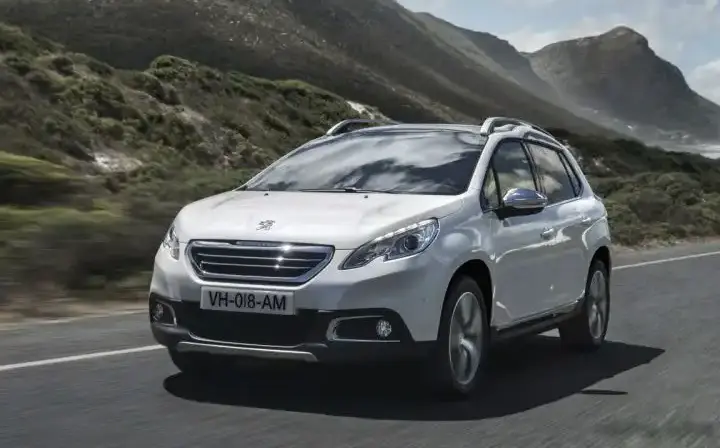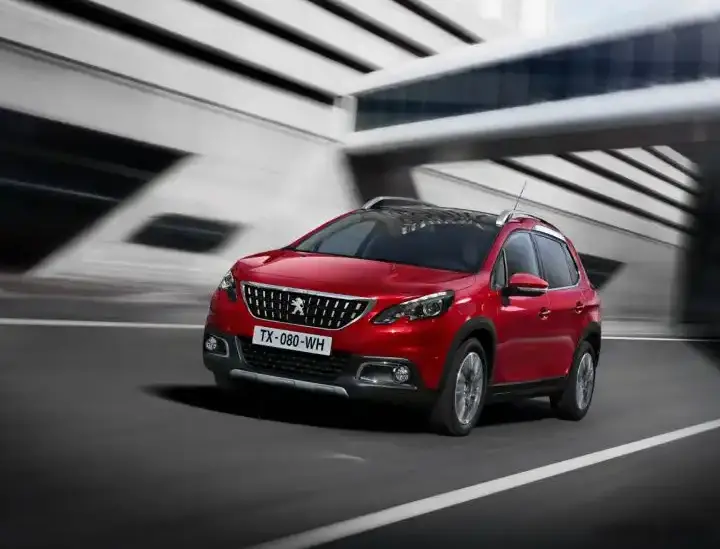
The Peugeot 2008 I (facelift 2016) 1.6 BlueHDi 120 Stop&Start is a front-wheel-drive subcompact crossover SUV produced by the French manufacturer Peugeot between 2016 and 2019. This variant occupied a key position in the 2008 lineup, offering a balance between fuel efficiency, reasonable performance, and affordability. It represented a significant update to the original 2008, introduced in 2013, with styling revisions and updated engine technology. The 1.6 BlueHDi 120 was particularly aimed at buyers seeking a practical and economical vehicle for urban and long-distance driving, and was a popular choice in European markets.
Technical Specifications
| Brand | Peugeot |
| Model | 2008 |
| Generation | 2008 I (facelift 2016) |
| Type (Engine) | 1.6 BlueHDi (120 Hp) start&stop STT |
| Start of production | 2016 |
| End of production | 2019 |
| Powertrain Architecture | Internal Combustion engine |
| Body type | SUV, Crossover |
| Seats | 5 |
| Doors | 5 |
| Fuel consumption (urban) | 4.3 l/100 km (54.7 US mpg, 65.7 UK mpg, 23.3 km/l) |
| Fuel consumption (extra urban) | 3.3 l/100 km (71.3 US mpg, 85.6 UK mpg, 30.3 km/l) |
| Fuel consumption (combined) | 3.7 l/100 km (63.6 US mpg, 76.3 UK mpg, 27 km/l) |
| CO2 emissions | 96 g/km |
| Fuel Type | Diesel |
| Acceleration 0 – 100 km/h | 9.6 sec |
| Acceleration 0 – 62 mph | 9.6 sec |
| Acceleration 0 – 60 mph | 9.1 sec |
| Maximum speed | 192 km/h (119.3 mph) |
| Emission standard | Euro 6 |
| Weight-to-power ratio | 10 kg/Hp, 100 Hp/tonne |
| Weight-to-torque ratio | 4 kg/Nm, 250 Nm/tonne |
| Power | 120 Hp @ 3500 rpm |
| Power per litre | 76.9 Hp/l |
| Torque | 300 Nm @ 1750 rpm (221.27 lb.-ft. @ 1750 rpm) |
| Engine layout | Front, Transverse |
| Engine Model/Code | BHZ DV6FC |
| Engine displacement | 1560 cm3 (95.2 cu. in.) |
| Engine configuration | Inline |
| Fuel injection system | Diesel Commonrail |
| Engine aspiration | Turbocharger, Intercooler |
| Engine oil capacity | 3.75 l (3.96 US qt | 3.3 UK qt) |
| Coolant capacity | 6 l (6.34 US qt | 5.28 UK qt) |
| Kerb Weight | 1200 kg (2645.55 lbs.) |
| Trunk (boot) space – minimum | 350 l (12.36 cu. ft.) |
| Fuel tank capacity | 45 l (11.89 US gal | 9.9 UK gal) |
| Length | 4159 mm (163.74 in.) |
| Width | 1829 mm (72.01 in.) |
| Width including mirrors | 2004 mm (78.9 in.) |
| Height | 1556 mm (61.26 in.) |
| Wheelbase | 2537 mm (99.88 in.) |
| Front track | 1472-1482 mm (57.95 – 58.35 in.) |
| Rear (Back) track | 1482-1492 mm (58.35 – 58.74 in.) |
| Drivetrain Architecture | The Internal combustion engine (ICE) drives the front wheels of the vehicle. |
| Drive wheel | Front wheel drive |
| Number of gears and type of gearbox | 6 gears, manual transmission |
| Front suspension | Independent, type McPherson with coil spring and anti-roll bar |
| Rear suspension | Semi-independent, coil spring |
| Front brakes | Ventilated discs |
| Rear brakes | Disc |
| Assisting systems | ABS (Anti-lock braking system) |
| Steering type | Steering rack and pinion |
| Power steering | Electric Steering |
| Tires size | 195/65 R15; 195/60 R16; 205/50 R17 |
| Wheel rims size | 15; 16; 17 |
Powertrain & Engine Architecture
The 2008 1.6 BlueHDi 120 is powered by the PSA Group’s DV6FC engine, specifically the BHZ variant. This is a 1.6-liter, four-cylinder diesel engine utilizing common-rail direct injection and a turbocharger with an intercooler. The engine benefits from PSA’s BlueHDi technology, which incorporates a Selective Catalytic Reduction (SCR) system using AdBlue (Diesel Exhaust Fluid) to significantly reduce nitrogen oxide (NOx) emissions, ensuring compliance with stringent Euro 6 emission standards. The engine produces 120 horsepower at 3500 rpm and a substantial 300 Nm (221 lb-ft) of torque at 1750 rpm. This torque output, available from relatively low engine speeds, contributes to good drivability and responsiveness. The engine features a 16-valve DOHC valvetrain. The 6-speed manual transmission was standard, chosen for its efficiency and driver engagement.
Driving Characteristics
The 1.6 BlueHDi 120 offered a comfortable and refined driving experience. While not a performance-oriented variant, the engine provided adequate power for everyday driving, including highway cruising and overtaking. The 6-speed manual transmission allowed for precise gear selection and helped to maximize fuel efficiency. The gear ratios were well-matched to the engine’s torque curve, providing strong acceleration in the lower gears. Compared to the more powerful petrol variants, the diesel offered superior fuel economy and a more relaxed driving style. However, it lacked the outright acceleration and responsiveness of the petrol engines. The front-wheel-drive configuration provided predictable handling, although it wasn’t particularly sporty.
Equipment & Trim Levels
The 1.6 BlueHDi 120 typically came equipped with a reasonable level of standard features. These included air conditioning, power windows, central locking, a basic audio system with USB connectivity, and stability control. Higher trim levels, such as Allure and GT Line, added features like alloy wheels, a touchscreen infotainment system with navigation, rear parking sensors, automatic headlights and wipers, and cruise control. Interior upholstery was typically cloth, with options for leather upgrades on higher trims. The dashboard layout was functional and user-friendly, with a focus on practicality.
Chassis & Braking
The 2008’s chassis featured a McPherson strut front suspension and a semi-independent coil spring rear suspension. This setup provided a good balance between ride comfort and handling. The front brakes were ventilated discs, while the rear brakes were solid discs. Anti-lock Braking System (ABS) was standard, enhancing safety. The steering was electric power-assisted, providing light and precise control. The suspension was tuned for comfort, absorbing bumps and imperfections in the road surface effectively. Stabilizer bars were fitted to both the front and rear axles to reduce body roll during cornering.
Market Reception & Comparison
The Peugeot 2008 1.6 BlueHDi 120 was well-received by critics and consumers alike. It was praised for its fuel efficiency, comfortable ride, and practical interior. Compared to other engines in the 2008 lineup, the 1.6 BlueHDi 120 offered the best fuel economy, making it an attractive option for drivers who prioritized running costs. The petrol engines provided more power but were less economical. The diesel engine’s reliability was generally good, although diesel particulate filter (DPF) maintenance was a consideration. The 1.6 BlueHDi 120 competed with other subcompact crossovers, such as the Renault Captur, Nissan Juke, and Opel/Vauxhall Mokka.
Legacy
The Peugeot 2008 I (facelift 2016) 1.6 BlueHDi 120 remains a popular choice in the used car market. Its fuel efficiency, practicality, and relatively low running costs continue to appeal to buyers. The DV6FC engine is known for its durability, although regular maintenance, including DPF regeneration, is essential. The 2008’s success helped to establish Peugeot as a major player in the subcompact crossover segment, paving the way for the second-generation model. The 1.6 BlueHDi engine, in various iterations, continued to be used in other PSA Group vehicles, demonstrating its versatility and reliability.