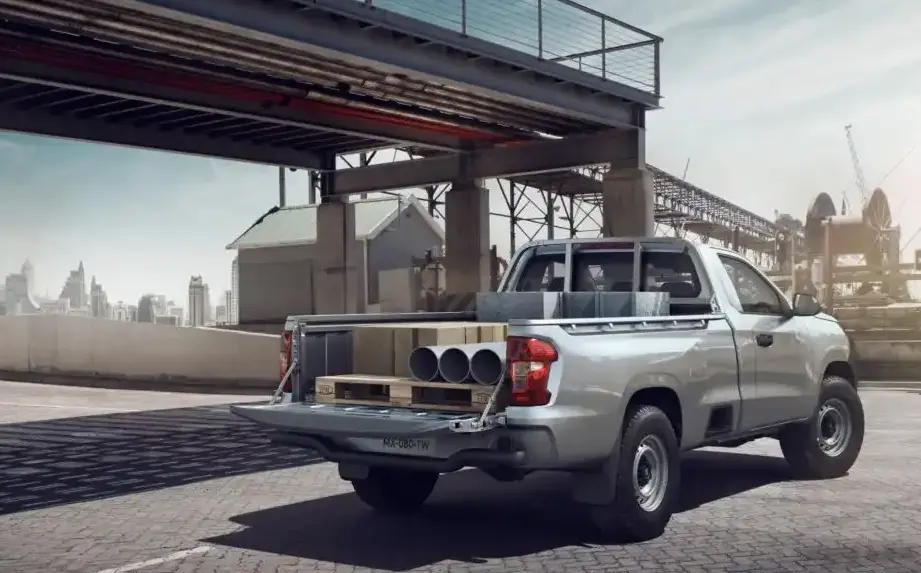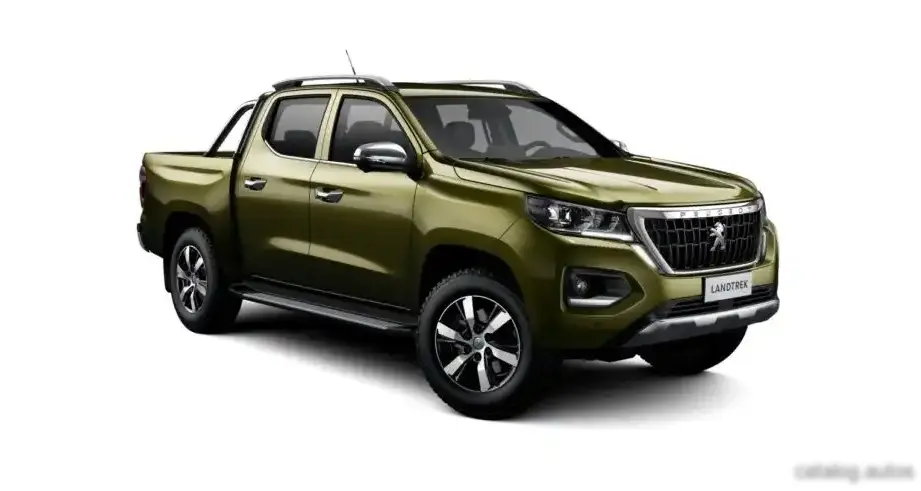
The Peugeot Landtrek Double Cab 2.4i (210 Hp) is a mid-size pickup truck introduced by Peugeot in February 2020. Designed primarily for markets outside of Europe, particularly in Latin America, Africa, and the Middle East, the Landtrek represents Peugeot’s entry into a highly competitive segment. This specific 2.4-liter turbocharged gasoline engine variant, paired with a six-speed manual transmission, occupies a position in the lineup aimed at buyers seeking a balance between performance, capability, and affordability. It serves as a workhorse option, positioned below potential future diesel or higher-trim gasoline offerings. The Landtrek is built on a robust ladder-frame chassis, emphasizing durability and load-carrying capacity.
Technical Specifications
| Brand | Peugeot |
| Model | Landtrek |
| Generation | Landtrek Double Cab |
| Type (Engine) | 2.4i (210 Hp) |
| Start of production | February, 2020 |
| Powertrain Architecture | Internal Combustion engine |
| Body type | Pick-up |
| Seats | 6 |
| Doors | 4 |
| Fuel consumption (combined) | 9.8 l/100 km (24 US mpg, 28.8 UK mpg, 10.2 km/l) |
| CO2 emissions | 229 g/km |
| Fuel Type | Petrol (Gasoline) |
| Acceleration 0 – 100 km/h | 12.2 sec |
| Acceleration 0 – 62 mph | 12.2 sec |
| Acceleration 0 – 60 mph | 11.6 sec |
| Maximum speed | 182 km/h (113.09 mph) |
| Emission standard | Euro 5 |
| Weight-to-power ratio | 9.3 kg/Hp, 107.7 Hp/tonne |
| Weight-to-torque ratio | 6.1 kg/Nm, 164.1 Nm/tonne |
| Power | 210 Hp @ 5600 rpm |
| Power per litre | 88.3 Hp/l |
| Torque | 320 Nm @ 2000-4000 rpm (236.02 lb.-ft. @ 2000-4000 rpm) |
| Engine layout | Front, Longitudinal |
| Engine Model/Code | 4K22D4T |
| Engine displacement | 2378 cm3 (145.11 cu. in.) |
| Number of cylinders | 4 |
| Engine configuration | Inline |
| Cylinder Bore | 87 mm (3.43 in.) |
| Piston Stroke | 100 mm (3.94 in.) |
| Compression ratio | 9.6:1 |
| Number of valves per cylinder | 4 |
| Fuel injection system | Multi-port manifold injection |
| Engine aspiration | Turbocharger, Intercooler |
| Engine oil capacity | 4.3 l (4.54 US qt | 3.78 UK qt) |
| Kerb Weight | 1950 kg (4299.01 lbs.) |
| Fuel tank capacity | 80 l (21.13 US gal | 17.6 UK gal) |
| Length | 5330 mm (209.84 in.) |
| Width | 1963 mm (77.28 in.) |
| Width including mirrors | 2221 mm (87.44 in.) |
| Height | 1897 mm (74.69 in.) |
| Wheelbase | 3180 mm (125.2 in.) |
| Front track | 1610 mm (63.39 in.) |
| Rear track | 1630 mm (64.17 in.) |
| Front overhang | 925 mm (36.42 in.) |
| Rear overhang | 1225 mm (48.23 in.) |
| Ride height (ground clearance) | 214-235 mm (8.43 – 9.25 in.) |
| Approach angle | 29.0° |
| Departure angle | 27.0° |
| Ramp-over angle | 25.0° |
| Wading depth | 600 mm (23.62 in.) |
| Drivetrain Architecture | Rear wheel drive |
| Number of gears and type of gearbox | 6 gears, manual transmission |
| Front suspension | Double wishbone |
| Rear suspension | Leaf spring |
| Front brakes | Ventilated discs |
| Rear brakes | Drum |
| Assisting systems | ABS (Anti-lock braking system) |
| Steering type | Steering rack and pinion |
| Power steering | Hydraulic Steering |
| Tires size | 265/65 R17 |
| Wheel rims size | 17 |
Powertrain & Engine Architecture
The Landtrek 2.4i utilizes Peugeot’s 4K22D4T engine, a 2.4-liter inline-four cylinder gasoline engine equipped with a turbocharger and intercooler. This engine employs multi-point fuel injection to deliver fuel to the cylinders. The engine produces 210 horsepower at 5600 rpm and 320 Nm (236 lb-ft) of torque between 2000 and 4000 rpm. The six-speed manual transmission is a conventional design, chosen for its robustness and cost-effectiveness in target markets. The longitudinal engine layout contributes to a more balanced weight distribution, although the rear-wheel-drive configuration limits traction in certain conditions. The engine’s design prioritizes durability and ease of maintenance, reflecting the intended operating environments of the Landtrek.
Driving Characteristics
The 2.4i Landtrek offers adequate performance for everyday use and moderate hauling. Acceleration from 0-100 km/h takes approximately 12.2 seconds. The turbocharger provides a noticeable boost in power, but the engine can feel somewhat strained when fully loaded or climbing steep inclines. The manual transmission allows for greater driver control, but the gear ratios are tuned for fuel efficiency and towing capacity rather than outright speed. Compared to potential future diesel variants, the 2.4i offers less low-end torque, requiring more frequent gear changes. The rear-wheel-drive configuration provides a more traditional pickup truck feel, but lacks the all-weather capability of four-wheel-drive systems.
Equipment & Trim Levels
The Landtrek Double Cab 2.4i typically comes standard with features such as air conditioning, power windows, and a basic audio system. Safety equipment includes ABS brakes and driver/passenger airbags. Higher trim levels, available in some markets, add features like alloy wheels, a touchscreen infotainment system, and rear parking sensors. Interior upholstery is generally durable cloth, designed to withstand the rigors of commercial use. Optional extras may include a bed liner, a tow hitch, and upgraded audio systems.
Chassis & Braking
The Landtrek utilizes a traditional ladder-frame chassis, providing a solid foundation for load-carrying and off-road capability. The front suspension consists of double wishbones, while the rear suspension employs leaf springs. This combination offers a good balance between ride comfort and load capacity. The front brakes are ventilated discs, providing adequate stopping power, while the rear brakes are drums, a cost-saving measure. The hydraulic power steering provides a reasonably direct steering feel. Ground clearance ranges from 214 to 235 mm (8.43 to 9.25 inches), allowing for moderate off-road capability.
Market Reception & Comparison
The Peugeot Landtrek has been generally well-received in its target markets, praised for its robust construction, competitive pricing, and practical features. Critics have noted that the 2.4i gasoline engine, while adequate, lacks the refinement and fuel efficiency of diesel alternatives. Compared to competitors like the Toyota Hilux and Ford Ranger, the Landtrek offers a more affordable entry point, but may not match their overall level of refinement or brand recognition. Fuel economy is rated at 9.8 l/100 km, which is typical for a vehicle of this type and size.
Legacy
The Peugeot Landtrek represents a significant step for Peugeot into the global pickup truck market. The 2.4i variant, while potentially superseded by more advanced powertrains in the future, serves as a foundational model, establishing the Landtrek’s reputation for durability and practicality. Long-term reliability is still being assessed, but the robust engine and chassis design suggest a reasonable lifespan. On the used car market, the Landtrek 2.4i is expected to appeal to buyers seeking a dependable and affordable work truck.