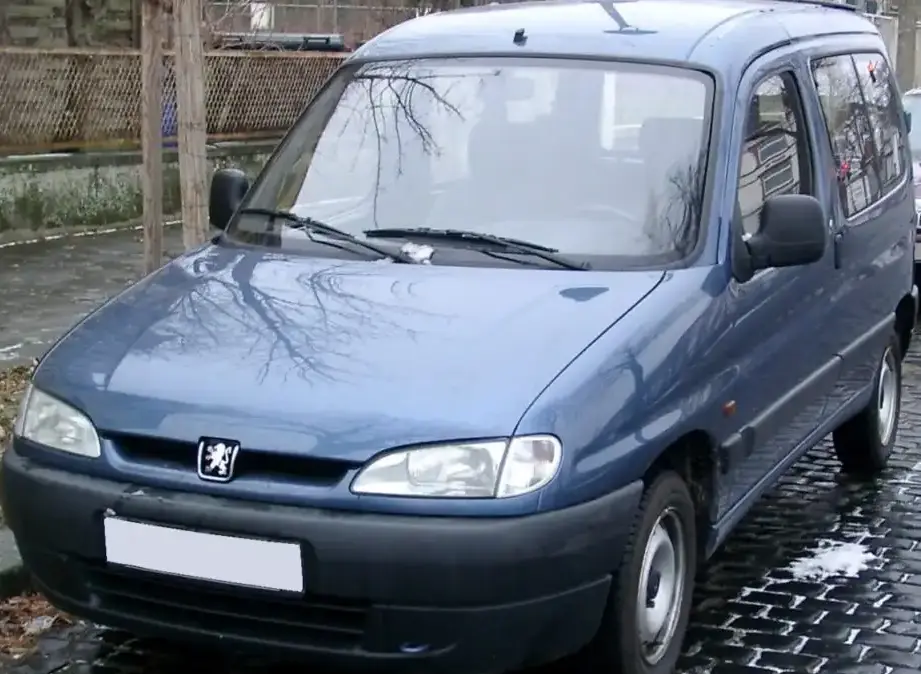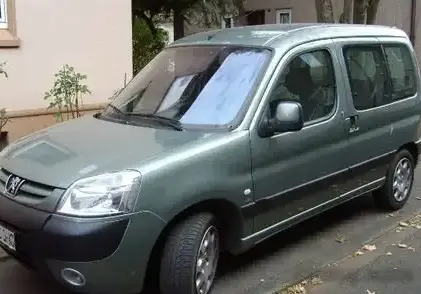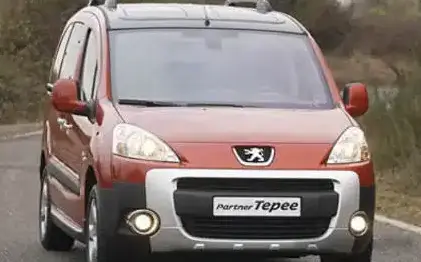
The Peugeot Partner II Tepee 1.6 HDi, producing 75 horsepower, was a popular configuration of the second-generation Partner Tepee, manufactured between 2008 and 2012. Positioned as an entry-level offering within the Partner Tepee range, it catered to buyers prioritizing fuel efficiency and practicality over outright performance. This variant played a significant role in the European light commercial vehicle (LCV) and multi-purpose vehicle (MPV) market, offering a versatile and affordable option for families and small businesses. It was often chosen for its lower purchase price and running costs compared to higher-powered versions.
Technical Specifications
| Brand | Peugeot |
| Model | Partner |
| Generation | Partner II Tepee |
| Type (Engine) | 1.6 HDi (75 Hp) |
| Start of production | 2008 |
| End of production | 2012 |
| Powertrain Architecture | Internal Combustion engine |
| Body type | Minivan |
| Seats | 5 |
| Doors | 5 |
| Fuel consumption (urban) | 7 l/100 km (33.6 US mpg, 40.4 UK mpg, 14.3 km/l) |
| Fuel consumption (extra urban) | 5 l/100 km (47 US mpg, 56.5 UK mpg, 20 km/l) |
| Fuel consumption (combined) | 5.7 l/100 km (41.3 US mpg, 49.6 UK mpg, 17.5 km/l) |
| Fuel Type | Diesel |
| Acceleration 0 – 100 km/h | 17.1 sec |
| Acceleration 0 – 62 mph | 17.1 sec |
| Acceleration 0 – 60 mph | 16.2 sec |
| Maximum speed | 150 km/h (93.21 mph) |
| Emission standard | Euro 4 |
| Weight-to-power ratio | 18.8 kg/Hp, 53.3 Hp/tonne |
| Weight-to-torque ratio | 7.6 kg/Nm, 131.5 Nm/tonne |
| Power | 75 Hp @ 3500 rpm |
| Power per litre | 48.1 Hp/l |
| Torque | 185 Nm @ 1750 rpm (136.45 lb.-ft. @ 1750 rpm) |
| Engine layout | Front, Transverse |
| Engine Model/Code | 9HT DV6BTED4 |
| Engine displacement | 1560 cm3 (95.2 cu. in.) |
| Number of cylinders | 4 |
| Engine configuration | Inline |
| Number of valves per cylinder | 2 |
| Fuel injection system | Diesel Commonrail |
| Engine aspiration | Turbocharger, Intercooler |
| Engine oil capacity | 3.75 l (3.96 US qt | 3.3 UK qt) |
| Coolant capacity | 6.3 l (6.66 US qt | 5.54 UK qt) |
| Kerb Weight | 1407 kg (3101.9 lbs) |
| Max. weight | 2040 kg (4497.43 lbs) |
| Max load | 633 kg (1395.53 lbs) |
| Trunk (boot) space – minimum | 505 l (17.83 cu. ft.) |
| Fuel tank capacity | 60 l (15.85 US gal | 13.2 UK gal) |
| Length | 4380 mm (172.44 in) |
| Width | 1810 mm (71.26 in) |
| Height | 1803 mm (70.98 in) |
| Wheelbase | 2728 mm (107.4 in) |
| Front track | 1505 mm (59.25 in) |
| Rear (Back) track | 1554 mm (61.18 in) |
| Drivetrain Architecture | Front wheel drive |
| Number of gears and type of gearbox | 5 gears, manual transmission |
| Front brakes | Ventilated discs |
| Rear brakes | Disc |
| Assisting systems | ABS (Anti-lock braking system) |
| Tires size | 205/65 R15H |
Powertrain & Engine Architecture
The heart of the Partner II Tepee 1.6 HDi (75 Hp) is the 9HT DV6BTED4 engine, a 1.6-liter inline-four cylinder diesel. This engine belongs to the DW10 family developed by PSA Peugeot Citroën. It features a common rail direct injection system, delivering fuel at high pressure for improved combustion efficiency and reduced emissions. The engine is turbocharged with an intercooler, enhancing power output and torque. The 75 horsepower output is achieved at 3500 rpm, while peak torque of 185 Nm (136 lb-ft) is available from 1750 rpm. This configuration prioritizes low-end torque for everyday drivability. The engine utilizes a two-valve per cylinder configuration. The 5-speed manual transmission was the standard offering, chosen for its simplicity and fuel efficiency.
Driving Characteristics
The 1.6 HDi 75 hp engine, paired with the 5-speed manual gearbox, provided adequate, though not exhilarating, performance. Acceleration from 0-100 km/h (0-62 mph) took approximately 17.1 seconds, and top speed was limited to 150 km/h (93 mph). The engine’s strength lay in its usable low-end torque, making it suitable for urban driving and carrying loads. However, overtaking maneuvers required careful planning. Compared to the more powerful 1.6 HDi 92 hp or 2.0 HDi variants, this version felt noticeably slower, especially when fully loaded. The gear ratios were optimized for fuel economy rather than outright performance, resulting in a relaxed cruising experience but requiring frequent downshifts when climbing hills or accelerating quickly.
Equipment & Trim Levels
The Partner II Tepee 1.6 HDi (75 Hp) typically came with a basic level of equipment, reflecting its position as an entry-level model. Standard features generally included power steering, central locking, electric front windows, and a basic audio system. Safety features such as ABS were also standard. Interior upholstery was typically cloth, and the dashboard featured a functional, if somewhat utilitarian, design. Optional extras included air conditioning, rear parking sensors, and upgraded audio systems. Higher trim levels, such as the Outdoor or Escape, offered additional features like alloy wheels, roof bars, and more premium interior trim.
Chassis & Braking
The Partner II Tepee utilized a conventional front-wheel-drive layout with MacPherson strut front suspension and a torsion beam rear suspension. The suspension was tuned for comfort and practicality, prioritizing ride quality over sporty handling. The front brakes were ventilated discs, providing adequate stopping power, while the rear brakes were solid discs. The vehicle’s relatively light weight (1407 kg / 3101.9 lbs) helped to compensate for the modest engine output. A stabilizer bar was fitted to the front suspension to reduce body roll during cornering.
Market Reception & Comparison
The Peugeot Partner II Tepee 1.6 HDi (75 Hp) was well-received in the market for its affordability and fuel efficiency. Critics praised its practicality and versatility, making it a popular choice for families and small businesses. However, some reviewers noted its lack of power, particularly when compared to higher-output versions. Fuel economy was a strong point, with combined fuel consumption figures around 5.7 l/100 km (41.3 US mpg). In terms of reliability, the 1.6 HDi engine proved to be generally robust, although some owners reported issues with the diesel particulate filter (DPF) system, a common concern with modern diesel engines. Compared to the 1.6 HDi 92 hp variant, the 75 hp model offered lower running costs but sacrificed performance.
Legacy
The Peugeot Partner II Tepee 1.6 HDi (75 Hp) remains a common sight on European roads today. Its robust engine and practical design have contributed to its longevity. In the used car market, these models are typically affordable and represent good value for money. While the engine may not be the most powerful, its reliability and fuel efficiency make it a sensible choice for buyers seeking a practical and economical MPV. The 9HT DV6BTED4 engine, while having some known issues with the DPF, is generally considered a durable unit when properly maintained.