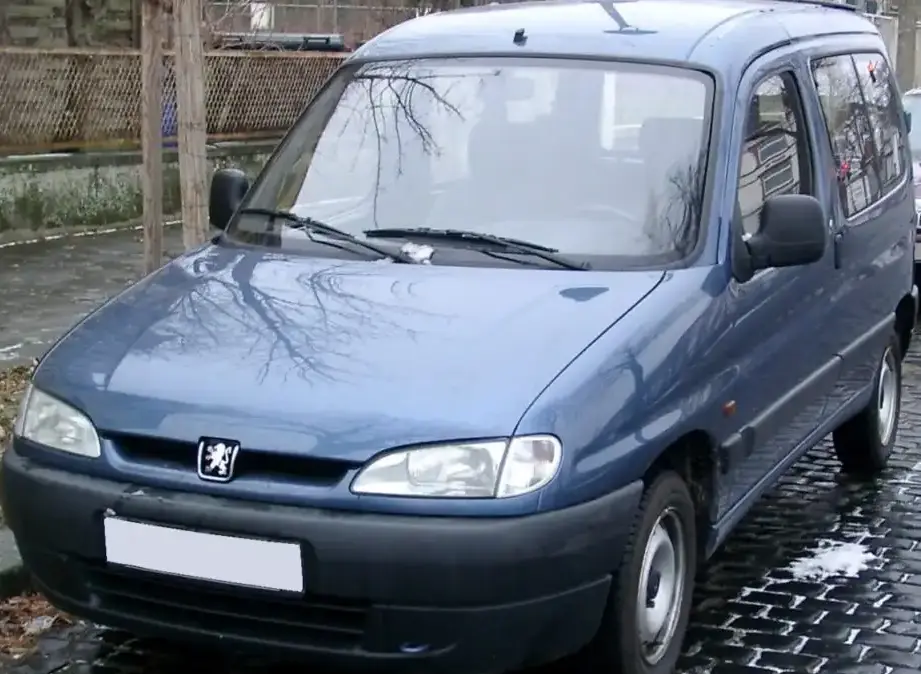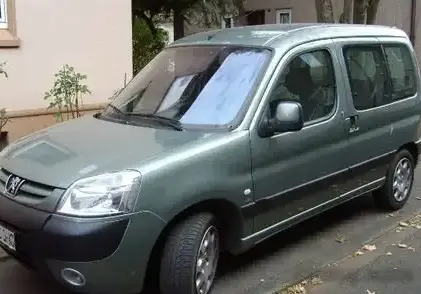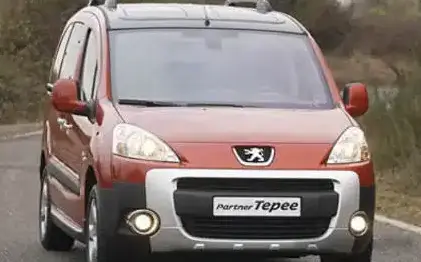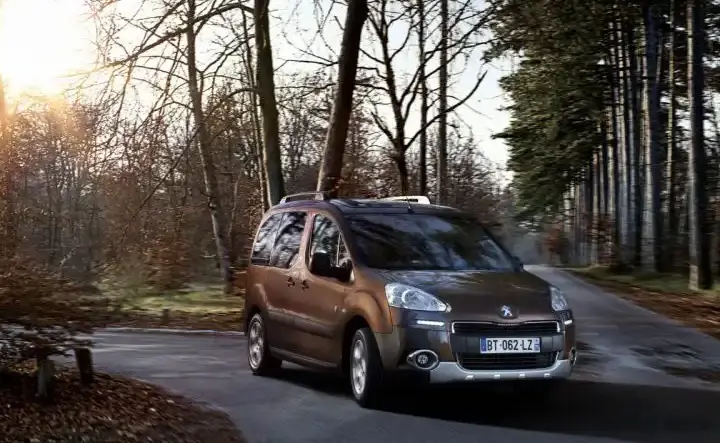
The Peugeot Partner II Tepee, specifically the Phase II model produced from 2012 to 2018, represented a significant iteration of Peugeot’s popular leisure activity vehicle (LAV). The 1.6 VTi variant, producing 98 horsepower, occupied a key position in the Partner Tepee lineup as an entry-level petrol option, aimed at buyers prioritizing affordability and practicality over outright performance. This version was part of the larger Partner II generation (built on the Citroën Berlingo platform), known for its versatility and spacious interior, and was primarily marketed in Europe as a family vehicle, small business transport, or for those needing a flexible cargo solution. The Phase II refresh brought styling updates and minor equipment revisions compared to the initial Partner II Tepee launch.
Technical Specifications
| Brand | Peugeot |
| Model | Partner |
| Generation | Partner II Tepee (Phase II, 2012) |
| Type (Engine) | 1.6 VTi (98 Hp) |
| Start of production | 2012 |
| End of production | 2018 |
| Powertrain Architecture | Internal Combustion engine |
| Body type | Minivan |
| Seats | 5 |
| Doors | 5 |
| Fuel consumption (urban) | 9.2 l/100 km (25.6 US mpg) |
| Fuel consumption (extra urban) | 5.3 l/100 km (44.4 US mpg) |
| Fuel consumption (combined) | 6.7 l/100 km (35.1 US mpg) |
| CO2 emissions | 155 g/km |
| Fuel Type | Petrol (Gasoline) |
| Acceleration 0 – 100 km/h | 15.5 sec |
| Acceleration 0 – 62 mph | 15.5 sec |
| Acceleration 0 – 60 mph | 14.7 sec |
| Maximum speed | 162 km/h (100.66 mph) |
| Emission standard | Euro 5 |
| Weight-to-power ratio | 15.8 kg/Hp |
| Weight-to-torque ratio | 10.2 kg/Nm |
| Power | 98 Hp @ 6000 rpm |
| Torque | 152 Nm @ 3500 rpm (112.11 lb.-ft. @ 3500 rpm) |
| Engine layout | Front, Transverse |
| Engine Model/Code | 5FK EP6CB |
| Engine displacement | 1598 cm3 (97.52 cu. in.) |
| Number of cylinders | 4 |
| Engine configuration | Inline |
| Number of valves per cylinder | 4 |
| Fuel injection system | Direct injection |
| Engine oil capacity | 4.25 l (4.49 US qt | 3.74 UK qt) |
| Coolant capacity | 5.7 l (6.02 US qt | 5.02 UK qt) |
| Kerb Weight | 1550 kg (3417.17 lbs.) |
| Max. weight | 2000 kg (4409.25 lbs.) |
| Max load | 450 kg (992.08 lbs.) |
| Trunk (boot) space – minimum | 100 l (3.53 cu. ft.) |
| Trunk (boot) space – maximum | 3000 l (105.94 cu. ft.) |
| Fuel tank capacity | 60 l (15.85 US gal | 13.2 UK gal) |
| Length | 4380 mm (172.44 in.) |
| Width | 1810 mm (71.26 in.) |
| Height | 1852 mm (72.91 in.) |
| Wheelbase | 2728 mm (107.4 in.) |
| Front track | 1505 mm (59.25 in.) |
| Rear track | 1554 mm (61.18 in.) |
| Minimum turning circle | 11 m (36.09 ft.) |
| Drivetrain | Front wheel drive |
| Number of gears | 5 |
| Gearbox type | Manual transmission |
| Front suspension | Independent, McPherson with coil spring and anti-roll bar |
| Rear suspension | Independent coil spring |
| Front brakes | Ventilated discs |
| Rear brakes | Disc |
| Assisting systems | ABS (Anti-lock braking system) |
| Steering type | Steering rack and pinion |
| Tires size | 205/65 R15; 215/55 R16 |
| Wheel rims size | 15; 16 |
Powertrain & Engine Architecture
The 1.6 VTi engine, identified by the code 5FK EP6CB, is a naturally aspirated, inline-four cylinder petrol engine. It features direct fuel injection, a technology that improves fuel efficiency and power output compared to traditional port fuel injection systems. The engine utilizes a dual overhead camshaft (DOHC) valvetrain with four valves per cylinder, contributing to its relatively high specific output for its displacement. The 98 horsepower and 152 Nm (112 lb-ft) of torque are modest, but sufficient for everyday driving. Paired with a five-speed manual transmission, the engine’s power is delivered to the front wheels. The five-speed gearbox was chosen for its simplicity and cost-effectiveness, rather than offering particularly close ratios geared for performance. The transmission’s gear ratios are fairly conventional, prioritizing fuel economy and ease of use over sporty acceleration.
Driving Characteristics
The 1.6 VTi engine in the Partner Tepee provides adequate, but not exhilarating, performance. Acceleration from 0-60 mph takes around 14.7 seconds, and top speed is limited to 100.66 mph. In real-world driving, the engine feels best suited to urban and suburban environments, where its torque is sufficient for navigating traffic and moderate inclines. Compared to the more powerful 1.6 HDi diesel variants or even the higher-output petrol options, the 1.6 VTi feels noticeably slower, particularly when fully loaded with passengers and cargo. The manual transmission requires frequent shifting to maintain momentum, especially on hills. The steering is light and easy, making it maneuverable in tight spaces, but lacks the feedback desired by more enthusiastic drivers. The suspension is tuned for comfort, absorbing bumps and imperfections in the road reasonably well, but can feel somewhat soft and prone to body roll during cornering.
Equipment & Trim Levels
The 1.6 VTi trim level of the Partner Tepee Phase II typically included basic, but functional, equipment. Standard features generally included power steering, central locking, electric front windows, and an adjustable steering column. Interior upholstery was typically cloth, with a durable and practical design. The dashboard layout was straightforward and user-friendly, with clearly labeled controls. Optional extras available for this trim included air conditioning, a CD player with auxiliary input, and rear parking sensors. Higher trim levels, such as the Outdoor or X trim, added features like alloy wheels, fog lights, and more premium interior materials.
Chassis & Braking
The Partner Tepee utilizes a McPherson strut front suspension with a coil spring and anti-roll bar, providing a comfortable ride and predictable handling. The rear suspension employs an independent coil spring setup. Braking duties are handled by ventilated discs at the front and solid discs at the rear. Anti-lock Braking System (ABS) is standard, enhancing safety during emergency braking situations. The chassis is designed to prioritize practicality and load-carrying capacity, rather than sporty handling. The relatively narrow tires (typically 205/65 R15 or 215/55 R16) contribute to a comfortable ride but limit grip in cornering.
Market Reception & Comparison
The 1.6 VTi Partner Tepee was generally well-received as a practical and affordable family vehicle. Critics praised its spacious interior, versatility, and fuel efficiency (around 35.1 US mpg combined). However, the engine’s modest power output was often cited as a drawback, particularly when compared to the more popular diesel options. The 1.6 HDi diesel variants offered significantly better fuel economy and torque, making them a more appealing choice for drivers covering long distances or frequently carrying heavy loads. The petrol version was often seen as a good option for those who primarily used the vehicle for short trips and didn’t require the extra power of the diesel.
Legacy
The 1.6 VTi engine, while not known for exceptional performance or longevity, has proven to be reasonably reliable in the Partner Tepee. Common issues are typically related to routine maintenance items, such as spark plugs, ignition coils, and timing belts. The Partner Tepee, in general, has a reputation for being a durable and practical vehicle. On the used car market, the 1.6 VTi variants are typically more affordable than the diesel models, making them an attractive option for budget-conscious buyers. However, potential buyers should be aware of the engine’s limited power output and consider their driving needs before making a purchase.