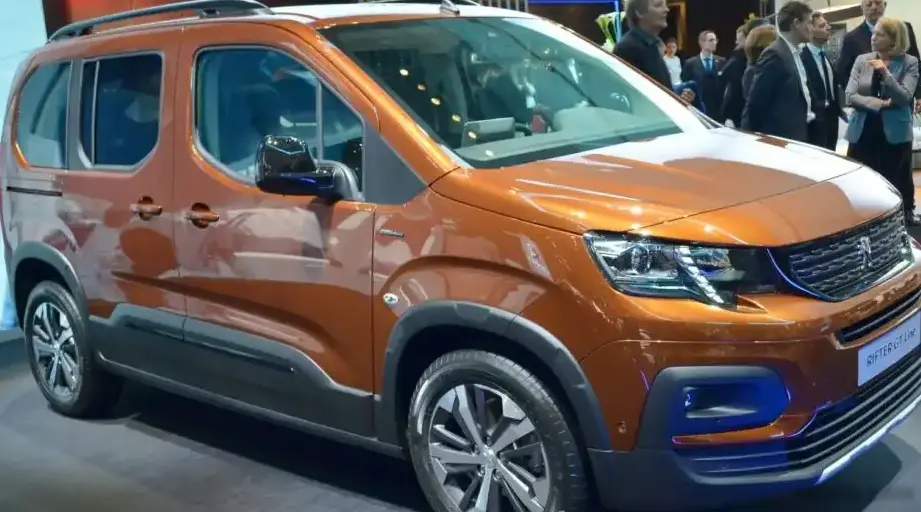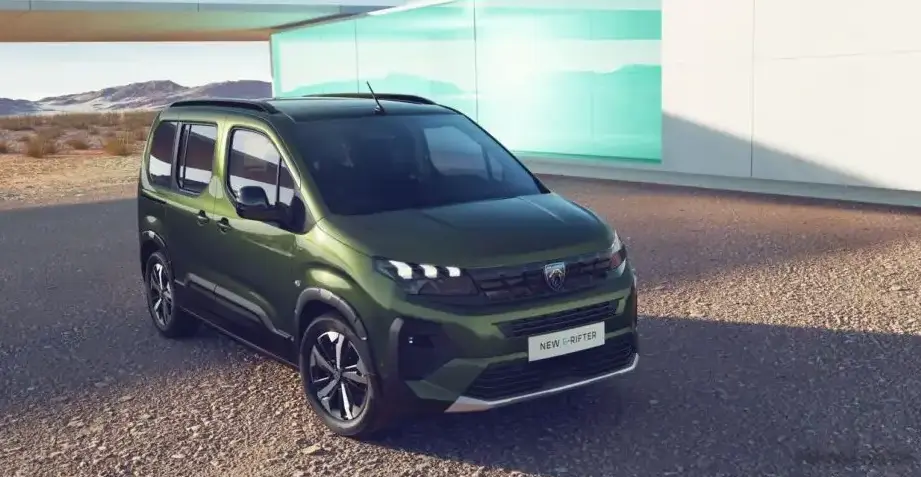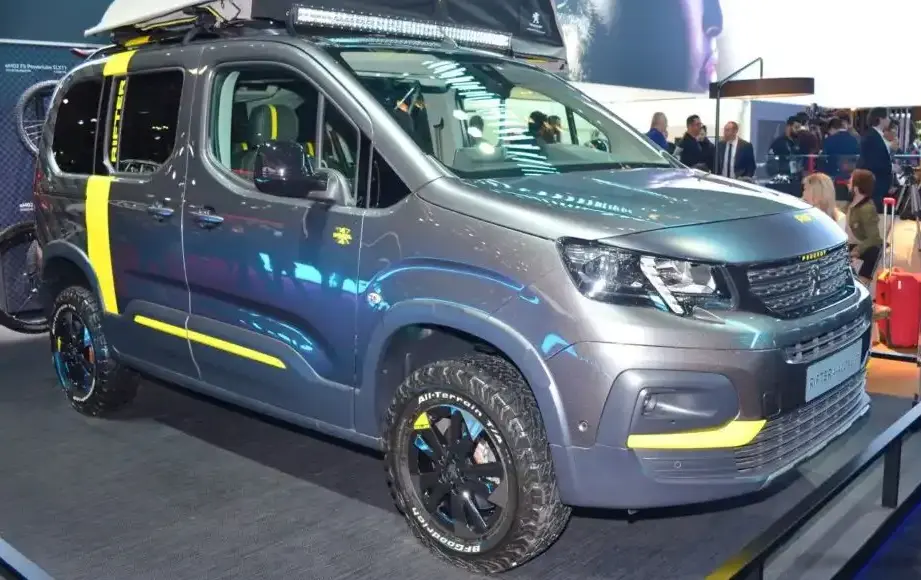
The Peugeot Rifter 4×4 Concept, powered by a 1.5-liter diesel engine producing 131 horsepower, represents a unique and short-lived variant of the Rifter minivan. Introduced as a concept in 2018, it showcased Peugeot’s capability to offer all-wheel drive in its leisure activity vehicle (LAV) lineup. While not a long-production model, the Rifter 4×4 Concept aimed to broaden the Rifter’s appeal to customers seeking enhanced traction and versatility, particularly in regions with challenging road conditions. It was positioned as a more adventurous alternative to the standard front-wheel-drive Rifter models.
Technical Specifications
| Brand | Peugeot |
| Model | Rifter |
| Generation | Rifter 4×4 Concept |
| Type (Engine) | 1.5 diesel (131 Hp) 4×4 |
| Start of production | 2018 |
| End of production | 2018 |
| Powertrain Architecture | Internal Combustion engine |
| Body type | Minivan |
| Seats | 5 |
| Doors | 4 |
| Fuel Type | Diesel |
| Power | 131 Hp |
| Power per litre | 87.3 Hp/l |
| Engine Model/Code | YHZ DV5RC |
| Engine displacement | 1500 cm3 |
| Engine displacement (US) | 91.54 cu. in. |
| Engine aspiration | Naturally aspirated engine |
| Engine oil capacity | 4 l |
| Engine oil capacity (US) | 4.23 US qt |
| Engine oil capacity (UK) | 3.52 UK qt |
| Length | 4450 mm |
| Length (US) | 175.2 in. |
| Width including mirrors | 2100 mm |
| Width including mirrors (US) | 82.68 in. |
| Height | 1900 mm |
| Height (US) | 74.8 in. |
| Front track | 1550 mm |
| Front track (US) | 61.02 in. |
| Rear (Back) track | 1550 mm |
| Rear (Back) track (US) | 61.02 in. |
| Drive wheel | All wheel drive (4×4) |
| Number of gears and type of gearbox | 6 gears, manual transmission SST |
| Wheel rims size | 20 |
Powertrain & Engine Architecture
The heart of the Rifter 4×4 Concept is the DV5RC engine, a 1.5-liter inline-four diesel engine. This engine is part of Peugeot’s Euro 6 compliant diesel range, designed for efficiency and reduced emissions. The 1.5-liter engine utilizes common-rail direct injection, delivering fuel directly into the combustion chamber at extremely high pressure. This system, coupled with a turbocharger, allows for a good balance of power and fuel economy. The engine features a single overhead camshaft (SOHC) valvetrain, operating four valves per cylinder. The 131 horsepower output is achieved at approximately 3,750 rpm, with peak torque of around 300 Nm (221 lb-ft) available from 1,750 rpm. This torque curve provides strong low-end pulling power, beneficial for off-road driving and carrying loads. The transmission is a six-speed manual gearbox, specifically a SST (Shifttronic) unit, offering smooth and precise gear changes.
Driving Characteristics
The Rifter 4×4 Concept’s driving experience is defined by its all-wheel-drive system and the characteristics of the 1.5-liter diesel engine. The all-wheel-drive system is primarily front-wheel drive, engaging the rear wheels automatically when traction is lost. This on-demand system provides enhanced stability and grip on slippery surfaces. The 131 horsepower output, while adequate for everyday driving, doesn’t deliver particularly brisk acceleration. The focus is more on usability and fuel efficiency. The six-speed manual transmission allows drivers to maintain optimal engine speed for various driving conditions. Compared to potential higher-powered gasoline variants (had they been offered in the 4×4 configuration), the diesel engine provides superior fuel economy and torque, making it well-suited for long journeys and towing. The gear ratios are tuned for maximizing fuel efficiency and providing sufficient power for climbing hills or navigating rough terrain.
Equipment & Trim Levels
As a concept vehicle, the Rifter 4×4 Concept was equipped with a range of features designed to highlight its adventurous capabilities. Standard equipment included air conditioning, a touchscreen infotainment system with navigation, and various driver-assistance systems. The interior featured durable upholstery and practical storage solutions. The concept model showcased a unique exterior styling package, including rugged body cladding, roof rails, and distinctive alloy wheels. Optional extras likely would have included features such as a panoramic sunroof, advanced parking sensors, and a more sophisticated audio system. The interior trim level was positioned as mid-range, offering a balance of comfort and practicality.
Chassis & Braking
The Rifter 4×4 Concept utilizes a reinforced chassis to accommodate the all-wheel-drive system and increased stresses associated with off-road driving. The suspension system consists of MacPherson struts at the front and a torsion beam axle at the rear. The torsion beam axle is a cost-effective and space-efficient solution commonly found in compact minivans. The braking system features disc brakes on all four wheels, providing adequate stopping power. The vehicle is equipped with an anti-lock braking system (ABS) and electronic brakeforce distribution (EBD) to enhance safety. Stabilizer bars are fitted to both the front and rear axles to reduce body roll during cornering. The tires are all-terrain tires, designed to provide good grip on a variety of surfaces.
Market Reception & Comparison
The Peugeot Rifter 4×4 Concept received generally positive reviews from automotive journalists. Critics praised its practicality, versatility, and the added capability of the all-wheel-drive system. However, some noted that the 1.5-liter diesel engine, while efficient, lacked the outright performance of larger engines. Compared to other trims in the Rifter lineup, the 4×4 Concept offered a unique proposition for customers seeking enhanced traction and off-road capability. Fuel economy was comparable to other diesel-powered Rifter models, averaging around 5.5-6.0 liters per 100 kilometers (43-39 mpg). Reliability was expected to be similar to other Rifter models, with the diesel engine and manual transmission being generally robust and dependable.
Legacy
The Peugeot Rifter 4×4 Concept, despite its limited production run, demonstrated Peugeot’s willingness to explore new market segments within the LAV category. While a full production version wasn’t widely released, it paved the way for future all-wheel-drive options in the Rifter and related Citroën and Opel/Vauxhall models. On the used car market, examples of the Rifter 4×4 Concept are rare and command a premium price due to their exclusivity. The 1.5-liter diesel engine, in general, has proven to be a reliable and durable powertrain, with many examples still in service today. The Rifter 4×4 Concept remains a noteworthy example of Peugeot’s innovative approach to designing practical and versatile vehicles.