Technical Specifications
| Brand | Peugeot |
| Model | Rifter |
| Generation | Rifter L2 (facelift 2024) |
| Type (Engine) | 1.5 BlueHDi (131 Hp) 7 Seat |
| Start of production | March, 2024 |
| Powertrain Architecture | Internal Combustion engine |
| Body type | Minivan |
| Seats | 7 |
| Doors | 5 |
| Fuel consumption at Low speed (WLTP) | 7.1 l/100 km (33.1 US mpg, 39.8 UK mpg, 14.1 km/l) |
| Fuel consumption at Medium speed (WLTP) | 5.6 l/100 km (42 US mpg, 50.4 UK mpg, 17.9 km/l) |
| Fuel consumption at high speed (WLTP) | 5.0 l/100 km (47 US mpg, 56.5 UK mpg, 20 km/l) |
| Fuel consumption at very high speed (WLTP) | 6.2 l/100 km (37.9 US mpg, 45.6 UK mpg, 16.1 km/l) |
| Combined fuel consumption (WLTP) | 5.8 l/100 km (40.6 US mpg, 48.7 UK mpg, 17.2 km/l) |
| CO2 emissions (WLTP) | 153 g/km |
| Fuel Type | Diesel |
| Acceleration 0 – 100 km/h | 12.3 sec |
| Acceleration 0 – 62 mph | 12.3 sec |
| Acceleration 0 – 60 mph | 11.7 sec |
| Maximum speed | 184 km/h (114.33 mph) |
| Emission standard | Euro 6e |
| Weight-to-power ratio | 12.2 kg/Hp, 82.2 Hp/tonne |
| Weight-to-torque ratio | 5.3 kg/Nm, 188.2 Nm/tonne |
| Power | 131 Hp @ 3750 rpm |
| Power per litre | 87.4 Hp/l |
| Torque | 300 Nm @ 1750 rpm (221.27 lb.-ft. @ 1750 rpm) |
| Engine layout | Front, Transverse |
| Engine Model/Code | YHZ DV5RC |
| Engine displacement | 1499 cm3 (91.47 cu. in.) |
| Number of cylinders | 4 |
| Engine configuration | Inline |
| Number of valves per cylinder | 4 |
| Fuel injection system | Diesel Commonrail |
| Engine aspiration | Turbocharger, Intercooler |
| Engine oil capacity | 4 l (4.23 US qt | 3.52 UK qt) |
| Kerb Weight | 1594-1725 kg (3514.17 – 3802.97 lbs.) |
| Max. weight | 2320 kg (5114.72 lbs.) |
| Max load | 595-726 kg (1311.75 – 1600.56 lbs.) |
| Trunk (boot) space – minimum | 209-322 l (7.38 – 11.37 cu. ft.) |
| Fuel tank capacity | 50 l (13.21 US gal | 11 UK gal) |
| Max. roof load | 100 kg (220.46 lbs.) |
| Permitted trailer load with brakes (12%) | 1050 kg (2314.85 lbs.) |
| Permitted trailer load without brakes | 750 kg (1653.47 lbs.) |
| Permitted towbar download | 74 kg (163.14 lbs.) |
| Length | 4755 mm (187.2 in.) |
| Width | 1848 mm (72.76 in.) |
| Width with mirrors folded | 1921 mm (75.63 in.) |
| Width including mirrors | 2107 mm (82.95 in.) |
| Height | 1837 mm (72.32 in.) |
| Wheelbase | 2975 mm (117.13 in.) |
| Front track | 1553 mm (61.14 in.) |
| Rear (Back) track | 1567 mm (61.69 in.) |
| Front overhang | 894 mm (35.2 in.) |
| Rear overhang | 886 mm (34.88 in.) |
| Minimum turning circle (turning diameter) | 11.5 m (37.73 ft.) |
| Drivetrain Architecture | The Internal combustion engine (ICE) drives the front wheels of the vehicle. |
| Drive wheel | Front wheel drive |
| Number of gears and type of gearbox | 6 gears, manual transmission |
| Front suspension | Independent type McPherson |
| Rear suspension | Elastic beam |
| Front brakes | Disc |
| Rear brakes | Disc |
| Assisting systems | ABS (Anti-lock braking system) |
| Steering type | Steering rack and pinion |
| Power steering | Electric Steering |
| Tires size | 215/65 R16 |
| Wheel rims size | 16 |
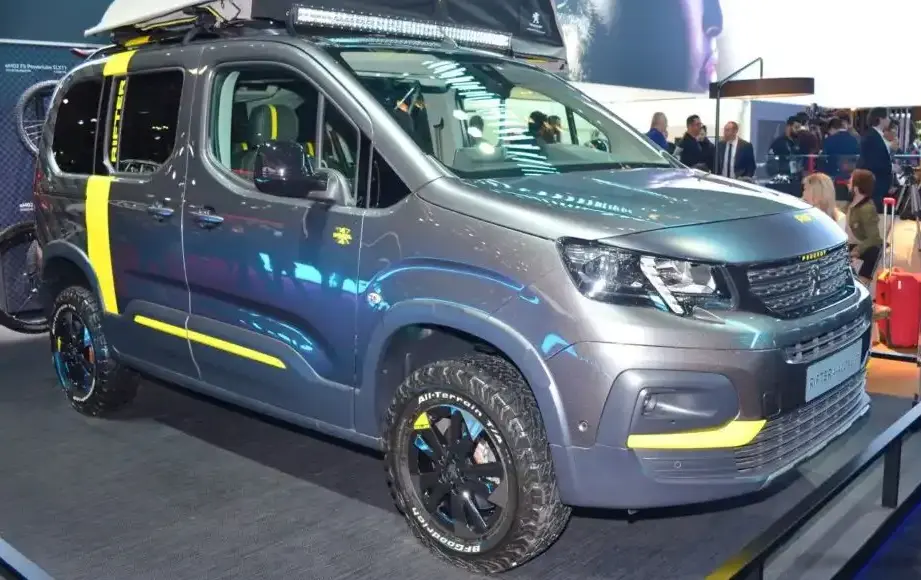
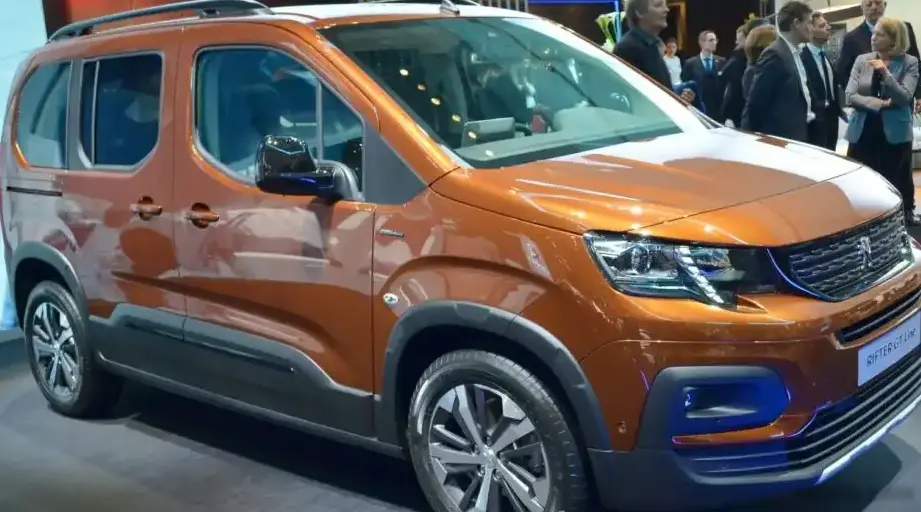
The Peugeot Rifter L2 (facelift 2024) 1.5 BlueHDi 131 hp 7-seat configuration represents a significant iteration within the third generation of the Rifter, a leisure activity vehicle (LAV) marketed by Peugeot. Introduced in March 2024, this variant builds upon the strengths of the original Rifter, offering increased practicality and updated styling. The “L2” designation indicates an extended wheelbase version, providing enhanced interior space, particularly beneficial for larger families or those requiring substantial cargo capacity. This specific model occupies a mid-range position within the Rifter lineup, balancing affordability with a reasonable level of equipment and a fuel-efficient diesel powertrain. It’s primarily aimed at the European market, where compact MPVs and LAVs remain popular due to their versatility and suitability for urban and rural environments.
Powertrain & Engine Architecture
The Peugeot Rifter L2 1.5 BlueHDi is powered by the DV5RC engine, a 1.5-liter inline-four cylinder diesel engine. This engine is part of Peugeot’s BlueHDi range, known for its focus on reducing emissions through the use of Selective Catalytic Reduction (SCR) technology and a diesel particulate filter (DPF). The engine utilizes a common rail direct injection system, delivering fuel at high pressure for optimized combustion. A turbocharger with an intercooler further enhances performance by increasing air intake. The 131 hp output is achieved at 3750 rpm, while peak torque of 300 Nm (221 lb-ft) is available from 1750 rpm, providing good low-end responsiveness. The engine is transversely mounted at the front of the vehicle. The 6-speed manual transmission is standard, chosen for its balance of fuel efficiency and driver engagement.
Driving Characteristics
The 1.5 BlueHDi 131 hp engine, paired with the 6-speed manual transmission, delivers adequate performance for everyday driving. Acceleration from 0-100 km/h (0-62 mph) takes approximately 12.3 seconds. While not particularly sporty, the engine provides sufficient torque for comfortable cruising and overtaking maneuvers. The manual gearbox allows for precise control, and the gear ratios are well-suited to maximizing fuel efficiency. Compared to higher-powered versions of the Rifter, this variant offers a more economical driving experience, but at the expense of outright speed. The extended wheelbase of the L2 model contributes to a stable and comfortable ride, even when fully loaded.
Equipment & Trim Levels
The 1.5 BlueHDi 131 hp 7-seat Rifter L2 typically comes equipped with features such as air conditioning, a touchscreen infotainment system with Bluetooth connectivity, and a range of safety features including ABS, ESP (Electronic Stability Program), and multiple airbags. Standard interior upholstery is typically cloth, with options for upgraded materials available. Higher trim levels may include features like rear parking sensors, a reversing camera, cruise control, and automatic headlights and wipers. The 7-seat configuration features folding rear seats, allowing for flexible cargo space.
Chassis & Braking
The Rifter L2 utilizes an independent McPherson strut suspension at the front and an elastic beam suspension at the rear. This setup provides a good balance between ride comfort and handling. Disc brakes are fitted on all four wheels, providing adequate stopping power. Electric power steering is standard, offering light and precise steering feel. The vehicle’s weight-to-power ratio is 12.2 kg/hp, contributing to its reasonable performance.
Market Reception & Comparison
The Peugeot Rifter L2 1.5 BlueHDi 131 hp has been generally well-received by automotive critics for its practicality, fuel efficiency, and comfortable ride. It’s often praised as a sensible choice for families or those needing a versatile vehicle for both work and leisure. Compared to petrol-powered versions of the Rifter, the diesel variant offers significantly better fuel economy. Against competitors like the Citroën Berlingo, Renault Kangoo, and Volkswagen Caddy, the Rifter stands out with its distinctive styling and spacious interior.
Legacy
The 1.5 BlueHDi engine has proven to be a reliable and durable powertrain in other Peugeot and Citroën models. While diesel engines are facing increasing scrutiny due to emissions concerns, the BlueHDi technology helps to mitigate these issues. The Rifter L2, in general, is expected to hold its value reasonably well in the used car market, particularly the 7-seat variants, due to their practicality and versatility. Regular maintenance, including timely DPF regeneration, is crucial for ensuring the long-term reliability of the diesel engine.