Technical Specifications
| Brand | Peugeot |
| Model | Rifter |
| Generation | Rifter L2 (facelift 2024) |
| Type (Engine) | 1.5 BlueHDi (131 Hp) EAT8 |
| Start of production | March, 2024 |
| Powertrain Architecture | Internal Combustion engine |
| Body type | Minivan |
| Seats | 5 |
| Doors | 5 |
| Fuel consumption at Low speed (WLTP) | 6.6 l/100 km (35.6 US mpg, 42.8 UK mpg, 15.2 km/l) |
| Fuel consumption at Medium speed (WLTP) | 5.5 l/100 km (42.8 US mpg, 51.4 UK mpg, 18.2 km/l) |
| Fuel consumption at high speed (WLTP) | 5.0 l/100 km (47 US mpg, 56.5 UK mpg, 20 km/l) |
| Fuel consumption at very high speed (WLTP) | 6.4 l/100 km (36.8 US mpg, 44.1 UK mpg, 15.6 km/l) |
| Combined fuel consumption (WLTP) | 5.8 l/100 km (40.6 US mpg, 48.7 UK mpg, 17.2 km/l) |
| CO2 emissions (WLTP) | 152 g/km |
| Fuel Type | Diesel |
| Acceleration 0 – 100 km/h | 11.1 sec |
| Acceleration 0 – 62 mph | 11.1 sec |
| Acceleration 0 – 60 mph | 10.5 sec |
| Maximum speed | 184 km/h (114.33 mph) |
| Emission standard | Euro 6e |
| Weight-to-power ratio | 12 kg/Hp, 83.1 Hp/tonne |
| Weight-to-torque ratio | 5.3 kg/Nm, 190.4 Nm/tonne |
| Power | 131 Hp @ 3750 rpm |
| Power per litre | 87.4 Hp/l |
| Torque | 300 Nm @ 1750 rpm (221.27 lb.-ft. @ 1750 rpm) |
| Engine layout | Front, Transverse |
| Engine Model/Code | YHZ DV5RC |
| Engine displacement | 1499 cm3 (91.47 cu. in.) |
| Number of cylinders | 4 |
| Engine configuration | Inline |
| Number of valves per cylinder | 4 |
| Fuel injection system | Diesel Commonrail |
| Engine aspiration | Turbocharger, Intercooler |
| Engine oil capacity | 4 l (4.23 US qt | 3.52 UK qt) |
| Kerb Weight | 1576-1707 kg (3474.49 – 3763.29 lbs.) |
| Max. weight | 2175 kg (4795.05 lbs.) |
| Max load | 468-599 kg (1031.76 – 1320.57 lbs.) |
| Trunk (boot) space – minimum | 1050 l (37.08 cu. ft.) |
| Trunk (boot) space – maximum | 3500 l (123.6 cu. ft.) |
| Fuel tank capacity | 50 l (13.21 US gal | 11 UK gal) |
| Max. roof load | 100 kg (220.46 lbs.) |
| Permitted trailer load with brakes (12%) | 1225 kg (2700.66 lbs.) |
| Permitted trailer load without brakes | 750 kg (1653.47 lbs.) |
| Permitted towbar download | 74 kg (163.14 lbs.) |
| Length | 4755 mm (187.2 in.) |
| Width | 1848 mm (72.76 in.) |
| Width with mirrors folded | 1921 mm (75.63 in.) |
| Width including mirrors | 2107 mm (82.95 in.) |
| Height | 1837 mm (72.32 in.) |
| Wheelbase | 2975 mm (117.13 in.) |
| Front track | 1553 mm (61.14 in.) |
| Rear (Back) track | 1567 mm (61.69 in.) |
| Front overhang | 894 mm (35.2 in.) |
| Rear overhang | 886 mm (34.88 in.) |
| Minimum turning circle (turning diameter) | 11.5 m (37.73 ft.) |
| Drivetrain Architecture | The Internal combustion engine (ICE) drives the front wheels of the vehicle. |
| Drive wheel | Front wheel drive |
| Number of gears and type of gearbox | 8 gears, automatic transmission |
| Front suspension | Independent type McPherson |
| Rear suspension | Elastic beam |
| Front brakes | Disc |
| Rear brakes | Disc |
| Assisting systems | ABS (Anti-lock braking system) |
| Steering type | Steering rack and pinion |
| Power steering | Electric Steering |
| Tires size | 215/60 R17 |
| Wheel rims size | 17 |
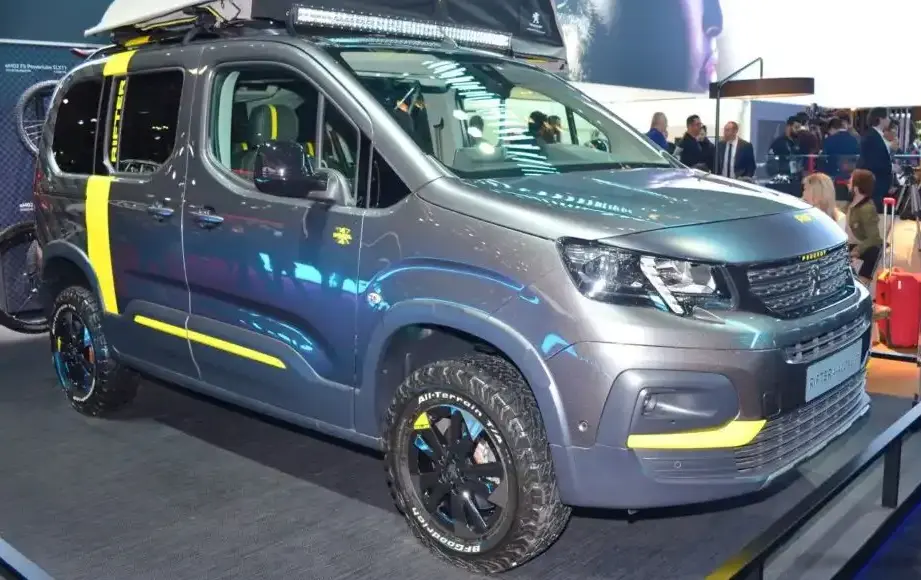
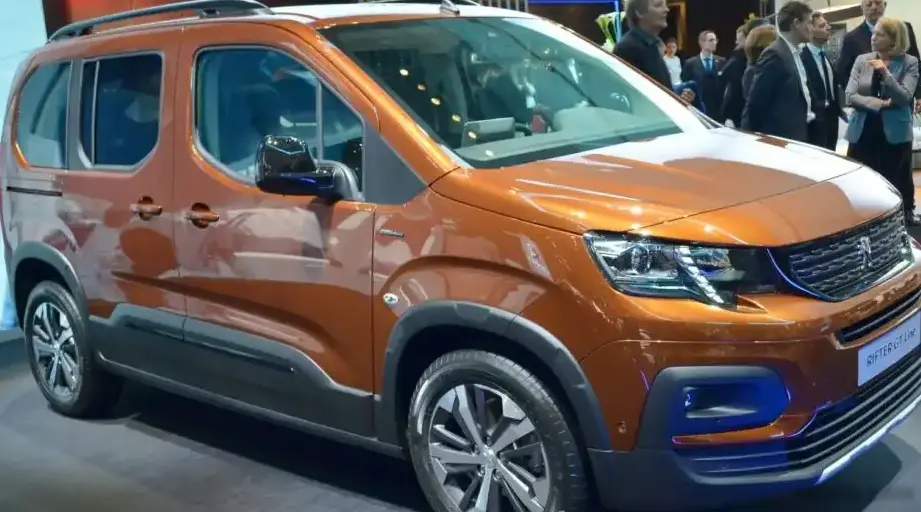
The Peugeot Rifter L2, specifically the facelifted 2024 model equipped with the 1.5 BlueHDi 131 horsepower engine and the EAT8 eight-speed automatic transmission, is a key offering in the European leisure activity vehicle (LAV) segment. Introduced in March 2024, this variant builds upon the original Rifter L2, which debuted in 2018 as part of the first generation, incorporating styling refinements and technological upgrades. The “L2” designation signifies an extended wheelbase, providing increased interior space and cargo capacity compared to the standard Rifter. This particular configuration aims to strike a balance between fuel efficiency, practicality, and ease of driving, catering to families and individuals with active lifestyles.
Powertrain & Engine Architecture
The core of this Rifter L2 variant is the 1.5-liter BlueHDi four-cylinder diesel engine, identified by the engine code YHZ DV5RC. This engine belongs to Peugeot’s BlueHDi family, renowned for its efforts to minimize particulate matter and NOx emissions through the implementation of a Diesel Particulate Filter (DPF) and Selective Catalytic Reduction (SCR) systems. The engine employs a common rail direct fuel injection system, delivering fuel at high pressure for optimized combustion. A turbocharger, coupled with an intercooler, boosts power output and torque. The engine generates a peak of 131 horsepower at 3750 rpm, while the 300 Nm (221 lb-ft) of torque is readily available from as low as 1750 rpm, contributing to strong low-end responsiveness. The EAT8 automatic transmission is an eight-speed torque converter automatic, selected for its smooth shifting characteristics and efficiency. It’s engineered to work in harmony with the engine’s torque curve, delivering comfortable acceleration and enhancing fuel economy.
Driving Characteristics
The 1.5 BlueHDi 131 hp/EAT8 combination in the Rifter L2 delivers a practical and comfortable driving experience. Acceleration from 0-60 mph takes approximately 10.5 seconds, and 0-100 km/h in 11.1 seconds, which is sufficient for everyday driving but doesn’t prioritize sporty performance. The EAT8 transmission is well-calibrated, providing smooth gear changes and preventing the engine from feeling strained during highway cruising. The engine’s relatively high torque output at low revolutions means that the Rifter L2 doesn’t necessitate frequent downshifts, making it easy to maneuver in urban settings. Compared to the more powerful diesel options available in the Rifter range, this variant emphasizes fuel efficiency over outright performance. It also offers a more relaxed and less demanding driving experience than versions equipped with a manual transmission.
Equipment & Trim Levels
The Rifter L2 1.5 BlueHDi 131 EAT8 typically comes with a comprehensive set of standard features. These generally include air conditioning, a touchscreen infotainment system with Apple CarPlay and Android Auto compatibility, Bluetooth connectivity, and a suite of safety features such as ABS, ESP, and multiple airbags. Higher trim levels add enhancements like navigation, a rearview camera, parking sensors, and more advanced driver-assistance systems. Interior upholstery is typically cloth, with options for upgraded materials. The extended wheelbase of the L2 provides generous space for passengers and cargo, making it well-suited for families or those who frequently transport larger items. Optional extras often include panoramic sunroofs, a variety of wheel designs, and customizable interior options.
Chassis & Braking
The Rifter L2 features a McPherson strut independent suspension at the front and an elastic beam (torsion beam) suspension at the rear. This configuration strikes a good balance between ride comfort and handling. The front brakes are discs, while the rear brakes are also discs, providing adequate stopping power for the vehicle’s weight. Electric power steering delivers light and precise steering feel. The suspension is tuned to prioritize comfort, effectively absorbing bumps and road imperfections. Stabilizer bars are incorporated to minimize body roll during cornering.
Market Reception & Comparison
The Peugeot Rifter L2 1.5 BlueHDi 131 EAT8 has been favorably received in the European market as a practical and versatile family vehicle. Reviewers have lauded its spacious interior, comfortable ride, and fuel efficiency. Compared to other trims within the Rifter lineup, this variant presents a compelling combination of cost and features. The 1.5 BlueHDi engine is known for its reliability and relatively low running costs. While the more powerful diesel options offer quicker acceleration, they also come with higher fuel consumption and potentially increased maintenance expenses. Competitors in this segment include the Citroën Berlingo, Renault Kangoo, and Volkswagen Caddy.
Legacy
The 1.5 BlueHDi engine has established itself as a reliable and durable powertrain within the Peugeot range. The EAT8 automatic transmission has also earned a reputation for smooth operation and longevity. In the used car market, the Rifter L2 1.5 BlueHDi 131 EAT8 is expected to maintain its value well due to its practicality, fuel efficiency, and relatively low maintenance costs. The combination of a diesel engine and automatic transmission makes it an appealing choice for buyers seeking a comfortable and economical family vehicle.