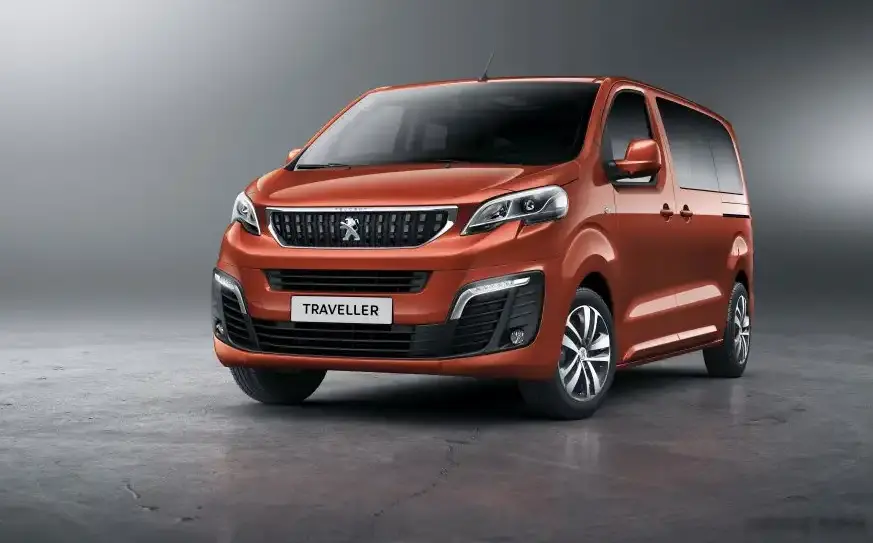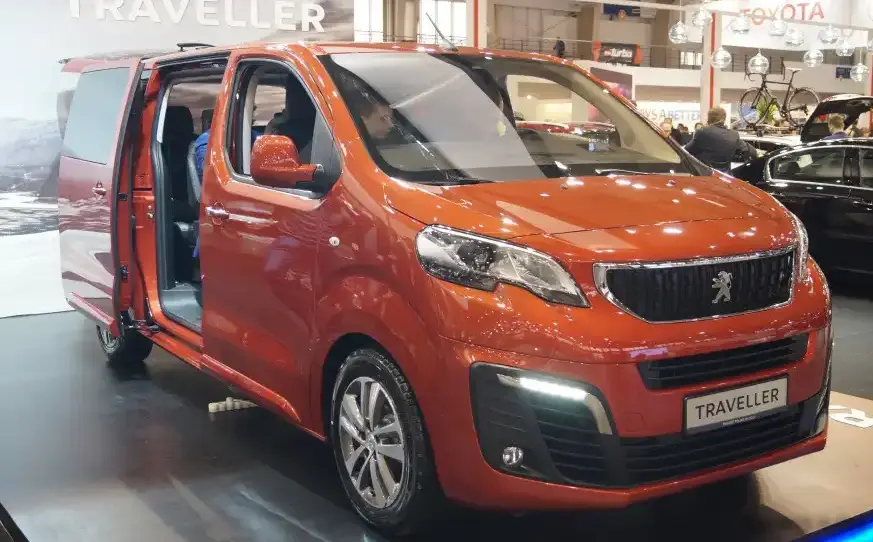
The Peugeot Traveller L2 2.0 BlueHDi (177 hp) EAT8 is a front-wheel-drive minivan produced by the French manufacturer Peugeot between September 2019 and April 2024. It represents a significant offering in the European leisure vehicle market, designed to compete with vehicles like the Volkswagen Multivan, Citroën SpaceTourer (with which it shares a platform), and Renault Trafic SpaceClass. The “L2” designation indicates a body length, offering a balance between interior space and maneuverability. This particular variant, equipped with the 2.0 BlueHDi engine and the eight-speed EAT8 automatic transmission, was positioned as a mid-range option within the Traveller lineup, appealing to families and those requiring flexible passenger and cargo capacity.
Technical Specifications
| Brand | Peugeot |
| Model | Traveller |
| Generation | Traveller L2 |
| Type (Engine) | 2.0 BlueHDi (177 Hp) EAT8 |
| Start of production | September, 2019 |
| End of production | April, 2024 |
| Powertrain Architecture | Internal Combustion engine |
| Body type | Minivan |
| Seats | 5-8 |
| Doors | 5 |
| Fuel consumption (urban) | 5.4 l/100 km (43.6 US mpg, 52.3 UK mpg, 18.5 km/l) |
| Fuel consumption (extra urban) | 4.8 l/100 km (49 US mpg, 58.9 UK mpg, 20.8 km/l) |
| Fuel consumption (combined) | 5.0 l/100 km (47 US mpg, 56.5 UK mpg, 20 km/l) |
| CO2 emissions | 133 g/km |
| Fuel Type | Diesel |
| Maximum speed | 185 km/h (114.95 mph) |
| Emission standard | Euro 6d |
| Weight-to-power ratio | 10 kg/Hp, 100.3 Hp/tonne |
| Weight-to-torque ratio | 4.4 kg/Nm, 226.8 Nm/tonne |
| Power | 177 Hp @ 3750 rpm |
| Power per litre | 88.6 Hp/l |
| Torque | 400 Nm @ 2000 rpm (295.02 lb.-ft. @ 2000 rpm) |
| Engine layout | Front, Transverse |
| Engine Model/Code | DW10FDCU |
| Engine displacement | 1997 cm3 (121.86 cu. in.) |
| Number of cylinders | 4 |
| Engine configuration | Inline |
| Number of valves per cylinder | 4 |
| Fuel injection system | Diesel Commonrail |
| Engine aspiration | Turbocharger, Intercooler |
| Engine oil capacity | 6 l (6.34 US qt | 5.28 UK qt) |
| Kerb Weight | 1764-2176 kg (3888.95 – 4797.26 lbs.) |
| Max. weight | 2800 kg (6172.94 lbs.) |
| Max load | 624-1036 kg (1375.68 – 2283.99 lbs.) |
| Trunk (boot) space – minimum | 603-798 l (21.29 – 28.18 cu. ft.) |
| Trunk (boot) space – maximum | 2700 l (95.35 cu. ft.) |
| Fuel tank capacity | 70 l (18.49 US gal | 15.4 UK gal) |
| Max. roof load | 150 kg (330.69 lbs.) |
| Permitted trailer load with brakes (12%) | 1900 kg (4188.78 lbs.) |
| Permitted trailer load without brakes | 750 kg (1653.47 lbs.) |
| Permitted towbar download | 84 kg (185.19 lbs.) |
| Length | 4959 mm (195.24 in.) |
| Width | 1920 mm (75.59 in.) |
| Width including mirrors | 2204 mm (86.77 in.) |
| Height | 1877 mm (73.9 in.) |
| Wheelbase | 3275 mm (128.94 in.) |
| Front track | 1630 mm (64.17 in.) |
| Rear track | 1618 mm (63.7 in.) |
| Front overhang | 881 mm (34.69 in.) |
| Rear overhang | 803 mm (31.61 in.) |
| Minimum turning circle | 12.9 m (42.32 ft.) |
| Drivetrain Architecture | Front wheel drive |
| Number of gears | 8 |
| Gearbox type | Automatic transmission |
| Front suspension | Independent type McPherson |
| Rear suspension | Independent coil spring |
| Front brakes | Ventilated discs |
| Rear brakes | Disc |
| Steering type | Steering rack and pinion |
| Power steering | Electric Steering |
| Tires size | 225/55 R17 101V |
| Wheel rims size | 17 |
Powertrain & Engine Architecture
The heart of the Traveller L2 2.0 BlueHDi is the DW10FDCU engine, a 2.0-liter inline-four cylinder diesel engine. This engine is part of Peugeot’s BlueHDi range, incorporating a diesel particulate filter (DPF) and Selective Catalytic Reduction (SCR) system to minimize harmful emissions and meet stringent Euro 6d standards. The engine utilizes a common rail direct injection system, delivering fuel at extremely high pressure for optimized combustion. A turbocharger with an intercooler further enhances performance by forcing more air into the cylinders. The engine produces 177 horsepower at 3750 rpm and a substantial 400 Nm (295 lb-ft) of torque at 2000 rpm. This torque output is particularly beneficial for a vehicle of this size, providing ample pulling power for carrying passengers and luggage. The EAT8 (Efficient Automatic Transmission 8) is an eight-speed automatic gearbox developed by Aisin Seiki in collaboration with Peugeot. It’s known for its smooth shifting and efficiency, contributing to the overall fuel economy of the vehicle.
Driving Characteristics
The 177 hp 2.0 BlueHDi engine, paired with the EAT8 automatic transmission, delivers a comfortable and refined driving experience. While not overtly sporty, the engine provides sufficient power for everyday driving and highway cruising. The EAT8 transmission is well-programmed, offering smooth and timely gear changes. Compared to the lower-powered 1.5 BlueHDi variants, the 2.0L offers noticeably more responsive acceleration, especially when fully loaded. It doesn’t match the performance of higher-spec Traveller models with more powerful engines, but it strikes a good balance between performance and fuel efficiency. The automatic transmission eliminates the need for manual gear changes, making it ideal for urban driving and long journeys. The front-wheel-drive configuration provides predictable handling, although it may exhibit some torque steer under hard acceleration.
Equipment & Trim Levels
The Traveller L2 2.0 BlueHDi (177 hp) EAT8 typically came equipped with a respectable level of standard features. These included air conditioning, a touchscreen infotainment system with Bluetooth connectivity, USB ports, and a rearview camera. Safety features such as ABS, electronic stability control, and multiple airbags were also standard. Higher trim levels offered upgrades such as navigation, panoramic sunroof, leather upholstery, and advanced driver-assistance systems (ADAS) like adaptive cruise control and lane departure warning. Interior upholstery was typically cloth in the base trims, with options for leather or Alcantara in higher specifications. The dashboard layout was functional and modern, with a focus on ergonomics and ease of use.
Chassis & Braking
The Peugeot Traveller L2 utilizes an independent McPherson strut suspension at the front and an independent coil spring suspension at the rear. This setup provides a comfortable ride quality, absorbing bumps and imperfections in the road surface effectively. The front brakes are ventilated discs, providing ample stopping power, while the rear brakes are solid discs. Electric power steering offers light and precise steering feel. The vehicle’s weight, ranging from 1764 to 2176 kg (3888.95 to 4797.26 lbs) depending on the configuration, is managed effectively by the suspension and braking systems.
Market Reception & Comparison
The Peugeot Traveller L2 2.0 BlueHDi (177 hp) EAT8 was generally well-received by automotive critics. It was praised for its comfortable ride, spacious interior, and fuel efficiency. The EAT8 automatic transmission was also a highlight, offering smooth and refined gear changes. Compared to the lower-powered 1.5 BlueHDi variants, the 2.0L engine provided a noticeable improvement in performance. However, some critics noted that the interior materials could be of higher quality in certain areas. Fuel economy figures of around 5.0 l/100 km (47 US mpg) were competitive within its segment. Reliability reports have been generally positive, with the DW10FDCU engine proving to be a robust and dependable unit.
Legacy
The Peugeot Traveller L2 2.0 BlueHDi (177 hp) EAT8 remains a popular choice in the used car market. Its combination of practicality, comfort, and fuel efficiency makes it an attractive option for families and those seeking a versatile vehicle. The DW10FDCU engine has a reputation for longevity, provided it has been properly maintained. The EAT8 transmission is also considered to be reliable. As with any diesel vehicle, regular servicing and the use of high-quality oil are crucial for maintaining its long-term health. The Traveller’s modular design and adaptable interior continue to make it a relevant and desirable vehicle in the modern automotive landscape.