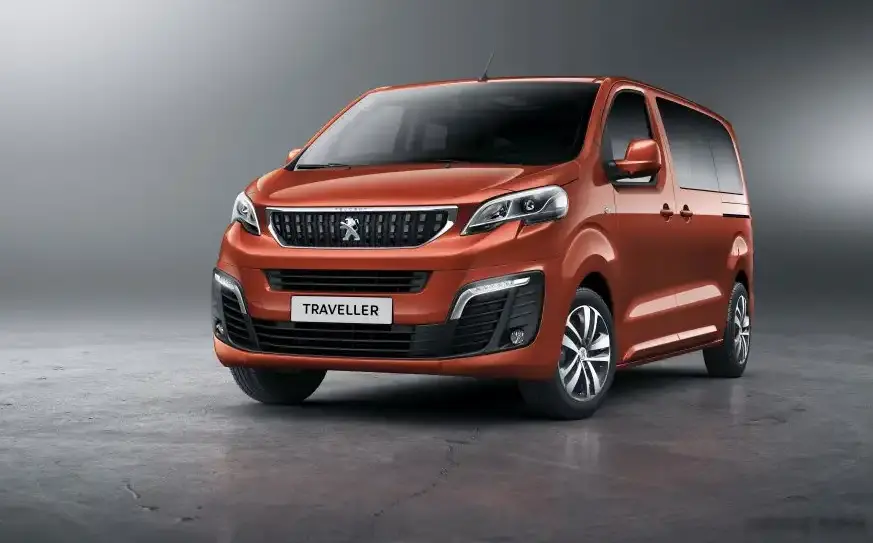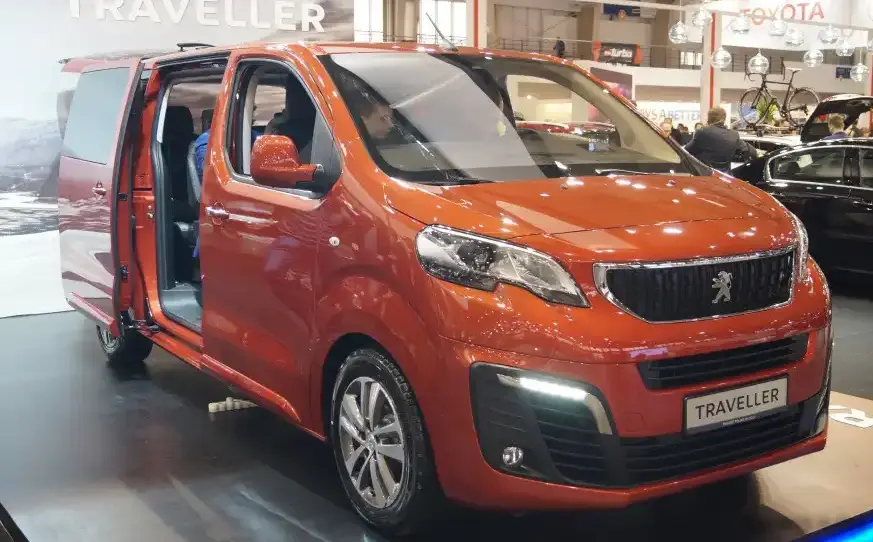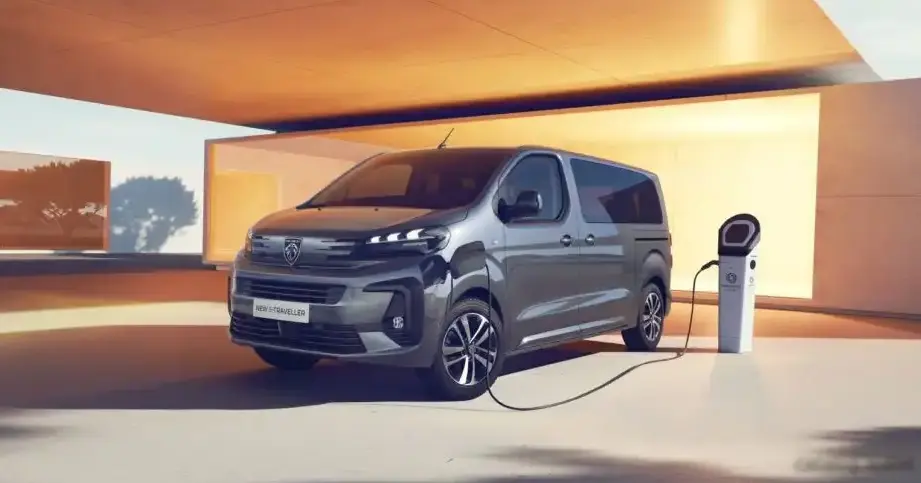
The Peugeot Traveller L2 (facelift 2024) 2.0 BlueHDi 177 Hp EAT8 represents a mid-range offering within the updated Traveller lineup, launched in April 2024. Positioned as a versatile people carrier and light commercial vehicle, the Traveller L2 caters to families and businesses requiring flexible passenger and cargo space. The “L2” designation indicates a medium-length wheelbase version of the Traveller, offering a balance between interior volume and maneuverability. This variant, equipped with the 2.0 BlueHDi engine and the eight-speed EAT8 automatic transmission, aims to provide a blend of fuel efficiency, reasonable performance, and driving convenience. It builds upon the foundation of the original Traveller, which debuted as a replacement for the Peugeot Expert Tepee, offering a more modern and refined experience.
Technical Specifications
| Brand | Peugeot |
| Model | Traveller |
| Generation | Traveller L2 (facelift 2024) |
| Type (Engine) | 2.0 BlueHDi (177 Hp) EAT8 |
| Start of production | April, 2024 |
| Powertrain Architecture | Internal Combustion engine |
| Body type | Minivan |
| Seats | 5-8 |
| Doors | 5 |
| Fuel consumption at Low speed (WLTP) | 8.7-8.9 l/100 km (27 – 26.4 US mpg, 32.5 – 31.7 UK mpg, 11.5 – 11.2 km/l) |
| Fuel consumption at Medium speed (WLTP) | 7.0-7.2 l/100 km (33.6 – 32.7 US mpg, 40.4 – 39.2 UK mpg, 14.3 – 13.9 km/l) |
| Fuel consumption at high speed (WLTP) | 6.2-6.4 l/100 km (37.9 – 36.8 US mpg, 45.6 – 44.1 UK mpg, 16.1 – 15.6 km/l) |
| Fuel consumption at very high speed (WLTP) | 7.9-8.0 l/100 km (29.8 – 29.4 US mpg, 35.8 – 35.3 UK mpg, 12.7 – 12.5 km/l) |
| Combined fuel consumption (WLTP) | 7.3-7.5 l/100 km (32.2 – 31.4 US mpg, 38.7 – 37.7 UK mpg, 13.7 – 13.3 km/l) |
| CO2 emissions (WLTP) | 192-195 g/km |
| Fuel Type | Diesel |
| Acceleration 0 – 100 km/h | 10.6 sec |
| Acceleration 0 – 62 mph | 10.6 sec |
| Acceleration 0 – 60 mph | 10.1 sec |
| Maximum speed | 185 km/h (114.95 mph) |
| Emission standard | Euro 6e |
| Weight-to-power ratio | 10.6 kg/Hp, 94.2 Hp/tonne |
| Weight-to-torque ratio | 4.7 kg/Nm, 213 Nm/tonne |
| Power | 177 Hp @ 3750 rpm |
| Power per litre | 88.6 Hp/l |
| Torque | 400 Nm @ 2000 rpm (295.02 lb.-ft. @ 2000 rpm) |
| Engine layout | Front, Transverse |
| Engine Model/Code | DW10FDCU |
| Engine displacement | 1997 cm3 (121.86 cu. in.) |
| Number of cylinders | 4 |
| Engine configuration | Inline |
| Number of valves per cylinder | 4 |
| Fuel injection system | Diesel Commonrail |
| Engine aspiration | Turbocharger, Intercooler |
| Engine oil capacity | 6 l (6.34 US qt | 5.28 UK qt) |
| Kerb Weight | 1878-2227 kg (4140.28 – 4909.69 lbs.) |
| Max. weight | 2830 kg (6239.08 lbs.) |
| Max load | 603-952 kg (1329.39 – 2098.8 lbs.) |
| Trunk (boot) space – minimum | 603-798 l (21.29 – 28.18 cu. ft.) |
| Trunk (boot) space – maximum | 2700 l (95.35 cu. ft.) |
| Fuel tank capacity | 70 l (18.49 US gal | 15.4 UK gal) |
| Max. roof load | 150 kg (330.69 lbs.) |
| Permitted trailer load with brakes (12%) | 1900 kg (4188.78 lbs.) |
| Permitted trailer load without brakes | 750 kg (1653.47 lbs.) |
| Permitted towbar download | 80 kg (176.37 lbs.) |
| Length | 4983 mm (196.18 in.) |
| Width | 1920 mm (75.59 in.) |
| Width with mirrors folded | 2010 mm (79.13 in.) |
| Width including mirrors | 2204 mm (86.77 in.) |
| Height | 1890 mm (74.41 in.) |
| Wheelbase | 3275 mm (128.94 in.) |
| Front track | 1627 mm (64.06 in.) |
| Rear (Back) track | 1600 mm (62.99 in.) |
| Front overhang | 904 mm (35.59 in.) |
| Rear overhang | 803 mm (31.61 in.) |
| Minimum turning circle (turning diameter) | 12.9 m (42.32 ft.) |
| Drivetrain Architecture | The Internal combustion engine (ICE) drives the front wheels of the vehicle. |
| Drive wheel | Front wheel drive |
| Number of gears and type of gearbox | 8 gears, automatic transmission |
| Front brakes | Ventilated discs |
| Rear brakes | Disc |
| Assisting systems | ABS (Anti-lock braking system) |
| Steering type | Steering rack and pinion |
| Power steering | Electric Steering |
| Tires size | 225/55 R17 101V |
| Wheel rims size | 17 |
Powertrain & Engine Architecture
The heart of this Traveller variant is the DW10FDCU 2.0-liter four-cylinder diesel engine. This engine is a member of the PSA Group’s (now Stellantis) BlueHDi family, known for its focus on reducing emissions through advanced combustion technologies and exhaust aftertreatment systems. The engine utilizes a common-rail direct fuel injection system, delivering fuel at extremely high pressure for optimized combustion. A turbocharger with an intercooler is employed to boost power and torque, providing 177 horsepower at 3750 rpm and a substantial 400 Nm (295 lb-ft) of torque at 2000 rpm. The engine features four valves per cylinder and is transversely mounted in the front of the vehicle. The EAT8 (Efficient Automatic Transmission 8) is an eight-speed automatic gearbox designed for smooth shifting and improved fuel economy. It features a torque converter and adaptive shift programming to optimize performance based on driving conditions.
Driving Characteristics
The 2.0 BlueHDi 177 Hp EAT8 powertrain delivers adequate performance for the Traveller L2, though it’s not designed for outright speed. Acceleration from 0-100 km/h (0-62 mph) takes around 10.6 seconds. The EAT8 transmission provides smooth and generally responsive gear changes, contributing to a comfortable driving experience. The torque output is readily available from low engine speeds, making it suitable for carrying passengers or cargo. Compared to higher-powered versions of the Traveller, this variant feels less eager to accelerate, particularly when fully loaded. The automatic transmission, while convenient, may exhibit some hesitation during quick overtaking maneuvers. The gear ratios are tuned for fuel efficiency, prioritizing relaxed cruising over sporty performance.
Equipment & Trim Levels
The Traveller L2 2.0 BlueHDi 177 Hp EAT8 typically comes equipped with a respectable level of standard features. These generally include air conditioning, a touchscreen infotainment system with Bluetooth connectivity, USB ports, and basic driver-assistance systems like ABS and ESP. Higher trim levels offer upgrades such as navigation, a panoramic sunroof, leather upholstery, and advanced safety features like lane departure warning and automatic emergency braking. Interior upholstery is typically cloth in the base trims, with options for leather or Alcantara in higher specifications. The dashboard layout is functional and modern, with a focus on practicality and ease of use.
Chassis & Braking
The Traveller L2 utilizes a front-wheel-drive configuration with a MacPherson strut suspension at the front and a twist beam suspension at the rear. This setup provides a reasonable balance between ride comfort and handling. Braking duties are handled by ventilated discs at the front and solid discs at the rear. ABS (Anti-lock Braking System) is standard, enhancing braking performance and stability. The suspension is tuned for comfort, prioritizing a smooth ride over sporty handling. Stabilizer bars are fitted to both the front and rear axles to reduce body roll during cornering.
Market Reception & Comparison
The Peugeot Traveller L2 2.0 BlueHDi 177 Hp EAT8 has been generally well-received as a practical and versatile people carrier. Critics have praised its spacious interior, comfortable ride, and fuel efficiency. However, some have noted that the engine can feel underpowered when the vehicle is fully loaded. Compared to the more powerful 180 hp diesel variant, this version offers a lower price point but sacrifices some performance. Against competitors like the Volkswagen Multivan and Citroën SpaceTourer (with which it shares a platform), the Traveller offers a competitive package in terms of price, features, and fuel economy.
Legacy
The DW10FDCU engine, while a workhorse for the PSA/Stellantis group, has a generally good reputation for reliability, though diesel particulate filter (DPF) issues can occur with frequent short journeys. The EAT8 transmission has also proven to be a durable unit. In the used car market, the Traveller L2 2.0 BlueHDi 177 Hp EAT8 represents a good value proposition for those seeking a spacious and economical people carrier. Regular maintenance, including timely oil changes and DPF regeneration, is crucial for ensuring the long-term reliability of this powertrain.