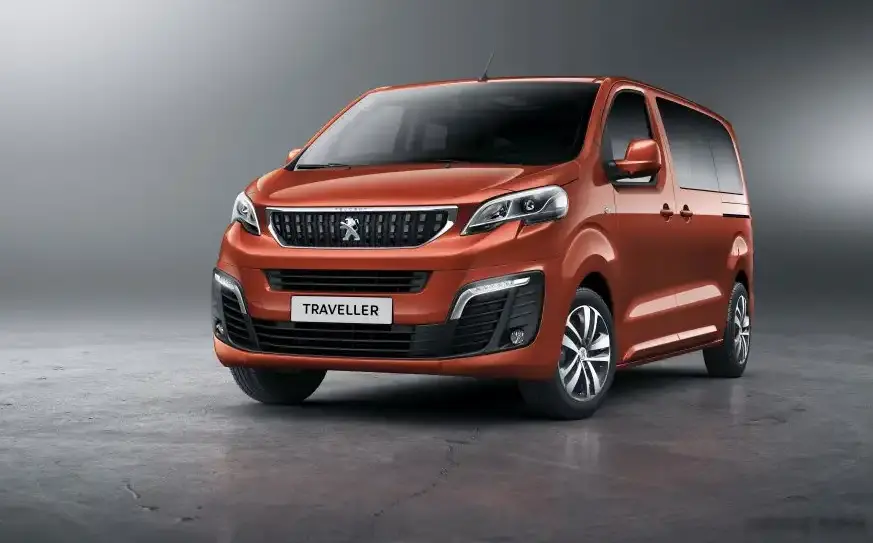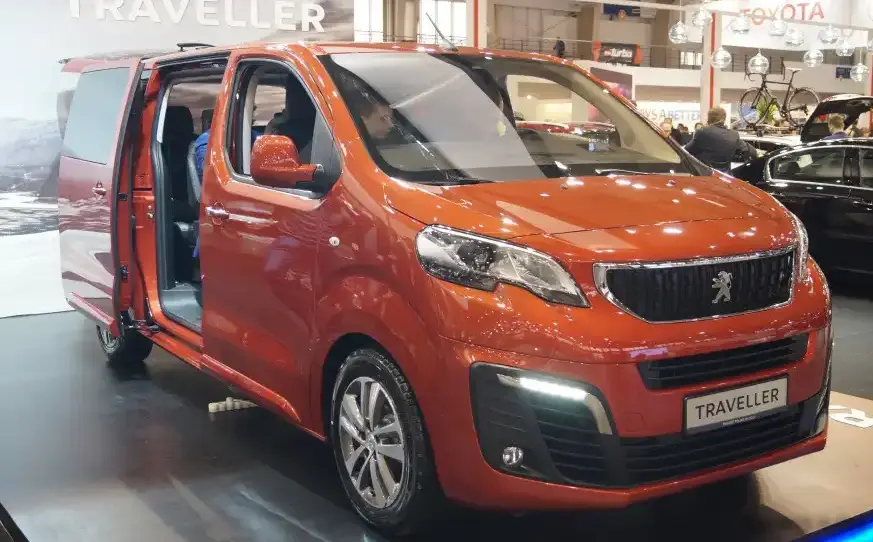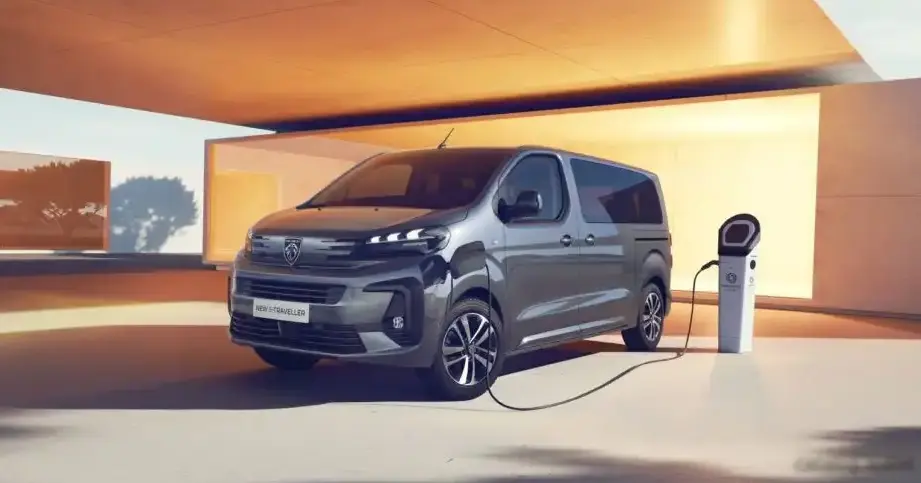
The Peugeot Traveller L2 e-Traveller 50 kWh (136 hp) is an all-electric, front-wheel-drive minivan introduced in April 2024 as part of the facelifted second-generation Traveller range. Representing an entry point into the e-Traveller lineup, this variant focuses on providing a practical and efficient electric vehicle solution for families and businesses. It slots below the longer-range 75 kWh versions, offering a more accessible price point while still delivering the versatility expected of the Traveller platform. The L2 designation indicates a body length, positioning it as a mid-size option within the Traveller family.
Technical Specifications
| Brand | Peugeot |
| Model | Traveller |
| Generation | Traveller L2 (facelift 2024) |
| Type (Engine) | e-Traveller 50 kWh (136 Hp) |
| Start of production | April, 2024 |
| Powertrain Architecture | BEV (Electric Vehicle) |
| Body type | Minivan |
| Seats | 5-8 |
| Doors | 5 |
| Fuel Type | Electricity |
| Acceleration 0 – 100 km/h | 13.3 sec |
| Acceleration 0 – 62 mph | 13.3 sec |
| Acceleration 0 – 60 mph | 12.6 sec |
| Maximum speed | 130 km/h (80.78 mph) |
| Weight-to-power ratio | 14.4 kg/Hp, 69.7 Hp/tonne |
| Weight-to-torque ratio | 7.2 kg/Nm, 138.3 Nm/tonne |
| Gross battery capacity | 50 kWh |
| Battery technology | Lithium-ion (Li-Ion) |
| Battery location | Below the floor |
| All-electric range (WLTP) | 213-223 km (132.35 – 138.57 mi) |
| Average Energy consumption (WLTP) | 24.3-24.7 kWh/100 km (39.11 – 39.75 kWh/100 mi) |
| Average Energy consumption (MPGe) | 86 – 85 |
| Average Energy consumption (km/kWh) | 4.1 – 4 |
| Average Energy consumption (mi/kWh) | 2.6 – 2.5 |
| Electric motor power | 136 Hp @ 6000 rpm |
| Electric motor Torque | 270 Nm (199.14 lb.-ft.) |
| Electric motor model/code | ZK01 |
| Electric motor location | Front axle, Transverse |
| Electric motor type | Synchronous |
| System power | 136 Hp @ 6000 rpm |
| System torque | 270 Nm (199.14 lb.-ft.) |
| Kerb Weight | 1952-2273 kg (4303.42 – 5011.11 lbs.) |
| Max. weight | 2941 kg (6483.8 lbs.) |
| Max load | 668-989 kg (1472.69 – 2180.37 lbs.) |
| Trunk (boot) space – minimum | 603-798 l (21.29 – 28.18 cu. ft.) |
| Trunk (boot) space – maximum | 2700 l (95.35 cu. ft.) |
| Max. roof load | 150 kg (330.69 lbs.) |
| Permitted trailer load with brakes (12%) | 1000 kg (2204.62 lbs.) |
| Permitted trailer load without brakes | 750 kg (1653.47 lbs.) |
| Permitted towbar download | 60 kg (132.28 lbs.) |
| Length | 4983 mm (196.18 in.) |
| Width | 1920 mm (75.59 in.) |
| Width with mirrors folded | 2010 mm (79.13 in.) |
| Width including mirrors | 2204 mm (86.77 in.) |
| Height | 1890 mm (74.41 in.) |
| Wheelbase | 3275 mm (128.94 in.) |
| Front track | 1627 mm (64.06 in.) |
| Rear (Back) track | 1600 mm (62.99 in.) |
| Front overhang | 904 mm (35.59 in.) |
| Rear overhang | 803 mm (31.61 in.) |
| Minimum turning circle | 12.9 m (42.32 ft.) |
| Drivetrain Architecture | One electric motor drives the front wheels. |
| Drive wheel | Front wheel drive |
| Number of gears | 1 |
| Gearbox type | automatic transmission |
| Front brakes | Ventilated discs |
| Rear brakes | Disc |
| Assisting systems | ABS (Anti-lock braking system) |
| Steering type | Steering rack and pinion |
| Power steering | Electric Steering |
| Tires size | 225/55 R17 101V |
| Wheel rims size | 17 |
Powertrain & Engine Architecture
The e-Traveller 50 kWh utilizes a single synchronous electric motor, designated ZK01, producing 136 horsepower at 6000 rpm and 270 Nm (199.14 lb.-ft.) of torque. This motor is transversely mounted on the front axle, driving the front wheels. The powertrain is entirely electric, relying on a 50 kWh lithium-ion battery pack positioned under the vehicle floor. This placement contributes to a lower center of gravity, enhancing stability. The single-speed automatic transmission simplifies operation, delivering seamless acceleration. The vehicle employs regenerative braking to recapture energy during deceleration, further improving efficiency. The charging ports are located and support various charging standards.
Driving Characteristics
The 136 hp and 270 Nm output of the e-Traveller 50 kWh results in a 0-60 mph acceleration time of around 12.6 seconds, and 0-100 km/h in 13.3 seconds. While not designed for outright performance, the instant torque delivery characteristic of electric motors provides adequate responsiveness for everyday driving situations. Compared to higher-output e-Traveller variants, this version prioritizes efficiency over speed. The single-speed automatic transmission ensures smooth power delivery, but lacks the gear ratios found in traditional internal combustion engine vehicles. This can be noticeable during highway cruising, where maintaining speed requires consistent throttle input. The front-wheel-drive configuration offers predictable handling, but may exhibit some torque steer under hard acceleration.
Equipment & Trim Levels
The e-Traveller 50 kWh typically comes equipped with a respectable level of standard features, including air conditioning, a touchscreen infotainment system with smartphone integration (Apple CarPlay and Android Auto), and a suite of safety features such as ABS, electronic stability control, and multiple airbags. Interior upholstery is generally cloth, with options for upgraded materials available. Trim levels vary by market, but commonly include features like parking sensors, a rearview camera, and cruise control. Optional extras may include a panoramic sunroof, navigation system, and advanced driver-assistance systems (ADAS) like lane departure warning and automatic emergency braking.
Chassis & Braking
The e-Traveller L2 utilizes a conventional front MacPherson strut suspension and a rear twist beam suspension. The braking system consists of ventilated discs on the front axle and solid discs on the rear. The suspension is tuned to prioritize comfort and ride quality, making it well-suited for carrying passengers and cargo. The electric powertrain’s added weight, due to the battery pack, is accounted for in the suspension design. The steering is electrically assisted, providing light and precise control.
Market Reception & Comparison
The e-Traveller 50 kWh has been generally well-received as a practical and affordable electric minivan option. Critics have praised its spacious interior, comfortable ride, and ease of use. However, its limited range compared to the 75 kWh variants has been noted as a potential drawback for those undertaking longer journeys. Fuel economy, measured in kWh/100km, is competitive within the electric minivan segment. Compared to internal combustion engine versions of the Traveller, the e-Traveller offers significantly lower running costs due to the reduced price of electricity versus gasoline or diesel. Reliability is expected to be good, given Peugeot’s reputation for building durable vehicles, but long-term data is still emerging.
Legacy
The Peugeot e-Traveller 50 kWh represents a significant step towards electrification in the minivan segment. While it may not be the most powerful or longest-range electric vehicle available, it provides a compelling option for those seeking a practical, efficient, and environmentally friendly mode of transportation. Its long-term reliability remains to be fully assessed, but the robust design of the electric powertrain suggests it will prove to be a durable and dependable vehicle in the used car market.