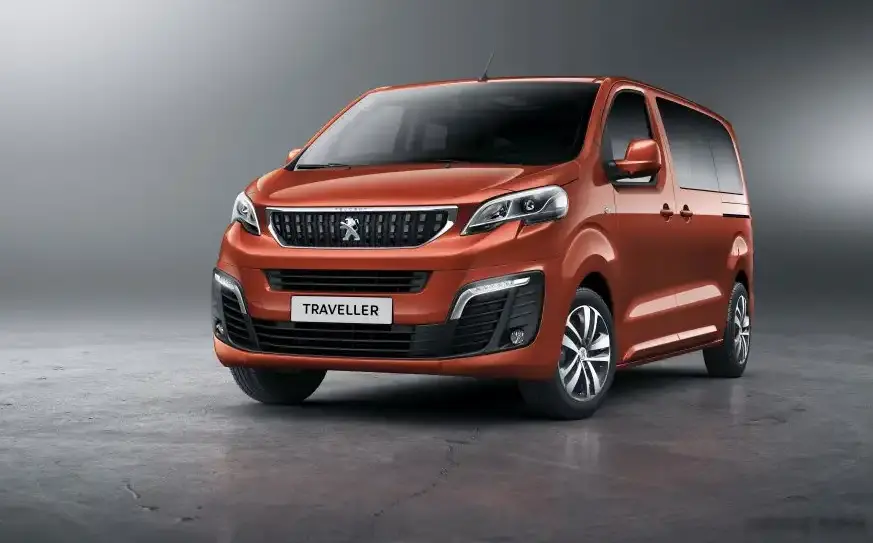
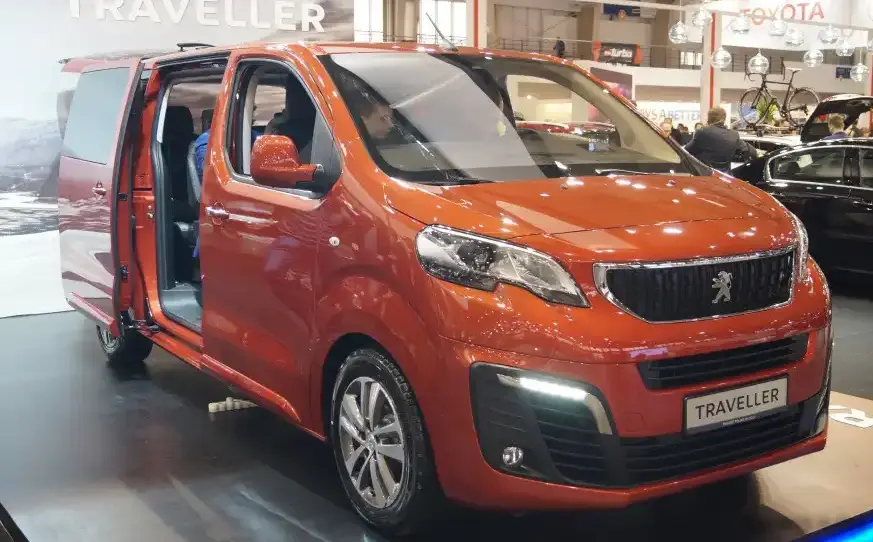
The Peugeot Traveller L3 2.0 BlueHDi (150 hp) is a front-wheel-drive minivan produced by the French manufacturer Peugeot between September 2016 and October 2020. Part of the first generation of the Traveller (based on the Citroën SpaceTourer and Opel/Vauxhall Zafira Life), the L3 designation indicates the extended wheelbase version, offering increased interior space and cargo capacity. This particular variant, powered by the 2.0 BlueHDi engine producing 150 horsepower, occupied a mid-range position within the Traveller lineup, balancing fuel efficiency with adequate performance for family and commercial use. It was primarily marketed in Europe, where minivans and multi-purpose vehicles (MPVs) remained popular for their versatility.
Technical Specifications
| Brand | Peugeot |
| Model | Traveller |
| Generation | Traveller L3 |
| Type (Engine) | 2.0 BlueHDi (150 Hp) |
| Start of production | September, 2016 |
| End of production | October, 2020 |
| Powertrain Architecture | Internal Combustion engine |
| Body type | Minivan |
| Seats | 5-8 |
| Doors | 5 |
| Fuel consumption (urban) | 5.9 l/100 km (39.9 US mpg, 47.9 UK mpg, 16.9 km/l) |
| Fuel consumption (extra urban) | 5.3 l/100 km (44.4 US mpg, 53.3 UK mpg, 18.9 km/l) |
| Fuel consumption (combined) | 5.5 l/100 km (42.8 US mpg, 51.4 UK mpg, 18.2 km/l) |
| CO2 emissions | 143 g/km |
| Fuel Type | Diesel |
| Acceleration 0 – 100 km/h | 10.8 sec |
| Acceleration 0 – 62 mph | 10.8 sec |
| Acceleration 0 – 60 mph | 10.3 sec |
| Maximum speed | 170 km/h (105.63 mph) |
| Emission standard | Euro 6 |
| Weight-to-power ratio | 11.7 kg/Hp, 85.8 Hp/tonne |
| Weight-to-torque ratio | 4.7 kg/Nm, 211.7 Nm/tonne |
| Power | 150 Hp @ 4000 rpm |
| Power per litre | 75.1 Hp/l |
| Torque | 370 Nm @ 2000 rpm (272.9 lb.-ft. @ 2000 rpm) |
| Engine layout | Front, Transverse |
| Engine Model/Code | AHX DW10FD |
| Engine displacement | 1997 cm3 (121.86 cu. in.) |
| Number of cylinders | 4 |
| Engine configuration | Inline |
| Cylinder Bore | 85 mm (3.35 in.) |
| Piston Stroke | 88 mm (3.46 in.) |
| Number of valves per cylinder | 4 |
| Fuel injection system | Diesel Commonrail |
| Engine aspiration | Turbocharger, Intercooler |
| Engine oil capacity | 6 l (6.34 US qt | 5.28 UK qt) |
| Kerb Weight | 1748 kg (3853.68 lbs.) |
| Max. weight | 2790 kg (6150.9 lbs.) |
| Max load | 1042 kg (2297.22 lbs.) |
| Trunk (boot) space – maximum | 3100 l (109.48 cu. ft.) |
| Fuel tank capacity | 69 l (18.23 US gal | 15.18 UK gal) |
| AdBlue tank | 22.4 l (5.92 US gal | 4.93 UK gal) |
| Max. roof load | 140-170 kg (308.65 – 374.79 lbs.) |
| Permitted trailer load with brakes (12%) | 2300 kg (5070.63 lbs.) |
| Length | 5306 mm (208.9 in.) |
| Width | 1920 mm (75.59 in.) |
| Width with mirrors folded | 2010 mm (79.13 in.) |
| Width including mirrors | 2204 mm (86.77 in.) |
| Height | 1890 mm (74.41 in.) |
| Wheelbase | 3275 mm (128.94 in.) |
| Front overhang | 878 mm (34.57 in.) |
| Rear overhang | 1153 mm (45.39 in.) |
| Minimum turning circle | 12.9 m (42.32 ft.) |
| Drivetrain Architecture | Front wheel drive |
| Number of gears and type of gearbox | 6 gears, manual transmission |
| Front suspension | Independent type McPherson |
| Rear suspension | Independent coil spring |
| Front brakes | Ventilated discs |
| Rear brakes | Disc |
| Assisting systems | ABS (Anti-lock braking system) |
| Steering type | Steering rack and pinion |
| Tires size | 215/60 R17 |
| Wheel rims size | 17 |
Powertrain & Engine Architecture
The Peugeot Traveller L3 2.0 BlueHDi (150 hp) utilizes the DW10FD engine, a 2.0-liter inline-four cylinder diesel engine. This engine, identified by the code AHX, is a member of Peugeot’s BlueHDi family, incorporating a diesel particulate filter (DPF) and Selective Catalytic Reduction (SCR) technology to reduce harmful emissions and meet stringent Euro 6 standards. The engine features a common rail direct injection system, delivering fuel at high pressure for optimized combustion. A turbocharger with an intercooler enhances power output by forcing more air into the cylinders. The valvetrain employs four valves per cylinder, contributing to improved breathing and efficiency. The 150 hp version of this engine produces 370 Nm (272.9 lb-ft) of torque at 2000 rpm, providing good low-end grunt for hauling passengers and cargo. The engine is transversely mounted at the front of the vehicle. The standard transmission for this variant was a 6-speed manual gearbox, although an optional 6-speed automatic transmission was available.
Driving Characteristics
The 150 hp 2.0 BlueHDi engine, paired with the manual transmission, provided adequate performance for the Traveller L3. Acceleration from 0-100 km/h (0-62 mph) took approximately 10.8 seconds. While not particularly sporty, the engine delivered sufficient power for comfortable cruising on highways and overtaking maneuvers. The manual gearbox offered precise shifts, allowing drivers to maintain control and optimize fuel economy. Compared to the higher-output 180 hp version of the same engine, the 150 hp variant felt less strained when fully loaded, but naturally lacked the same level of outright acceleration. The longer wheelbase of the L3 model contributed to a more stable ride, particularly at higher speeds, but also resulted in a slightly larger turning radius.
Equipment & Trim Levels
The Traveller L3 2.0 BlueHDi (150 hp) typically came equipped with a respectable level of standard features. These included air conditioning, electric front windows, a touchscreen infotainment system with Bluetooth connectivity, and a range of safety features such as ABS, ESP (Electronic Stability Program), and multiple airbags. Higher trim levels offered upgrades such as navigation, rear parking sensors, a panoramic sunroof, and leather upholstery. Interior upholstery was generally cloth, with options for upgraded materials. The dashboard layout was functional and modern, prioritizing practicality and ease of use. Optional extras included a head-up display, adaptive cruise control, and a more advanced infotainment system.
Chassis & Braking
The Peugeot Traveller L3 utilized an independent McPherson strut suspension at the front and an independent coil spring suspension at the rear. This setup provided a comfortable ride quality, absorbing bumps and irregularities in the road surface effectively. The front brakes were ventilated discs, offering good stopping power, while the rear brakes were solid discs. The steering system employed a rack and pinion setup, providing precise and responsive handling. The vehicle was equipped with ABS (Anti-lock Braking System) as standard, enhancing safety during emergency braking situations. Stabilizer bars were fitted to both the front and rear axles to reduce body roll during cornering.
Market Reception & Comparison
The Peugeot Traveller L3 2.0 BlueHDi (150 hp) was generally well-received by automotive critics. It was praised for its spacious interior, comfortable ride, and fuel efficiency. The 150 hp engine was considered adequate for most users, offering a good balance between performance and economy. Compared to the more powerful 180 hp version, the 150 hp model offered slightly better fuel economy, making it an attractive option for those prioritizing running costs. Its main competitors included the Citroën SpaceTourer, Opel/Vauxhall Zafira Life, Volkswagen Transporter, and Ford Tourneo Custom.
Legacy
The DW10FD engine, in its various iterations, has proven to be a relatively reliable powertrain. While the diesel particulate filter (DPF) can be a potential point of failure if the vehicle is primarily used for short trips, regular maintenance and the use of quality diesel fuel can mitigate this risk. In the used car market, the Peugeot Traveller L3 2.0 BlueHDi (150 hp) remains a popular choice for families and businesses seeking a versatile and practical vehicle. Its spacious interior, comfortable ride, and reasonable running costs continue to make it an appealing option.