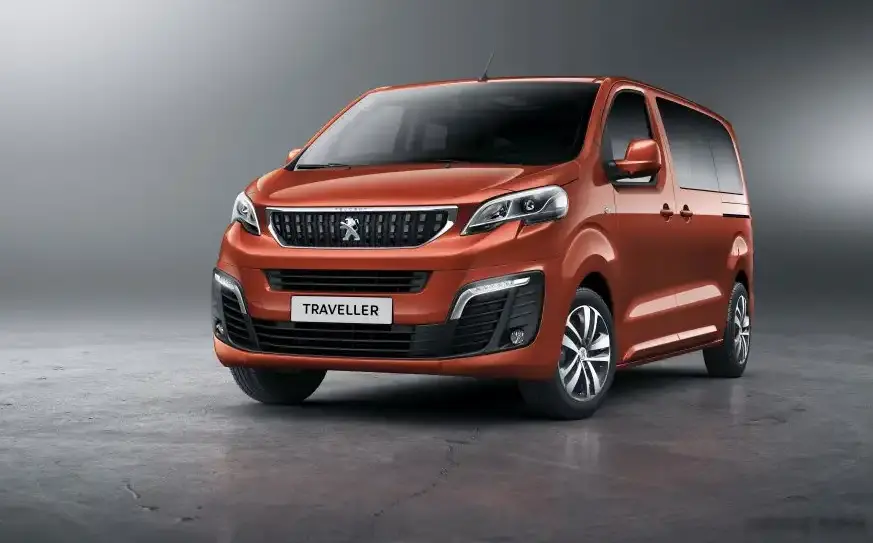
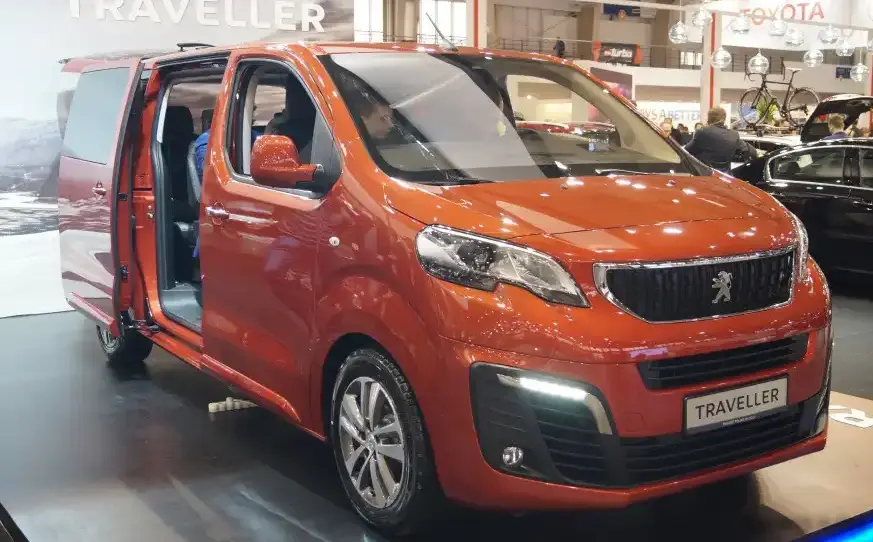
The Peugeot Traveller L3 e-Traveller 50 kWh (136 hp) is an all-electric, extended-length version of Peugeot’s popular multi-purpose vehicle (MPV), the Traveller. Introduced in October 2020 and produced through April 2024, this variant represents Peugeot’s entry into the electric MPV segment, targeting families and businesses seeking a spacious, practical, and zero-emission vehicle. The L3 designation indicates the longest wheelbase available for the Traveller, offering increased interior space and cargo capacity. It falls within the broader range of Traveller models, positioned as an environmentally conscious alternative to the petrol and diesel-powered versions.
Technical Specifications
| Brand | Peugeot |
| Model | Traveller |
| Generation | Traveller L3 |
| Type (Engine) | e-Traveller 50 kWh (136 Hp) |
| Start of production | October, 2020 |
| End of production | April, 2024 |
| Powertrain Architecture | BEV (Electric Vehicle) |
| Body type | Minivan |
| Seats | 5-8 |
| Doors | 5 |
| Fuel Type | Electricity |
| Acceleration 0 – 100 km/h | 13.1 sec |
| Acceleration 0 – 62 mph | 13.1 sec |
| Acceleration 0 – 60 mph | 12.4 sec |
| Maximum speed | 130 km/h (80.78 mph) |
| Weight-to-power ratio | 14.1 kg/Hp, 71.1 Hp/tonne |
| Weight-to-torque ratio | 7.4 kg/Nm, 135.8 Nm/tonne |
| Gross battery capacity | 50 kWh |
| Battery technology | Lithium-ion (Li-Ion) |
| Battery location | Below the floor |
| All-electric range (WLTP) | 224 km (139.19 mi) |
| Average Energy consumption (WLTP) | 26.4 kWh/100 km (42.49 kWh/100 mi) |
| MPGe | 79 |
| km/kWh | 3.8 |
| mi/kWh | 2.4 |
| Electric motor power | 136 Hp @ 5500 rpm |
| Electric motor Torque | 260 Nm (191.77 lb.-ft.) |
| Electric motor location | Front axle, Transverse |
| Electric motor type | Synchronous |
| System power | 136 Hp @ 5500 rpm |
| System torque | 260 Nm (191.77 lb.-ft.) |
| Kerb Weight | 1914-2261 kg (4219.65 – 4984.65 lbs.) |
| Max. weight | 2965 kg (6536.71 lbs.) |
| Max load | 704-1051 kg (1552.05 – 2317.06 lbs.) |
| Trunk (boot) space – minimum | 989-1384 l (34.93 – 48.88 cu. ft.) |
| Trunk (boot) space – maximum | 3300 l (116.54 cu. ft.) |
| Length | 5309 mm (209.02 in.) |
| Width | 1920 mm (75.59 in.) |
| Width including mirrors | 2204 mm (86.77 in.) |
| Height | 1877 mm (73.9 in.) |
| Wheelbase | 3275 mm (128.94 in.) |
| Front track | 1630 mm (64.17 in.) |
| Rear (Back) track | 1618 mm (63.7 in.) |
| Front overhang | 881 mm (34.69 in.) |
| Rear overhang | 1153 mm (45.39 in.) |
| Minimum turning circle | 12.9 m (42.32 ft.) |
| Drivetrain Architecture | One electric motor drives the front wheels. |
| Drive wheel | Front wheel drive |
| Number of gears | 1 |
| Gearbox type | automatic transmission |
| Front suspension | Independent type McPherson |
| Rear suspension | Independent coil spring |
| Front brakes | Ventilated discs |
| Rear brakes | Disc |
| Assisting systems | ABS (Anti-lock braking system) |
| Steering type | Steering rack and pinion |
| Power steering | Electric Steering |
| Tires size | 225/55 R17 101V |
| Wheel rims size | 17 |
Powertrain & Engine Architecture
The e-Traveller L3 50 kWh utilizes a single synchronous electric motor mounted transversely on the front axle. This motor produces 136 horsepower at 5500 rpm and 260 Nm (191.77 lb.-ft.) of torque. Power is delivered to the front wheels via a single-speed automatic transmission, characteristic of most electric vehicles. The 50 kWh lithium-ion battery pack is located under the vehicle floor, contributing to a lower center of gravity and maximizing interior space. The battery supports various charging options, including AC and DC fast charging, allowing for convenient replenishment at home, work, or public charging stations. The vehicle’s powertrain is managed by a sophisticated electronic control unit (ECU) that optimizes energy efficiency and performance.
Driving Characteristics
The 136 hp electric powertrain in the e-Traveller L3 50 kWh delivers adequate, though not particularly brisk, performance. Acceleration from 0 to 60 mph takes approximately 12.4 seconds, and the top speed is limited to 80.78 mph. The instant torque characteristic of electric motors provides responsive acceleration at lower speeds, making it well-suited for urban driving. Compared to the petrol and diesel versions of the Traveller, the e-Traveller offers a smoother and quieter driving experience. The single-speed transmission simplifies operation, while the regenerative braking system helps to recapture energy and extend the vehicle’s range. The longer L3 wheelbase contributes to a comfortable ride, but it also makes the vehicle feel larger and less agile than shorter Traveller variants.
Equipment & Trim Levels
The e-Traveller L3 50 kWh typically came equipped with a generous level of standard features, reflecting its position as a modern MPV. These included air conditioning, a touchscreen infotainment system with smartphone integration (Apple CarPlay and Android Auto), Bluetooth connectivity, and a suite of safety features such as ABS, electronic stability control, and multiple airbags. Higher trim levels offered additional features such as navigation, a panoramic sunroof, leather upholstery, and advanced driver-assistance systems (ADAS) like adaptive cruise control and lane-keeping assist. Interior upholstery was typically cloth in base models, with options for leather or premium fabric upgrades. The dashboard layout was functional and user-friendly, with a focus on practicality and ease of use.
Chassis & Braking
The e-Traveller L3 utilizes an independent McPherson strut suspension at the front and an independent coil spring suspension at the rear. This setup provides a comfortable ride and good handling characteristics, considering the vehicle’s size and weight. Ventilated disc brakes are fitted to the front wheels, while solid discs are used at the rear. The electric power steering system offers light and precise steering feel. The vehicle’s weight distribution is influenced by the location of the battery pack under the floor, which helps to lower the center of gravity and improve stability. The standard tire size is 225/55 R17, mounted on 17-inch alloy wheels.
Market Reception & Comparison
The Peugeot e-Traveller L3 50 kWh was generally well-received by critics for its spacious interior, comfortable ride, and zero-emission powertrain. However, its relatively limited range (224 km / 139.19 miles WLTP) was a common point of criticism, particularly compared to some of its competitors. Fuel economy, expressed as energy consumption, was rated at 26.4 kWh/100 km (42.49 kWh/100 mi), translating to approximately 79 MPGe. Compared to the petrol and diesel Traveller variants, the e-Traveller offered lower running costs due to the reduced price of electricity compared to fuel, but it also carried a higher initial purchase price. The e-Traveller competed with other electric MPVs such as the Volkswagen ID. Buzz and the Mercedes-Benz EQV.
Legacy
The Peugeot e-Traveller L3 50 kWh represents an important step in Peugeot’s transition to electric mobility. While the 50 kWh battery capacity is now considered relatively modest, it provided a viable entry point into the electric MPV market for many buyers. The powertrain has proven to be generally reliable, with few widespread issues reported. On the used car market, the e-Traveller L3 50 kWh remains a popular choice for families and businesses seeking a practical, spacious, and environmentally friendly vehicle. Its long-term value is influenced by factors such as battery health, mileage, and overall condition. As battery technology continues to improve, the e-Traveller’s range may become a more significant consideration for potential buyers.