
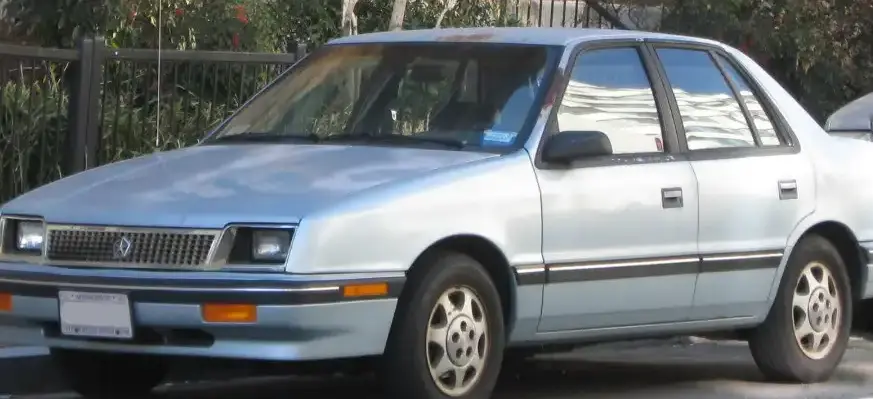
The Plymouth Sundance 3.0i V6, produced between 1992 and 1994, represented a mid-range offering within the second generation of the Sundance compact car. Positioned as a step up from the base 2.5-liter engine, the 3.0i provided a noticeable performance increase, appealing to buyers seeking more power in their daily driver. The Sundance, as a whole, was Plymouth’s entry into the competitive compact market, sharing its platform – the Chrysler JA – with the Dodge Spirit and Chrysler LeBaron. This generation saw a significant redesign from the original, offering a more modern aesthetic and improved features. The 3.0i variant aimed to balance affordability with a more engaging driving experience.
Technical Specifications
| Brand | Plymouth |
| Model | Sundance |
| Type (Engine) | 3.0i V6 (143 Hp) |
| Start of production | 1992 |
| End of production | 1994 |
| Powertrain Architecture | Internal Combustion engine |
| Body type | Hatchback |
| Seats | 5 |
| Doors | 3/5 |
| Fuel consumption (urban) | 15 l/100 km (15.7 US mpg, 18.8 UK mpg, 6.7 km/l) |
| Fuel consumption (extra urban) | 9 l/100 km (26.1 US mpg, 31.4 UK mpg, 11.1 km/l) |
| Fuel Type | Petrol (Gasoline) |
| Maximum speed | 190 km/h (118.06 mph) |
| Weight-to-power ratio | 8.6 kg/Hp, 115.8 Hp/tonne |
| Weight-to-torque ratio | 5.3 kg/Nm, 187.9 Nm/tonne |
| Power | 143 Hp @ 5000 rpm |
| Power per litre | 48.1 Hp/l |
| Torque | 232 Nm @ 3600 rpm (171.11 lb.-ft. @ 3600 rpm) |
| Engine layout | Front, Transverse |
| Engine Model/Code | 6G72 |
| Engine displacement | 2972 cm3 (181.36 cu. in.) |
| Number of cylinders | 6 |
| Engine configuration | V-engine |
| Cylinder Bore | 91.1 mm (3.59 in.) |
| Piston Stroke | 76 mm (2.99 in.) |
| Compression ratio | 8.9:1 |
| Number of valves per cylinder | 2 |
| Fuel injection system | Multi-port manifold injection |
| Engine aspiration | Naturally aspirated engine |
| Valvetrain | OHC |
| Engine oil capacity | 4.3 l (4.54 US qt | 3.78 UK qt) |
| Coolant | 9 l (9.51 US qt | 7.92 UK qt) |
| Kerb Weight | 1235 kg (2722.71 lbs.) |
| Trunk (boot) space – minimum | 375 l (13.24 cu. ft.) |
| Trunk (boot) space – maximum | 870 l (30.72 cu. ft.) |
| Fuel tank capacity | 53 l (14 US gal | 11.66 UK gal) |
| Length | 4365 mm (171.85 in.) |
| Width | 1710 mm (67.32 in.) |
| Height | 1340 mm (52.76 in.) |
| Wheelbase | 2470 mm (97.24 in.) |
| Front track | 1465 mm (57.68 in.) |
| Rear (Back) track | 1455 mm (57.28 in.) |
| Drivetrain Architecture | The Internal combustion engine (ICE) drives the front wheels of the vehicle. |
| Drive wheel | Front wheel drive |
| Number of gears and type of gearbox | 5 gears, manual transmission |
| Front suspension | Coil spring |
| Rear suspension | Coil spring |
| Front brakes | Ventilated discs |
| Rear brakes | Disc |
| Assisting systems | ABS (Anti-lock braking system) |
| Steering type | Steering rack and pinion |
| Power steering | Hydraulic Steering |
| Tires size | 205/60 R14 |
Powertrain & Engine Architecture
The heart of the Sundance 3.0i was the Mitsubishi-sourced 6G72 3.0-liter V6 engine. This engine, a 60-degree V configuration, was chosen for its relatively compact size and smooth operation. It featured a single overhead camshaft (OHC) design operating two valves per cylinder. Fuel delivery was handled by a multi-port fuel injection system, contributing to improved fuel efficiency and throttle response compared to earlier carbureted designs. The 6G72 was known for its durability and relatively simple maintenance requirements. The 5-speed manual transmission paired with this engine provided a direct connection to the drivetrain, offering drivers more control over gear selection. The engine’s 8.9:1 compression ratio was a compromise between performance and the ability to run on readily available 87 octane gasoline.
Driving Characteristics
The 143 horsepower and 171 lb-ft of torque offered by the 3.0i V6 provided a noticeable improvement in acceleration and overall driving experience compared to the base 2.5-liter engine. While not a sports car, the 3.0i Sundance offered sufficient power for highway merging and passing maneuvers. The 5-speed manual transmission allowed drivers to keep the engine in its optimal power band, maximizing performance. Gear ratios were fairly standard for the time, prioritizing fuel economy in higher gears while providing adequate acceleration in lower gears. Compared to the automatic transmission option available on other Sundance trims, the manual version felt more responsive and engaging. The front-wheel-drive configuration provided predictable handling, although it lacked the all-weather capability of an all-wheel-drive system.
Equipment & Trim Levels
The Sundance 3.0i typically came standard with features such as air conditioning, power steering, and an AM/FM stereo. Higher trim levels, often denoted by “LE” or “LX” designations, added features like upgraded upholstery, cruise control, power windows and locks, and a more comprehensive sound system. Interior upholstery was typically cloth, with options for upgraded materials on higher trims. The dashboard layout was functional and straightforward, prioritizing ease of use. Optional extras included a sunroof, upgraded wheels, and a premium sound system. The 3.0i trim generally sat in the mid-range of the Sundance lineup, offering a good balance of features and affordability.
Chassis & Braking
The Sundance utilized a relatively simple chassis design, featuring coil spring suspension at all four corners. Front suspension geometry was designed to provide comfortable ride quality and predictable handling. Rear suspension was a solid axle setup, which was cost-effective but less sophisticated than independent rear suspension. Braking duties were handled by ventilated discs at the front and solid discs at the rear. An anti-lock braking system (ABS) was available, enhancing safety by preventing wheel lockup during hard braking. Steering was rack-and-pinion, providing responsive and accurate steering feel. The standard tire size was 205/60 R14, offering a good balance of ride comfort and handling.
Market Reception & Comparison
The Sundance 3.0i V6 was generally well-received by automotive critics as a competent and affordable compact car. Reviewers praised the engine’s smooth operation and adequate power, but some noted that the interior materials were somewhat basic. Fuel economy was considered average for the class, falling in line with other V6-powered compacts of the era. Compared to the base 2.5-liter Sundance, the 3.0i offered a significant performance upgrade, making it a more appealing option for drivers who prioritized power. However, it was often more expensive than comparable models from competitors like the Honda Civic or Toyota Corolla. The 3.0i also offered a more refined driving experience than the turbocharged 2.5-liter models, which were sometimes criticized for their turbo lag.
Legacy
The Plymouth Sundance 3.0i V6, while not a groundbreaking vehicle, remains a fondly remembered compact car from the early 1990s. The 6G72 engine proved to be remarkably durable, and many examples are still on the road today. The Sundance’s simple design and readily available parts make it relatively easy to maintain. In the used car market, the 3.0i V6 variant typically commands a slightly higher price than the base models, reflecting its increased performance and desirability. The Sundance represents a transitional period in American automotive history, bridging the gap between older, more traditional designs and the more modern, technologically advanced vehicles that followed.
