
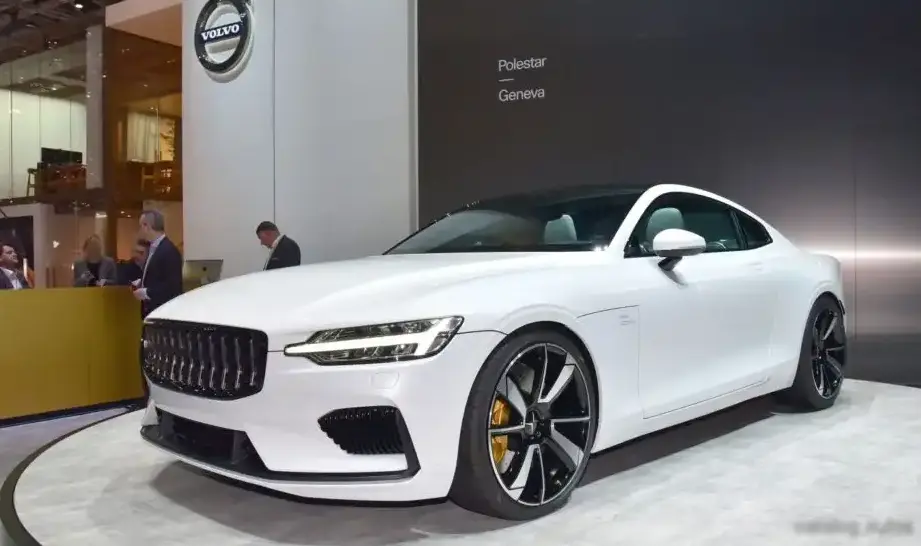
The Polestar 1 2.0, a high-performance plug-in hybrid grand tourer, represents the initial foray of the Polestar brand as an independent automotive manufacturer. Production commenced in 2019, and the vehicle served as a statement of intent, showcasing Polestar’s commitment to electric performance and sophisticated design. Built on a modified version of the Volvo Scalable Product Architecture (SPA) platform, the 1 2.0 aimed to blend the refinement of a luxury coupe with the exhilarating performance of a sports car, while incorporating advanced hybrid technology. It occupies a unique niche, bridging the gap between traditional gasoline-powered grand tourers and fully electric vehicles.
Technical Specifications
| Brand | Polestar |
| Model | 1 |
| Generation | 1 |
| Type (Engine) | 2.0 (600 Hp) Plug-in Hybrid AWD |
| Start of production | 2019 |
| Powertrain Architecture | PHEV (Plug-in Hybrid Electric Vehicle) |
| Body type | Coupe |
| Seats | 4 |
| Doors | 2 |
| Fuel Type | Petrol / electricity |
| Acceleration 0 – 100 km/h | 4.2 sec |
| Acceleration 0 – 62 mph | 4.2 sec |
| Acceleration 0 – 60 mph | 4 sec |
| Gross battery capacity | 34 kWh |
| All-electric range | 150 km (93.21 mi) |
| Electric motor power (x2) | 222 Hp |
| Electric motor Torque (x2) | 480 Nm (354.03 lb.-ft.) |
| System power | 600 Hp |
| System torque | 1000 Nm (737.56 lb.-ft.) |
| Internal combustion engine Power | 341 Hp |
| Internal combustion engine Torque | 370 Nm (272.9 lb.-ft.) |
| Engine Model/Code | B4204T48 |
| Number of cylinders | 4 |
| Engine configuration | Inline |
| Engine oil capacity | 5.6 l (5.92 US qt | 4.93 UK qt) |
| Fuel tank capacity | 60 l (15.85 US gal | 13.2 UK gal) |
| Length | 4585 mm (180.51 in.) |
| Width including mirrors | 2070 mm (81.5 in.) |
| Height | 1352 mm (53.23 in.) |
| Wheelbase | 2742 mm (107.95 in.) |
| Drive wheel | All wheel drive (4×4) |
| Front suspension | Double wishbone |
| Front brakes | Ventilated discs |
| Rear brakes | Ventilated discs, 390 mm |
| Tires size | 275/30 R21; 295/30 R21 |
| Wheel rims size | 21 |
Powertrain & Engine Architecture
The Polestar 1 2.0’s powertrain is a complex and sophisticated system centered around a 2.0-liter turbocharged and supercharged inline-four cylinder engine (Volvo’s B4204T48) paired with two electric motors – one powering the front axle and the other driving the rear. The internal combustion engine produces 341 horsepower and 370 Nm (272.9 lb-ft) of torque. Each electric motor contributes 222 horsepower and 480 Nm (354.03 lb-ft) of torque, resulting in a combined system output of 600 horsepower and a substantial 1000 Nm (737.56 lb-ft) of torque. The engine utilizes direct injection and a sophisticated valvetrain to optimize performance and efficiency. The eight-speed automatic transmission, sourced from ZF, is specifically tuned for the hybrid system, providing smooth and rapid gear changes. The 34 kWh battery pack allows for an all-electric range of approximately 150 km (93.21 miles), making it suitable for daily commutes and shorter journeys.
Driving Characteristics
The Polestar 1 2.0 delivers a driving experience that is both refined and exhilarating. In all-electric mode, the car offers near-silent operation and instant torque, providing brisk acceleration. When the internal combustion engine engages, the combined power output results in a 0-60 mph time of around 4 seconds. The all-wheel-drive system provides excellent traction and stability, particularly in adverse weather conditions. The chassis is tuned for a balance between comfort and handling, offering a composed ride quality while remaining responsive in corners. The steering is precise and well-weighted, providing a confident feel. Compared to potential future, fully electric Polestar models, the 1 2.0 offers a unique blend of electric efficiency and the familiar character of a combustion engine.
Equipment & Trim Levels
The Polestar 1 2.0 was positioned as a premium grand tourer, and its standard equipment reflected this. The interior featured high-quality leather upholstery, a minimalist dashboard design, and a large central touchscreen infotainment system. Standard features included a premium audio system, advanced driver-assistance systems (ADAS) such as adaptive cruise control and lane-keeping assist, and a panoramic sunroof. Optional extras included upgraded interior trim materials, bespoke paint colors, and performance-enhancing options. The focus was on creating a luxurious and technologically advanced cabin experience.
Chassis & Braking
The Polestar 1 2.0 utilizes a double wishbone front suspension and a multi-link rear suspension, optimized for both comfort and handling. The suspension is electronically controlled, allowing for adjustable damping rates to suit different driving conditions. The braking system features ventilated discs on all four wheels, with large 390mm discs at the rear, providing ample stopping power. The car is equipped with a high-performance braking system designed to handle the demands of its substantial power output. The chassis is constructed from a combination of steel and carbon fiber reinforced polymer (CFRP) to maximize strength and minimize weight.
Market Reception & Comparison
The Polestar 1 2.0 received generally positive reviews from automotive critics. It was praised for its striking design, impressive performance, and advanced hybrid technology. Some critics noted the relatively high price point compared to other grand tourers, but acknowledged the car’s unique combination of attributes. Compared to other plug-in hybrid vehicles, the Polestar 1 2.0 offered a higher level of performance and luxury. Its all-electric range was competitive with other PHEVs in its class. The car’s focus on driving dynamics set it apart from many of its rivals, which prioritized fuel efficiency or comfort.
Legacy
The Polestar 1 2.0, while produced in limited numbers, served as a crucial stepping stone for the Polestar brand. It established Polestar as a credible manufacturer of high-performance electric vehicles and paved the way for the development of the Polestar 2 and Polestar 3. The powertrain technology developed for the 1 2.0 influenced subsequent Polestar models. On the used car market, the Polestar 1 2.0 remains a desirable and relatively rare vehicle, commanding a premium price due to its exclusivity and performance capabilities. The long-term reliability of the powertrain appears to be good, with few reported issues. The car represents a significant moment in the evolution of hybrid technology and the emergence of Polestar as a major player in the electric vehicle market.
