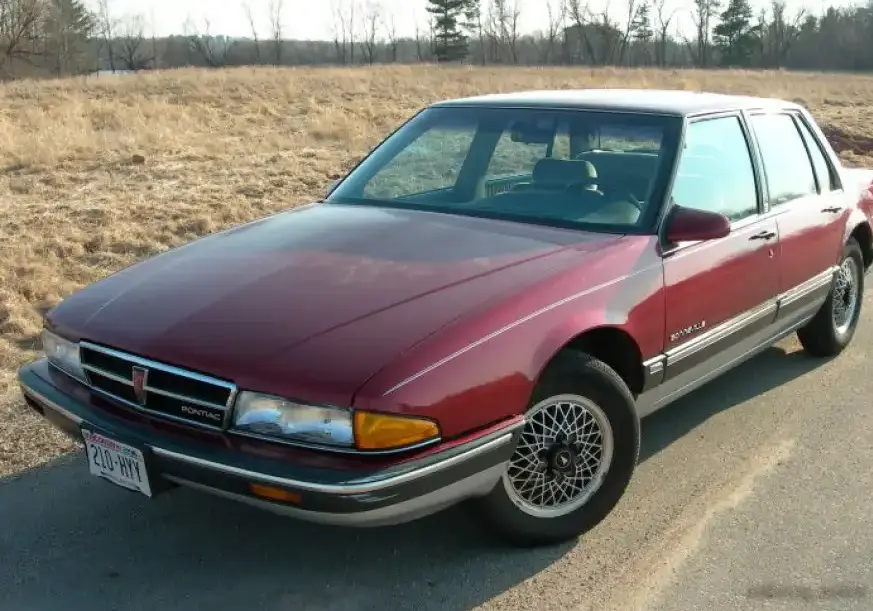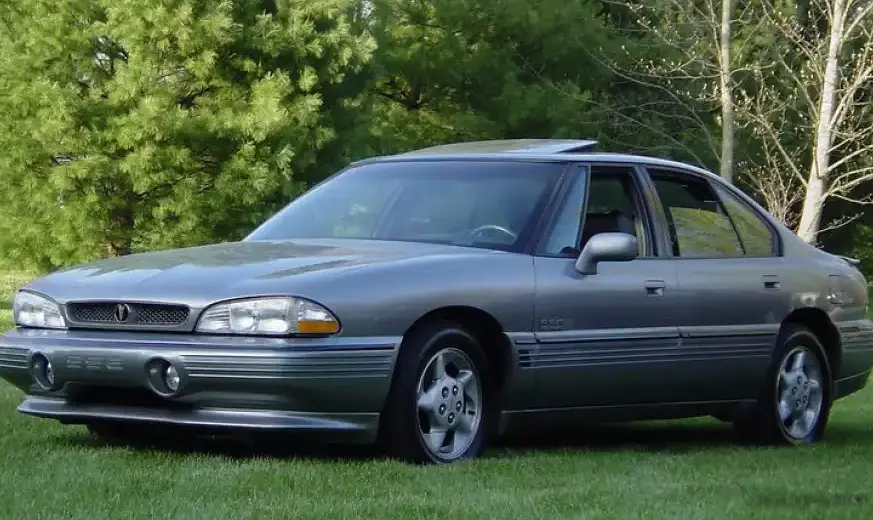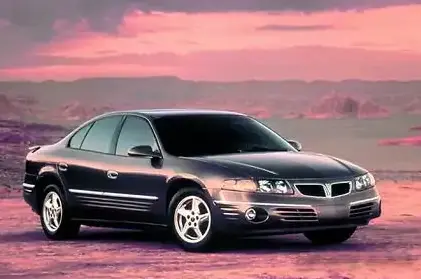
The Pontiac Bonneville (H) 3.8i V6, produced from 1999 to May 2005, represented a significant iteration of Pontiac’s flagship sedan. Falling within the eighth generation of the Bonneville, designated as the ‘H’ body, this variant occupied a middle ground in the lineup, offering a balance between performance and affordability. It was built on the GM H-body platform, shared with other GM vehicles like the Buick LeSabre and Cadillac DeVille. The 3.8i V6 with 208 horsepower and a four-speed automatic transmission was a popular configuration, aimed at buyers seeking a comfortable and reliable full-size sedan without the expense of the supercharged models.
Technical Specifications
| Brand | Pontiac |
| Model | Bonneville |
| Generation | Bonneville (H) |
| Type (Engine) | 3.8 i V6 (208 Hp) |
| Start of production | 1999 |
| End of production | May, 2005 |
| Powertrain Architecture | Internal Combustion engine |
| Body type | Sedan |
| Seats | 5 |
| Doors | 4 |
| Fuel consumption (urban) | 11.7 l/100 km (20.1 US mpg) |
| Fuel consumption (extra urban) | 8.1 l/100 km (29 US mpg) |
| Fuel consumption (combined) | 9.8 l/100 km (24 US mpg) |
| Fuel Type | Petrol (Gasoline) |
| Maximum speed | 200 km/h (124.27 mph) |
| Weight-to-power ratio | 7.8 kg/Hp |
| Weight-to-torque ratio | 5.2 kg/Nm |
| Power | 208 Hp @ 5200 rpm |
| Power per litre | 54.9 Hp/l |
| Torque | 312 Nm @ 4000 rpm (230.12 lb.-ft. @ 4000 rpm) |
| Engine layout | Front, Transverse |
| Engine Model/Code | L36 |
| Engine displacement | 3791 cm3 (231.34 cu. in.) |
| Number of cylinders | 6 |
| Engine configuration | V-engine |
| Cylinder Bore | 96.5 mm (3.8 in.) |
| Piston Stroke | 86.4 mm (3.4 in.) |
| Compression ratio | 9.4:1 |
| Number of valves per cylinder | 2 |
| Fuel injection system | Multi-port manifold injection |
| Engine aspiration | Naturally aspirated engine |
| Engine oil capacity | 4.3 l (4.54 US qt | 3.78 UK qt) |
| Coolant | 12.3 l (13 US qt | 10.82 UK qt) |
| Kerb Weight | 1630 kg (3593.53 lbs.) |
| Trunk (boot) space (minimum) | 510 l (18.01 cu. ft.) |
| Fuel tank capacity | 70 l (18.49 US gal | 15.4 UK gal) |
| Length | 5145 mm (202.56 in.) |
| Width | 1885 mm (74.21 in.) |
| Height | 1440 mm (56.69 in.) |
| Wheelbase | 2850 mm (112.2 in.) |
| Front track | 1590 mm (62.6 in.) |
| Rear (Back) track | 1580 mm (62.2 in.) |
| Drivetrain Architecture | Front wheel drive |
| Number of gears and type of gearbox | 4 gears, automatic transmission |
| Front suspension | Spring Strut |
| Rear suspension | Coil spring |
| Front brakes | Ventilated discs |
| Rear brakes | Disc |
| Assisting systems | ABS (Anti-lock braking system) |
| Steering type | Steering rack and pinion |
| Power steering | Hydraulic Steering |
| Tires size | 235/55 R17 |
Powertrain & Engine Architecture
The heart of the Bonneville 3.8i V6 was the L36 engine, a 3.8-liter (231 cubic inches) naturally aspirated V6. This engine was a staple of GM’s mid-size and full-size vehicles for many years. It featured a 90-degree V-angle, two valves per cylinder, and a cast iron block with aluminum cylinder heads. Fuel delivery was handled by a multi-port fuel injection system, providing precise fuel metering for improved efficiency and performance. The L36 engine was known for its durability and relatively simple design. The four-speed 4T65E automatic transmission was the sole transmission option for this variant. This transmission was electronically controlled and featured overdrive for improved highway fuel economy. While not a performance-oriented transmission, it provided smooth and reliable shifting in normal driving conditions.
Driving Characteristics
The 208 horsepower and 230 lb-ft of torque offered by the 3.8i V6 provided adequate, but not exhilarating, performance. Acceleration from 0 to 60 mph typically took around 8-9 seconds. The automatic transmission, while smooth, did contribute to a slightly less responsive feel compared to the available manual transmission in other Bonneville trims. The gear ratios were tuned for comfortable cruising, prioritizing fuel economy over outright acceleration. In real-world driving, the 3.8i V6 Bonneville felt competent and capable for everyday tasks, but lacked the punch of the supercharged 3800 Series II engine found in higher-spec models. The front-wheel-drive configuration provided predictable handling, but didn’t offer the sporty dynamics of rear-wheel-drive alternatives.
Equipment & Trim Levels
The 3.8i V6 Bonneville typically came standard with features like air conditioning, power windows and locks, a CD player, and cloth upholstery. Higher trim levels, such as the SLE, added features like leather upholstery, upgraded audio systems, and alloy wheels. Optional extras included a sunroof, heated seats, and a navigation system. The interior design was generally conservative and focused on comfort, with a spacious cabin and ample legroom for both front and rear passengers. The dashboard layout was straightforward and easy to use, with clearly labeled controls.
Chassis & Braking
The Bonneville (H) utilized a front-wheel-drive chassis with independent front suspension featuring coil springs and a multi-link rear suspension. This setup provided a comfortable ride, absorbing bumps and imperfections in the road effectively. The standard braking system consisted of ventilated disc brakes on the front wheels and solid disc brakes on the rear. Anti-lock brakes (ABS) were standard, enhancing safety by preventing wheel lockup during hard braking. The steering was rack-and-pinion with hydraulic power assist, providing light and responsive steering feel.
Market Reception & Comparison
The Bonneville 3.8i V6 was generally well-received by critics as a comfortable and reliable family sedan. However, it wasn’t considered a standout performer in its class. Compared to the supercharged Bonneville SSEi, the 3.8i V6 offered significantly less power and acceleration. However, it was more affordable and offered better fuel economy. Against competitors like the Ford Crown Victoria and Chrysler LHS, the Bonneville offered a more modern interior and a more refined driving experience. Fuel economy averaged around 24 mpg combined, which was competitive for a full-size sedan at the time. Reliability was generally good, with the L36 engine proving to be a durable and long-lasting powerplant.
Legacy
The Pontiac Bonneville 3.8i V6 remains a relatively affordable and reliable used car option today. The L36 engine is known for its longevity, and with proper maintenance, can easily exceed 200,000 miles. While not a collector’s item, the Bonneville 3.8i V6 represents a comfortable and practical American sedan from the early 2000s. Parts availability is generally good, as the L36 engine and 4T65E transmission were used in a wide range of GM vehicles. The Bonneville, as a whole, represents the final chapter in Pontiac’s long history of producing large, comfortable sedans, and the 3.8i V6 variant offered a compelling value proposition for buyers seeking a dependable and spacious family car.