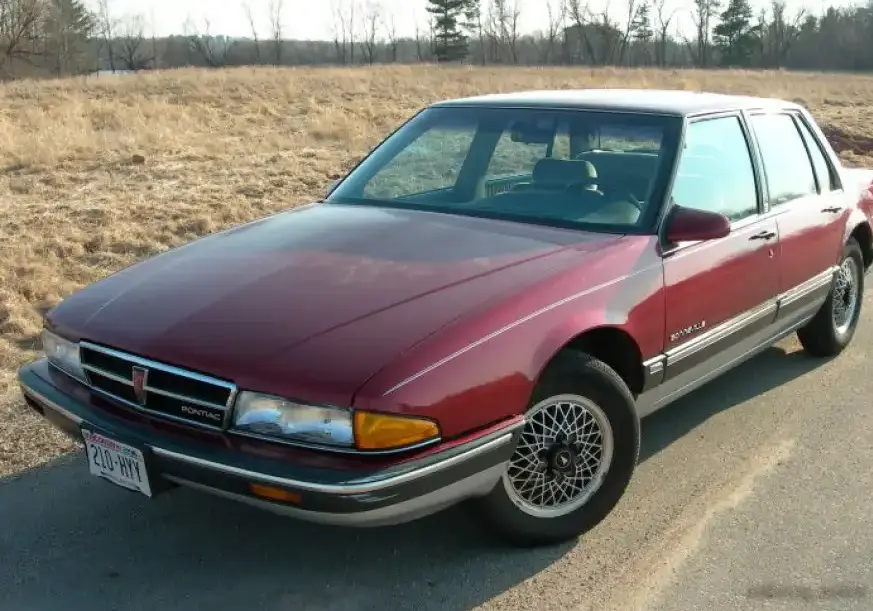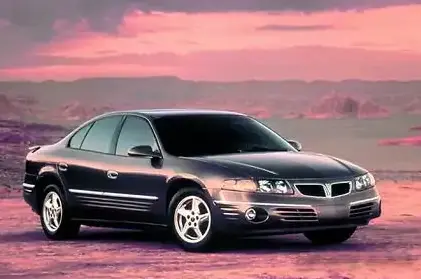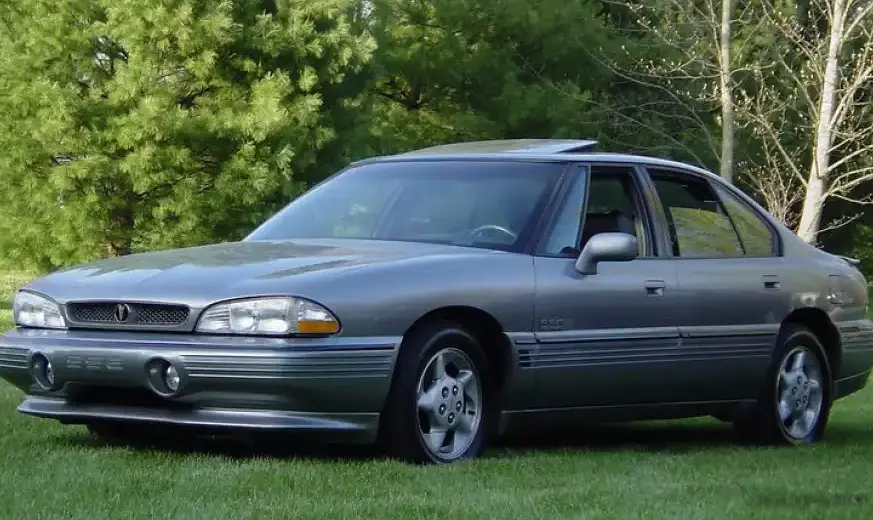
The Pontiac Bonneville II, specifically the 3.8 i V6 variant producing 172 horsepower, represented a significant offering in the full-size American sedan market from 1991 through 1999. Positioned as a comfortable and relatively affordable option within the Bonneville lineup, it served as a mainstay for families and those prioritizing a smooth ride over outright performance. This generation, internally designated as the Bonneville II, built upon the success of its predecessor and continued Pontiac’s tradition of spacious, well-equipped vehicles. It was based on the GM B-body platform, shared with other Buick and Oldsmobile models, and aimed to provide a blend of size, comfort, and modern features.
Technical Specifications
| Brand | Pontiac |
| Model | Bonneville |
| Generation | Bonneville II |
| Type (Engine) | 3.8 i V6 (172 Hp) |
| Start of production | 1991 |
| End of production | 1999 |
| Powertrain Architecture | Internal Combustion engine |
| Body type | Sedan |
| Seats | 5 |
| Doors | 4 |
| Fuel consumption (urban) | 16 l/100 km (14.7 US mpg) |
| Fuel consumption (extra urban) | 10 l/100 km (23.5 US mpg) |
| Fuel Type | Petrol (Gasoline) |
| Maximum speed | 190 km/h (118.06 mph) |
| Weight-to-power ratio | 9.1 kg/Hp |
| Weight-to-torque ratio | 5.3 kg/Nm |
| Power | 172 Hp @ 4800 rpm |
| Power per litre | 45.4 Hp/l |
| Torque | 298 Nm @ 3200 rpm (219.79 lb.-ft. @ 3200 rpm) |
| Engine layout | Front, Transverse |
| Engine Model/Code | L27 |
| Engine displacement | 3791 cm3 (231.34 cu. in.) |
| Number of cylinders | 6 |
| Engine configuration | V-engine |
| Cylinder Bore | 96.52 mm (3.8 in.) |
| Piston Stroke | 86.36 mm (3.4 in.) |
| Compression ratio | 9:1 |
| Number of valves per cylinder | 2 |
| Fuel injection system | Multi-port manifold injection |
| Engine aspiration | Naturally aspirated engine |
| Engine oil capacity | 4.3 l (4.54 US qt | 3.78 UK qt) |
| Coolant | 12.3 l (13 US qt | 10.82 UK qt) |
| Kerb Weight | 1565 kg (3450.23 lbs.) |
| Trunk (boot) space – minimum | 506 l (17.87 cu. ft.) |
| Fuel tank capacity | 68 l (17.96 US gal | 14.96 UK gal) |
| Length | 5107 mm (201.06 in.) |
| Width | 1892 mm (74.49 in.) |
| Height | 1415 mm (55.71 in.) |
| Wheelbase | 2815 mm (110.83 in.) |
| Front track | 1545 mm (60.83 in.) |
| Rear (Back) track | 1547 mm (60.91 in.) |
| Drivetrain Architecture | Front wheel drive |
| Drive wheel | Front wheel drive |
| Number of gears and type of gearbox | 4 gears, automatic transmission |
| Front suspension | Spring Strut |
| Rear suspension | Coil spring |
| Front brakes | Ventilated discs |
| Rear brakes | Drum |
| Assisting systems | ABS (Anti-lock braking system) |
| Steering type | Steering rack and pinion |
| Power steering | Hydraulic Steering |
| Tires size | 215/65 R15 |
Powertrain & Engine Architecture
The heart of the Bonneville II 3.8 i V6 was the L27 engine, a 3.8-liter (231 cubic inches) naturally aspirated V6. This engine was a staple of GM’s mid-size and full-size offerings for many years. It featured a 90-degree V-angle, two valves per cylinder, and a cast iron block with aluminum cylinder heads. The L27 utilized a multi-port fuel injection system, delivering fuel directly to each intake port for improved efficiency and responsiveness. The 4-speed automatic transmission (typically the 4T60 or 4T65) was chosen for its smooth operation and ease of use, aligning with the Bonneville’s focus on comfortable cruising. This transmission featured electronic control for optimized shift points and a torque converter lockup for improved fuel economy at highway speeds. The engine’s 9:1 compression ratio was a compromise between performance and the ability to run on regular unleaded gasoline.
Driving Characteristics
The 172 horsepower and 298 lb-ft of torque produced by the 3.8L V6, when paired with the 4-speed automatic, provided adequate, but not exhilarating, performance. Acceleration from 0 to 60 mph typically took around 9-10 seconds. The automatic transmission was tuned for smooth shifts and prioritized comfort over aggressive downshifting. Compared to the higher-output 3800 Series II V6 found in some Bonneville trims, or the Supercharged variants, this version felt noticeably less powerful. However, it offered a more relaxed driving experience and better fuel economy. The gear ratios were optimized for highway cruising, making it a comfortable long-distance vehicle. The front-wheel-drive configuration contributed to predictable handling, but didn’t offer the sporty feel of rear-wheel-drive alternatives.
Equipment & Trim Levels
The 3.8L automatic Bonneville II typically came standard with features like air conditioning, power windows and locks, a tilt steering wheel, and an AM/FM stereo. Higher trim levels, such as the LE, added features like upgraded upholstery (often cloth or velour), a premium sound system, and alloy wheels. Optional extras included a sunroof, leather seats, and traction control. The interior design was generally conservative, focusing on spaciousness and ease of use. Dashboard layouts were straightforward, with clearly labeled controls. The base trim focused on providing essential features at an affordable price point, while the LE trim offered a more luxurious experience.
Chassis & Braking
The Bonneville II utilized a front-wheel-drive chassis with an independent front suspension featuring coil springs and a strut design. The rear suspension employed a coil-spring independent setup. Front brakes were ventilated discs, providing adequate stopping power, while rear brakes were typically drum brakes. ABS (Anti-lock Braking System) was standard equipment, enhancing safety during emergency braking situations. The suspension was tuned for a comfortable ride, prioritizing smoothness over sporty handling. Stabilizer bars were included at both the front and rear to reduce body roll during cornering, though the Bonneville II was not intended to be a performance vehicle.
Market Reception & Comparison
The Bonneville II 3.8L automatic was generally well-received by consumers seeking a large, comfortable, and reliable sedan. Critics praised its spacious interior, smooth ride, and relatively affordable price. However, it was often criticized for its lack of sporty handling and its somewhat dated styling. Compared to the more powerful Bonneville trims, the 3.8L version offered better fuel economy – averaging around 16 mpg city and 23 mpg highway – but at the expense of performance. It was a popular choice for families and those who prioritized comfort and practicality over driving excitement. The 3.8L engine was known for its durability, making it a relatively reliable option in the used car market.
Legacy
The L27 3.8L V6 engine proved to be remarkably durable and reliable, and many examples are still on the road today. The 4T60/4T65 automatic transmissions, while generally reliable, can be prone to certain issues with age, such as slipping or harsh shifting. In the used car market, the Bonneville II 3.8L automatic represents an affordable and spacious option for those seeking a classic American sedan. Its simplicity and relatively low maintenance costs make it an attractive choice for budget-conscious buyers. While not a collector’s item, it remains a fondly remembered vehicle for many who experienced its comfortable ride and spacious interior during its production run.