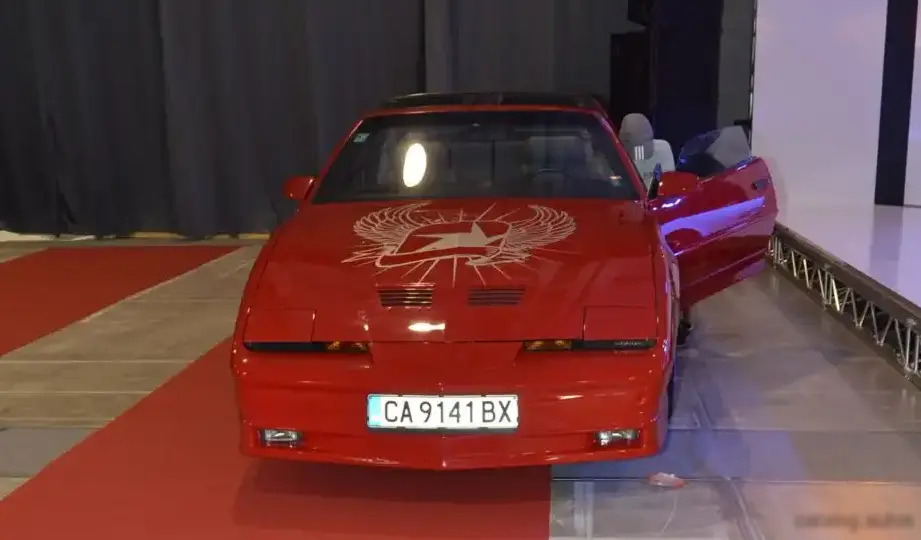
The Pontiac Firebird III 2.8L (102 hp) represents a significant entry point into the third-generation Firebird lineup, produced from 1982 through 1989. This variant, powered by the 2.8-liter V6 engine paired with an automatic transmission, served as the base model, offering a more accessible price point for buyers interested in the Firebird’s iconic styling. It occupied a crucial position in the market, appealing to those seeking a sporty coupe without the higher costs associated with the more powerful V8 options. The third-generation Firebird, known internally as the F-body, aimed to modernize the Firebird’s image while retaining its performance-oriented character.
Technical Specifications
| Brand | Pontiac |
| Model | Firebird |
| Generation | Firebird III |
| Engine Type | 2.8L (102 Hp) |
| Production Years | 1982 – 1989 |
| Powertrain Architecture | Internal Combustion Engine |
| Body Type | Coupe |
| Doors | 2 |
| Fuel Type | Petrol (Gasoline) |
| Power | 102 Hp |
| Engine Aspiration | Naturally Aspirated |
| Engine Oil Capacity | 4.3 l (4.54 US qt | 3.78 UK qt) |
| Coolant Capacity | 11.5 l (12.15 US qt | 10.12 UK qt) |
| Fuel Tank Capacity | 60.5 l (15.98 US gal | 13.31 UK gal) |
| Length | 4833 mm (190.28 in) |
| Width | 1838 mm (72.36 in) |
| Height | 1264 mm (49.76 in) |
Powertrain & Engine Architecture
The heart of the Firebird III 2.8L was the 2.8-liter (173 cubic inch) V6 engine. This engine, part of the GM’s “Family II” V6 series, was a 60-degree V-engine featuring a cast iron block and aluminum cylinder heads. It utilized a two-barrel carburetor for fuel delivery, a relatively simple system compared to the fuel injection found on some later models and higher-performance trims. The engine’s valvetrain employed two valves per cylinder, operated by a single overhead camshaft. The 102 horsepower output was achieved at approximately 5200 rpm, with peak torque of around 165 lb-ft at 3600 rpm. The engine was typically paired with a three-speed automatic transmission (TH700R4, also known as the 700R4), chosen for its smooth operation and ease of use. This transmission featured a torque converter and provided relatively conservative gear ratios, prioritizing fuel economy and comfortable cruising over outright acceleration.
Driving Characteristics
The 2.8L automatic Firebird offered a distinctly different driving experience compared to its V8-powered siblings. Acceleration was adequate for everyday driving, but it lacked the punch and responsiveness of the 305 or 350 cubic inch V8 engines. The automatic transmission, while smooth, contributed to a less engaging driving experience. Gear changes were not particularly quick, and the transmission’s programming emphasized fuel efficiency. The Firebird’s suspension, while tuned for handling, was somewhat compromised by the lower power output of the 2.8L engine. It wasn’t as prone to body roll as the V8 models, but it also didn’t offer the same level of confidence during spirited driving. The overall driving experience was best described as comfortable and refined, making it a suitable choice for daily commuting and long highway trips.
Equipment & Trim Levels
The base Firebird III 2.8L came with a fairly basic level of equipment. Standard features typically included cloth upholstery, a basic AM/FM radio, and manual windows and locks. Air conditioning was often an optional extra. The interior design was functional but lacked the luxurious touches found in higher trim levels like the Trans Am. Dashboard configuration was relatively simple, with a straightforward instrument cluster. Optional extras included upgraded sound systems, power windows and locks, cruise control, and a tilt steering wheel. Exterior features were also fairly basic, with standard steel wheels and limited chrome trim. The Firebird III was positioned as the entry-level model, and its equipment reflected that.
Chassis & Braking
The third-generation Firebird utilized a unibody construction, providing a good balance of strength and weight. The front suspension featured independent coil springs, while the rear suspension employed a solid axle with coil springs. The base Firebird III 2.8L typically came equipped with drum brakes on the rear wheels and disc brakes on the front. Stabilizer bars were included, but their thickness was less substantial than those found on the higher-performance models. The steering system was a recirculating ball system, providing adequate precision but lacking the feel of more modern steering technologies. The chassis and braking system were designed to provide safe and reliable handling, but they were not optimized for high-performance driving.
Market Reception & Comparison
The Firebird III 2.8L automatic received mixed reviews from automotive critics. While the styling was generally praised, the engine’s performance was often criticized as being underwhelming. Fuel economy was a strong point, with the 2.8L engine offering better gas mileage than the V8 options. Reliability was generally good, although the carburetor could occasionally require adjustment. Compared to the V8-powered Firebirds, the 2.8L automatic was significantly less expensive, making it an attractive option for budget-conscious buyers. However, it lacked the performance and prestige of its more powerful siblings. The 2.8L automatic was often seen as a compromise, offering a stylish coupe at a reasonable price but sacrificing performance in the process.
Legacy
The 2.8L V6 engine, while not known for its blistering performance, proved to be a relatively durable and reliable powertrain. Many examples of the Firebird III 2.8L are still on the road today, a testament to the engine’s longevity. In the used car market, these models are typically the most affordable entry point into Firebird ownership. While they may not be as desirable as the V8-powered versions, they offer a classic Firebird experience at a fraction of the cost. The Firebird III 2.8L represents a significant chapter in the Firebird’s history, offering a more accessible and fuel-efficient option for buyers who appreciated the car’s styling but didn’t necessarily need the power of a V8 engine. It remains a popular choice for enthusiasts looking for a classic American coupe that is both affordable and reliable.