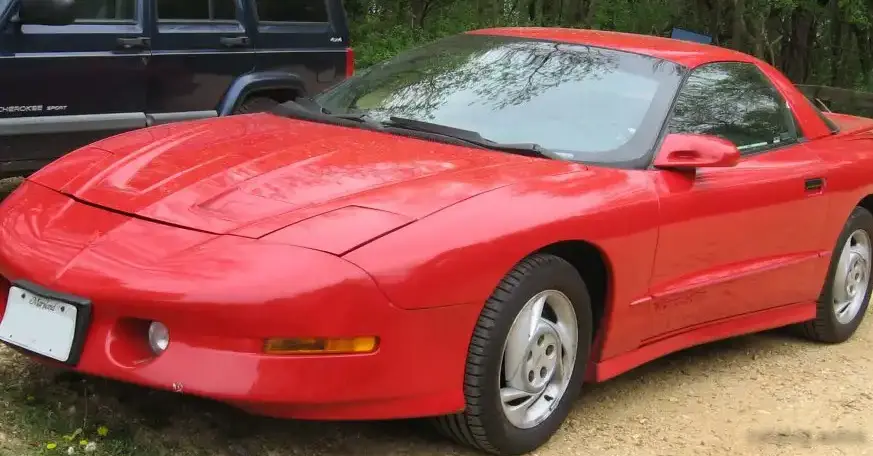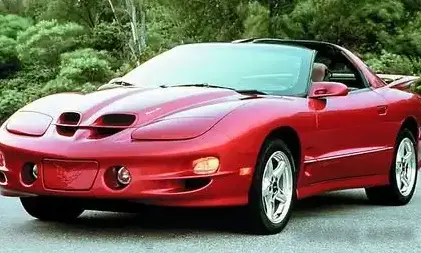
The Pontiac Firebird IV Cabrio 3.4i V6, produced solely for the 1995 model year, represented a transitional point for the fourth-generation Firebird. Falling within the 1993-2002 (fourth) generation – internally designated the F-body platform – the Cabriolet offered open-air motoring with a focus on comfortable cruising rather than outright performance. This particular variant, equipped with the 3.4-liter V6 engine and a four-speed automatic transmission, served as the entry-level engine option for the Firebird convertible, positioned below the more potent V8 models. Production numbers were relatively low, making it a less common find among Firebird enthusiasts today.
Technical Specifications
| Brand | Pontiac |
| Model | Firebird |
| Generation | Firebird IV Cabrio |
| Type (Engine) | 3.4 i V6 (162 Hp) |
| Start of production | 1995 |
| End of production | 1995 |
| Powertrain Architecture | Internal Combustion engine |
| Body type | Cabriolet |
| Seats | 4 |
| Doors | 2 |
| Fuel consumption (combined) | 10.6 l/100 km |
| Fuel consumption (US mpg) | 22.2 US mpg |
| Fuel consumption (UK mpg) | 26.6 UK mpg |
| Fuel consumption (km/l) | 9.4 km/l |
| Fuel Type | Petrol (Gasoline) |
| Weight-to-power ratio | 9.1 kg/Hp |
| Hp/tonne | 110.2 Hp/tonne |
| Weight-to-torque ratio | 5.4 kg/Nm |
| Nm/tonne | 184.4 Nm/tonne |
| Power | 162 Hp @ 4600 rpm |
| Power per litre | 48.3 Hp/l |
| Torque | 271 Nm @ 3600 rpm (199.88 lb.-ft. @ 3600 rpm) |
| Engine layout | Front, Longitudinal |
| Engine Model/Code | L32 |
| Engine displacement | 3352 cm3 (204.55 cu. in.) |
| Number of cylinders | 6 |
| Engine configuration | V-engine |
| Cylinder Bore | 92 mm (3.62 in.) |
| Piston Stroke | 84 mm (3.31 in.) |
| Compression ratio | 9:1 |
| Number of valves per cylinder | 2 |
| Fuel injection system | Multi-port manifold injection |
| Engine aspiration | Naturally aspirated engine |
| Valvetrain | OHC |
| Engine oil capacity | 3.8 l (4.02 US qt | 3.34 UK qt) |
| Coolant capacity | 11.8 l (12.47 US qt | 10.38 UK qt) |
| Kerb Weight | 1470 kg (3240.8 lbs.) |
| Trunk (boot) space – minimum | 365 l (12.89 cu. ft.) |
| Trunk (boot) space – maximum | 954 l (33.69 cu. ft.) |
| Fuel tank capacity | 59 l (15.59 US gal | 12.98 UK gal) |
| Length | 4968 mm (195.59 in.) |
| Width | 1893 mm (74.53 in.) |
| Height | 1321 mm (52.01 in.) |
| Wheelbase | 2566 mm (101.02 in.) |
| Front track | 1542 mm (60.71 in.) |
| Rear track | 1540 mm (60.63 in.) |
| Drivetrain Architecture | Rear wheel drive |
| Number of gears | 4 |
| Gearbox type | Automatic transmission |
| Front suspension | Spring Strut |
| Rear suspension | Coil spring |
| Front brakes | Ventilated discs |
| Rear brakes | Drum |
| Assisting systems | ABS (Anti-lock braking system) |
| Steering type | Steering rack and pinion |
| Power steering | Hydraulic Steering |
| Tires size | 215/60 R16 H |
Powertrain & Engine Architecture
The heart of the Firebird IV Cabrio 3.4i was the 3.4-liter (3400 cubic inches) L32 V6 engine. This engine was part of GM’s “3800” family, though downsized in displacement. It featured a 90-degree V-angle, two valves per cylinder operated by an overhead camshaft (OHC), and a multi-port fuel injection system. The L32 produced 162 horsepower at 4600 rpm and 271 Nm (199.88 lb-ft) of torque at 3600 rpm. The engine’s 9:1 compression ratio was a compromise between performance and the use of readily available 87-octane gasoline. Paired with this engine was a 4L60E four-speed automatic transmission, known for its relatively smooth shifts and durability. This transmission was a common choice for GM vehicles of the era, prioritizing ease of use over outright performance.
Driving Characteristics
The 3.4L V6 and 4L60E automatic combination delivered a comfortable, but not particularly sporty, driving experience. Acceleration was adequate for everyday driving, but noticeably slower than the V8-powered Firebirds. The automatic transmission’s gear ratios were geared towards fuel efficiency and smooth cruising, rather than aggressive acceleration. The 0-60 mph time was estimated to be around 8.5-9.5 seconds, depending on testing conditions and vehicle load. The automatic transmission did detract from driver engagement, and the lack of manual shift control was a common complaint. However, the smooth power delivery of the V6 made it a pleasant choice for those prioritizing comfort and ease of driving.
Equipment & Trim Levels
The 1995 Firebird Cabrio 3.4i typically came standard with features like power windows, power locks, air conditioning, and a basic AM/FM stereo. The interior featured cloth upholstery, and the dashboard layout was typical of early 1990s GM designs. Optional extras included a premium sound system, leather upholstery, and a power driver’s seat. The Firebird’s convertible top was manually operated, a cost-saving measure compared to the power-operated tops found on some competitors. The base model trim was fairly spartan, focusing on providing essential features at an affordable price point.
Chassis & Braking
The Firebird IV Cabrio utilized a unibody construction. The front suspension consisted of a strut-type setup, while the rear employed a coil-spring arrangement. The Cabriolet’s suspension was tuned for comfort, resulting in a relatively soft ride. Braking duties were handled by ventilated discs at the front and drum brakes at the rear. Anti-lock brakes (ABS) were standard, enhancing safety. The relatively modest weight of the V6-powered Cabriolet (approximately 3240 lbs) helped to offset the limitations of the drum brakes at the rear.
Market Reception & Comparison
Critics generally viewed the 3.4L Firebird Cabrio as a decent value for the money, but it lacked the performance and prestige of the V8 models. Fuel economy was reasonable for the time, averaging around 22 mpg in combined driving. The L32 V6 engine was generally considered reliable, although it was prone to oil leaks as it aged. Compared to the Firebird’s V6 and V8 siblings, the 3.4i offered the lowest price of entry but also the least amount of performance. The V6 models were often seen as a more practical choice for daily commuting, while the V8s appealed to enthusiasts seeking a more thrilling driving experience.
Legacy
The 1995 Firebird IV Cabrio 3.4i V6, while not a particularly sought-after variant, holds a place in Firebird history as an accessible and affordable entry point to the fourth-generation model. The L32 V6 engine proved to be reasonably durable, and parts availability remains good. Today, these cars are often found in the used car market at relatively low prices, making them an attractive option for those seeking a classic American convertible on a budget. However, potential buyers should be aware of the potential for oil leaks and the age-related deterioration of rubber components. The 3.4i represents a unique blend of comfort, affordability, and classic Firebird styling.