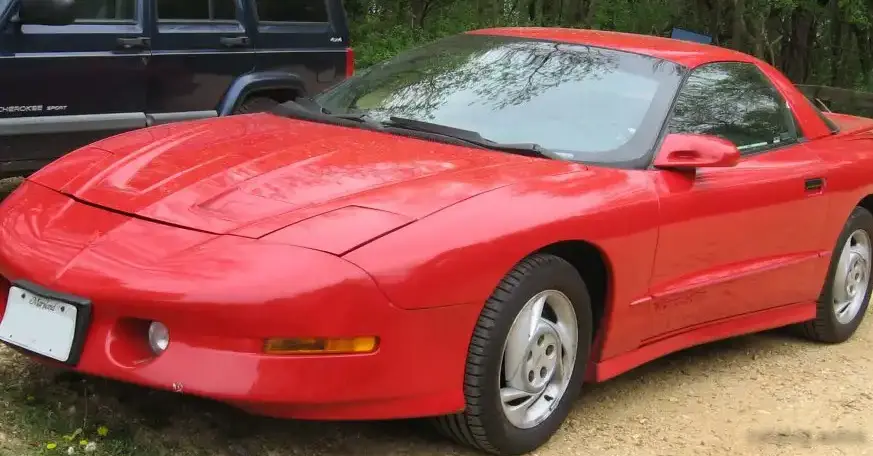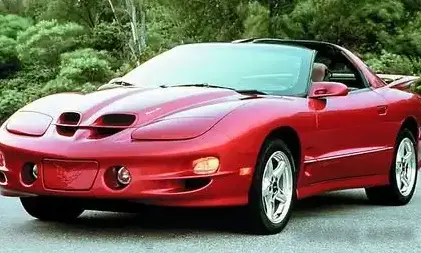
The Pontiac Firebird IV Cabrio 3.8i V6, produced from 1995 to 2002, represented a significant iteration of the iconic Firebird lineage. This fourth-generation model (often referred to as the F-body) offered a blend of sporty styling, respectable performance, and open-air enjoyment with its convertible top. The 3.8i V6 variant, equipped with an automatic transmission, occupied a middle ground in the Firebird lineup, providing a more accessible entry point compared to the flagship V8 models while still delivering a satisfying driving experience. It was positioned as a comfortable and stylish cruiser, appealing to buyers who prioritized ease of use and everyday practicality over outright track performance.
Technical Specifications
| Brand | Pontiac |
| Model | Firebird |
| Generation | Firebird IV Cabrio |
| Type (Engine) | 3.8i V6 (208 Hp) Automatic |
| Start of production | 1995 |
| End of production | 2002 |
| Powertrain Architecture | Internal Combustion engine |
| Body type | Cabriolet |
| Seats | 4 |
| Doors | 2 |
| Fuel consumption (combined) | 10.6 l/100 km (22.2 US mpg, 26.6 UK mpg, 9.4 km/l) |
| Fuel Type | Petrol (Gasoline) |
| Weight-to-power ratio | 7.3 kg/Hp, 136.8 Hp/tonne |
| Weight-to-torque ratio | 4.9 kg/Nm, 205.1 Nm/tonne |
| Power | 208 Hp @ 5200 rpm |
| Power per litre | 54.9 Hp/l |
| Torque | 312 Nm @ 4000 rpm (230.12 lb.-ft. @ 4000 rpm) |
| Engine layout | Front, Longitudinal |
| Engine Model/Code | L36 |
| Engine displacement | 3791 cm3 (231.34 cu. in.) |
| Number of cylinders | 6 |
| Engine configuration | V-engine |
| Cylinder Bore | 96.5 mm (3.8 in.) |
| Piston Stroke | 86.4 mm (3.4 in.) |
| Compression ratio | 9.4:1 |
| Number of valves per cylinder | 2 |
| Fuel injection system | Multi-port manifold injection |
| Engine aspiration | Naturally aspirated engine |
| Engine oil capacity | 4.3 l (4.54 US qt | 3.78 UK qt) |
| Coolant | 11.6 l (12.26 US qt | 10.21 UK qt) |
| Kerb Weight | 1521 kg (3353.23 lbs.) |
| Fuel tank capacity | 59 l (15.59 US gal | 12.98 UK gal) |
| Length | 4968 mm (195.59 in.) |
| Width | 1893 mm (74.53 in.) |
| Height | 1340 mm (52.76 in.) |
| Wheelbase | 2566 mm (101.02 in.) |
| Front track | 1542 mm (60.71 in.) |
| Rear track | 1540 mm (60.63 in.) |
| Drivetrain Architecture | Rear wheel drive |
| Drive wheel | Rear wheel drive |
| Number of gears and type of gearbox | 4 gears, automatic transmission |
| Front suspension | Spring Strut |
| Rear suspension | Coil spring |
| Front brakes | Ventilated discs |
| Rear brakes | Disc |
| Assisting systems | ABS (Anti-lock braking system) |
| Steering type | Steering rack and pinion |
| Power steering | Hydraulic Steering |
| Tires size | 215/60 R16 S |
| Wheel rims size | 16 |
Powertrain & Engine Architecture
The heart of the Firebird IV Cabrio 3.8i V6 was the 3.8-liter (3791 cc) L36 V6 engine. This engine, a member of the GM 3800 series, was known for its durability and smooth operation. It featured a 90-degree V-configuration, two valves per cylinder, and a cast iron block with aluminum cylinder heads. Fuel delivery was handled by a multi-port fuel injection system, contributing to efficient combustion and responsive throttle control. The engine produced 208 horsepower at 5200 rpm and 230 lb-ft of torque at 4000 rpm. The automatic transmission used was a 4T60-E, a four-speed electronically controlled unit. This transmission was chosen for its smoothness and ease of use, aligning with the intended character of this particular Firebird variant.
Driving Characteristics
The 3.8i V6 automatic combination delivered a comfortable and relaxed driving experience. While not as quick as the V8-powered Firebirds, it offered sufficient power for everyday driving and highway cruising. The automatic transmission, while smooth, did result in some power loss compared to the available manual transmission. Gear ratios were tuned for fuel efficiency and comfortable acceleration, rather than outright performance. The 0-60 mph time was typically in the 7-8 second range, making it competitive with other V6-powered sports coupes of the era. The rear-wheel-drive layout provided a balanced feel, although the relatively soft suspension tuning prioritized ride comfort over sharp handling.
Equipment & Trim Levels
The Firebird IV Cabrio 3.8i V6 typically came standard with features such as air conditioning, power windows and locks, a premium sound system, and a leather-wrapped steering wheel. Upholstery was usually cloth, but leather was available as an option. Optional extras included a power-adjustable driver’s seat, a sunroof, and upgraded audio systems. The interior design was driver-focused, with a clear instrument cluster and well-placed controls. The convertible top was power-operated and featured a glass rear window.
Chassis & Braking
The Firebird IV Cabrio utilized a unibody construction for rigidity. The front suspension consisted of independent coil springs and a strut design, while the rear suspension employed a solid axle with coil springs. This setup provided a comfortable ride, but wasn’t as sophisticated as the independent rear suspension found on some competing models. Braking duties were handled by ventilated discs at the front and solid discs at the rear. Anti-lock brakes (ABS) were standard, enhancing safety and control during hard braking. The steering system was a rack-and-pinion setup with hydraulic power assist, providing responsive and precise steering feel.
Market Reception & Comparison
Critics generally viewed the Firebird IV Cabrio 3.8i V6 as a solid and enjoyable vehicle. It was praised for its comfortable ride, stylish design, and reliable engine. However, some reviewers noted that the V6 engine lacked the punch of the V8 models, and the automatic transmission didn’t offer the same level of driver engagement as a manual. Compared to the Firebird V8 models, the 3.8i V6 offered better fuel economy (around 22 mpg combined) and lower maintenance costs. It also appealed to a broader audience who weren’t necessarily seeking high-performance thrills. Against competitors like the Ford Mustang and Chevrolet Camaro, the Firebird offered a unique blend of style and value.
Legacy
The L36 3.8-liter V6 engine proved to be remarkably durable and reliable, with many examples still running strong today. The 4T60-E automatic transmission, while not without its potential issues, is generally considered a robust unit when properly maintained. In the used car market, the Firebird IV Cabrio 3.8i V6 represents an affordable and stylish entry point into the world of classic American sports cars. Its relatively simple mechanicals and readily available parts make it a relatively easy vehicle to maintain and repair. While it may not possess the same collector appeal as the V8-powered models, it remains a popular choice for enthusiasts seeking a comfortable and enjoyable open-air driving experience.