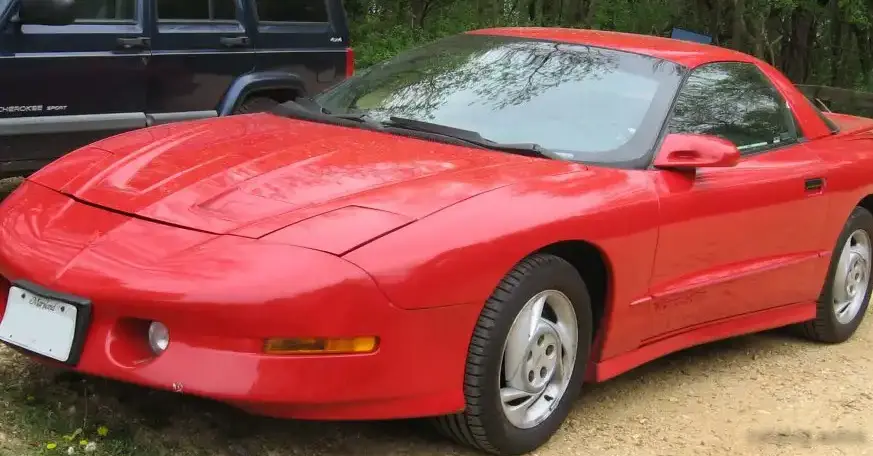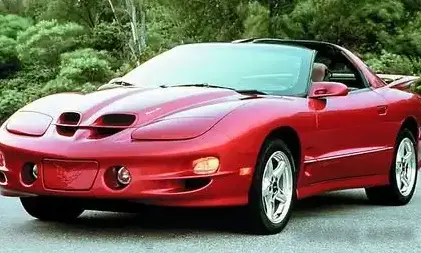
The Pontiac Firebird IV Cabrio 5.7i V8, produced between 1995 and 1999, represented the fourth and final generation of the iconic Firebird. This particular variant, equipped with the 5.7-liter (345.7 cubic inch) V8 engine producing 309 horsepower, was positioned as the performance flagship of the Firebird Cabriolet lineup. It offered a blend of open-air motoring and substantial power, appealing to enthusiasts seeking a classic American muscle car experience. The fourth generation Firebird (1993-2002) shared its platform with the Chevrolet Camaro, known internally as the F-body. The Cabriolet version, while less common than the coupe, provided a more accessible and enjoyable driving experience for many.
Technical Specifications
| Brand | Pontiac |
| Model | Firebird |
| Generation | Firebird IV Cabrio |
| Type (Engine) | 5.7 i V8 (309 Hp) |
| Start of production | 1995 |
| End of production | 1999 |
| Powertrain Architecture | Internal Combustion engine |
| Body type | Cabriolet |
| Seats | 4 |
| Doors | 2 |
| Fuel consumption (urban) | 14.7 l/100 km (16 US mpg, 19.2 UK mpg, 6.8 km/l) |
| Fuel consumption (extra urban) | 9 l/100 km (26.1 US mpg, 31.4 UK mpg, 11.1 km/l) |
| Fuel Type | Petrol (Gasoline) |
| Acceleration 0 – 100 km/h | 6 sec |
| Acceleration 0 – 62 mph | 6 sec |
| Acceleration 0 – 60 mph | 5.7 sec |
| Maximum speed | 250 km/h (155.34 mph) |
| Weight-to-power ratio | 5.3 kg/Hp, 189 Hp/tonne |
| Weight-to-torque ratio | 3.6 kg/Nm, 277.7 Nm/tonne |
| Power | 309 Hp @ 5200 rpm |
| Power per litre | 54.5 Hp/l |
| Torque | 454 Nm @ 4000 rpm (334.85 lb.-ft. @ 4000 rpm) |
| Engine layout | Front, Longitudinal |
| Engine displacement | 5665 cm3 (345.7 cu. in.) |
| Number of cylinders | 8 |
| Engine configuration | V-engine |
| Cylinder Bore | 99 mm (3.9 in.) |
| Piston Stroke | 92 mm (3.62 in.) |
| Compression ratio | 10.5:1 |
| Number of valves per cylinder | 2 |
| Fuel injection system | Multi-port manifold injection |
| Engine aspiration | Naturally aspirated engine |
| Engine oil capacity | 4.7 l (4.97 US qt | 4.14 UK qt) |
| Coolant | 14.5 l (15.32 US qt | 12.76 UK qt) |
| Kerb Weight | 1635 kg (3604.56 lbs.) |
| Trunk (boot) space – minimum | 365 l (12.89 cu. ft.) |
| Trunk (boot) space – maximum | 955 l (33.73 cu. ft.) |
| Fuel tank capacity | 59 l (15.59 US gal | 12.98 UK gal) |
| Length | 4920 mm (193.7 in.) |
| Width | 1890 mm (74.41 in.) |
| Height | 1340 mm (52.76 in.) |
| Wheelbase | 2570 mm (101.18 in.) |
| Front track | 1540 mm (60.63 in.) |
| Rear (Back) track | 1540 mm (60.63 in.) |
| Drivetrain Architecture | The Internal combustion engine (ICE) drives the rear wheels of the vehicle. |
| Drive wheel | Rear wheel drive |
| Number of gears and type of gearbox | 4 gears, automatic transmission |
| Front suspension | Spring Strut |
| Rear suspension | Coil spring |
| Front brakes | Ventilated discs |
| Rear brakes | Disc |
| Assisting systems | ABS (Anti-lock braking system) |
| Steering type | Steering rack and pinion |
| Power steering | Hydraulic Steering |
| Tires size | 235/55 R16 |
Powertrain & Engine Architecture
The heart of the Firebird IV Cabrio 5.7i was the GM LT1 small-block V8 engine. This engine, displacing 5.7 liters (345.7 cubic inches), featured a cast iron block with aluminum cylinder heads. It utilized a reverse-flow cooling system, which improved cylinder head temperature control. The LT1 employed multi-port fuel injection (MPFI) and an Opti-Spark distributorless ignition system. The Opti-Spark, while innovative for its time, became known for potential reliability issues when exposed to moisture. The engine produced 309 horsepower at 5200 rpm and 454 Nm (334.85 lb-ft) of torque at 4000 rpm. The 4L60E four-speed automatic transmission was the sole transmission option for this variant. This transmission was electronically controlled, offering smooth shifts and adaptive learning capabilities.
Driving Characteristics
The 5.7L V8 and 4L60E automatic combination delivered brisk acceleration. While not as raw or engaging as a manual transmission equipped Firebird, the automatic provided a comfortable and accessible driving experience. The 0-60 mph sprint was consistently achieved in around 5.7 seconds, and the car could reach a top speed of 155.34 mph (250 km/h). The automatic transmission’s gear ratios were tuned for a balance of acceleration and highway cruising. The Firebird’s rear-wheel-drive layout contributed to a sporty feel, but the relatively soft suspension tuning of the Cabriolet prioritized comfort over outright handling precision. Compared to the manual transmission versions, the automatic felt slightly less responsive, but offered a more relaxed driving experience.
Equipment & Trim Levels
The Firebird IV Cabrio 5.7i typically came well-equipped, though options allowed for further customization. Standard features included air conditioning, power windows and locks, a premium sound system, and leather upholstery. The interior featured a driver-focused cockpit with analog gauges. Optional extras included a sunroof, upgraded sound systems, and various cosmetic enhancements. The 5.7i was generally considered the premium trim level for the Firebird Cabriolet, offering a more luxurious and refined experience than the base V6 models.
Chassis & Braking
The Firebird IV Cabriolet utilized a unibody construction. The front suspension consisted of independent struts, while the rear featured a solid axle with coil springs. The braking system employed ventilated discs at the front and solid discs at the rear. Anti-lock brakes (ABS) were standard. The Cabriolet’s chassis was reinforced to compensate for the lack of a fixed roof, adding weight but maintaining structural rigidity. The suspension was tuned for a comfortable ride, with stabilizer bars helping to reduce body roll during cornering.
Market Reception & Comparison
The Firebird IV Cabrio 5.7i was generally well-received by automotive critics, who praised its powerful engine and attractive styling. However, some criticized the Opti-Spark ignition system for its potential reliability issues. Compared to the V6-powered Firebird Cabriolets, the 5.7i offered a significant performance upgrade, but at a higher price point. It competed with other American muscle cars, such as the Chevrolet Camaro and Ford Mustang, as well as import sports cars. Fuel economy was relatively poor, averaging around 16 mpg in the city and 26 mpg on the highway.
Legacy
The Pontiac Firebird IV Cabrio 5.7i remains a popular choice among collectors and enthusiasts. The LT1 engine is known for its robust construction and potential for modification. While the Opti-Spark ignition system can be a source of headaches, it is often replaced with aftermarket alternatives. The Firebird IV Cabriolet represents the final chapter in the Firebird’s storied history, and the 5.7i variant stands as the most powerful and desirable version of the fourth-generation Cabriolet. Today, well-maintained examples command a premium in the used car market, appealing to those seeking a piece of American automotive heritage.